

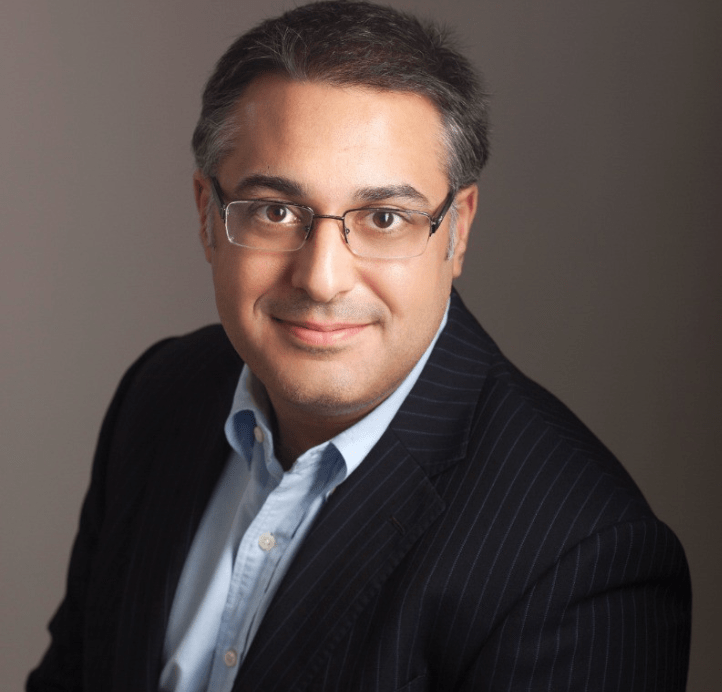
Credit: Linked In
Yaser Jabbar didn’t just train to be a surgeon—he built that identity over time, advancing through some of the UK’s most challenging hospitals with a calm determination that frequently defines long-term professional success. His early credentials spoke to promise, not controversy.
He started his adventure at St. George’s Hospital Medical School in London, where the training is rigorous and shaped by proximity to high-acuity NHS situations. It’s not a place for coasting—every rotation demands focus, humility, and tenacity.
| Category | Detail |
|---|---|
| Name | Yaser Jabbar |
| Profession | Orthopaedic Surgeon (Adult & Pediatric) |
| Education | St. George’s Medical School (London), MSc in Orthopaedic Engineering |
| Key Positions | Consultant at Great Ormond Street Hospital, Chelsea & Westminster |
| Known For | Limb reconstruction, deformity correction, trauma surgery |
| External Reference | Wikipedia – Yaser Jabbar |
Shortly after qualifying in 2004, Jabbar entered the crucible of the UK’s hospital system, picking up placements that were formative, although not yet spectacular. He worked in Oxford, and although he wasn’t allowed onto the orthopaedic training course first, he discovered a different path forward.
Instead of stalling, he recalibrated. He pursued a master’s degree in Orthopaedic Engineering at Cardiff University. That transition into biomechanics allowed him to perceive the skeleton not just as a clinical item, but as a mechanical system regulated by structure, stress, and motion.
For orthopaedics, that mindset is particularly advantageous. In addition to healing, bones can support weight, align, and transfer energy. A surgeon who knows the forces involved can construct significantly more personalized procedures, especially in infants whose growth plates are still active.
Jabbar’s next move was remarkably global. He worked in Australia—at the Royal Children’s Hospital in Melbourne and Westmead Children’s Hospital in Sydney. Both institutions are known for high standards and stringent control, especially when it comes to paediatric treatment.
These international experiences often act like professional accelerants. They expose doctors to diverse types of surgical planning and patient communication, extending their perspective and introducing tools that don’t usually exist in British handbooks.
Upon returning to the UK, Jabbar took up consultant roles at the Chelsea and Westminster Hospital. There, he helped promote sophisticated procedures in limb lengthening and slipping epiphysis care. At that point, he seemed like a rising figure in difficult paediatric orthopaedics.
He also co-hosted international fellows, presented his research on frame stability, and became a senior author on the largest published series employing the Precice intramedullary lengthening device in children. His profile was expanding—and not just inside hospital walls.
Eventually, he joined Great Ormond Street Hospital (GOSH) as a paediatric orthopaedic consultant in 2017. For many in the field, such appointment represents the pinnacle of clinical skill, trust, and the ability to do high-stakes surgeries on patients who are fragile.
During his stint at GOSH, he also collaborated on vascular abnormality therapies employing interventional radiology. These are not typical situations. They demand integration across specializations, remarkable timing, and a great awareness for the fragility of children’s anatomy.
His academic concentration was on innovation, including technologies that increase the effectiveness of therapeutic communication, augmented reality, and 3D modeling. He seems truly committed to changing patient care with a tech-forward mindset.
But optimism can occasionally be founded on faulty knowledge.
One of Jabbar’s coworkers had worries in 2020. A trend emerged—patient outcomes that didn’t fit with expected recovery curves. Reports began to gather, slowly at first, then with intensity.
I remember reading about the whistleblower who said she was advised to keep her head down. More than any surgical case study, that sentence stuck with me.
The investigations took time. Too much time, families would eventually argue. Jabbar left GOSH in 2023. His name was taken off the GMC list by early 2024, and he was no longer authorized to practice medicine in the UK.
The information that surfaced was concerning. Reports from the Royal College of Surgeons criticized insufficient documentation, unauthorized surgical alterations, and surgeries that lacked medical rationale. Some kids had injuries that lasted a lifetime. Others faced amputations.
It became evident that the optimism built into his CV had quietly coexisted with red flags that institutions refused to act on. That tension—between potential and accountability—forms the essence of this complex professional genesis.
According to reports, Jabbar was still performing surgeries while working in Dubai as of late 2024. Medical licenses may be local, but careers can spread across borders with unexpected ease.
Although this mobility is very adaptable, it also draws attention to weaknesses in international regulatory coherence. Patients in another nation may be at comparable danger if oversight in that nation is compromised.
So where does that leave his genesis story? It’s not simply about where he studied or how he trained. It’s about the structures that shaped him, enabled him, and, eventually, separated themselves from him.
Through this lens, Jabbar’s genesis is both a study in ambition and a cautionary tale. His career shows how technical ability and ingenuity can carry someone forward—but also how unquestioned decisions, when compounded, can lead to irrevocable harm.
The early chapters of his story were distinguished by growth, interest, and advancement. The final chapters need reflection—by institutions, by peers, and by the profession as a whole.
Origins often look tidy on paper. But they are shaped, over time, by what is chosen, what is missed, and what is finally disclosed.
