

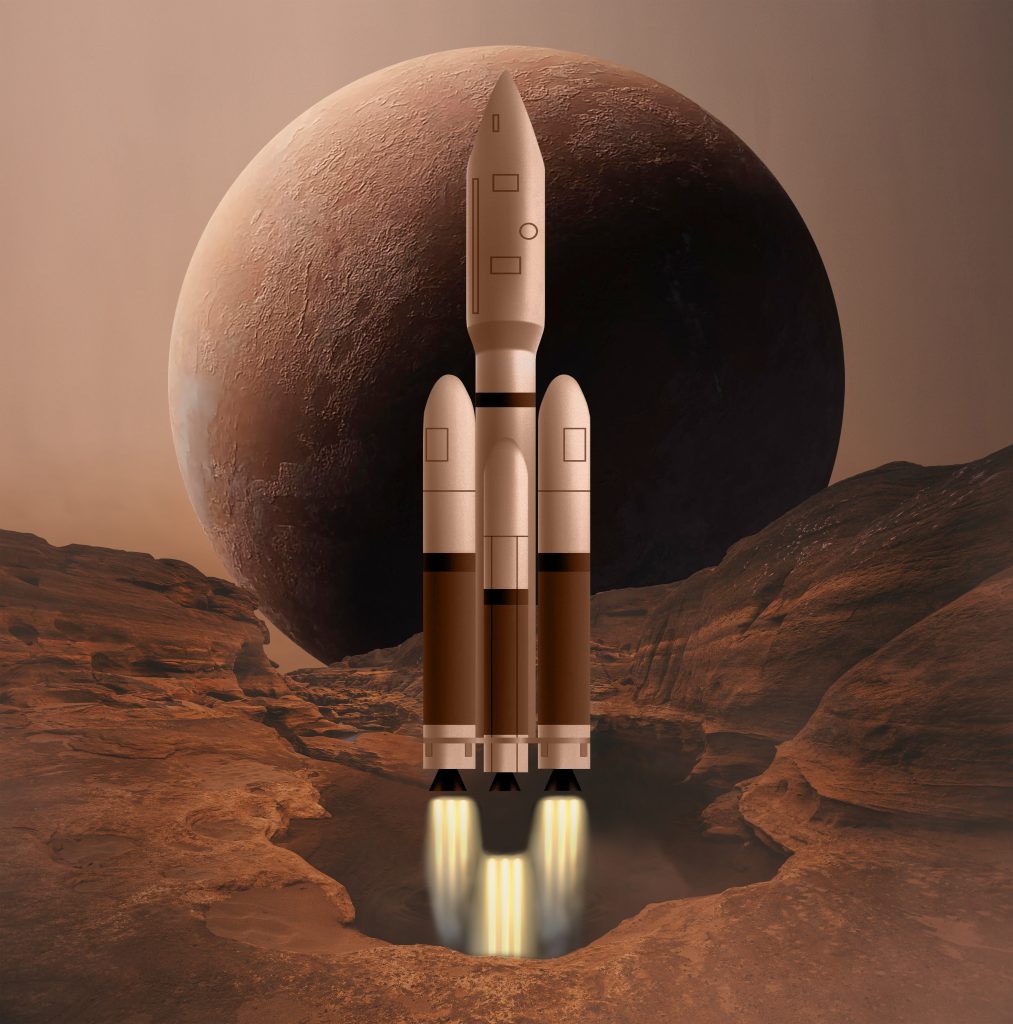
Standing tall once more, the Artemis rocket is positioned exactly on Kennedy Space Center’s Launch Pad 39B, its nose pointed toward a sky we’ve studied for centuries and only touched once.
Many were reminded of a slow but determined procession, where the significance of the procession surpasses its speed, as they watched the 98-meter rocket creep along the crawlerway at less than one mile per hour.
| Program Name | Artemis Program |
|---|---|
| Led By | NASA (with ESA, CSA, JAXA, and others) |
| Launch Vehicle | Space Launch System (SLS) |
| Spacecraft | Orion Crew Capsule + European Service Module |
| Current Mission | Artemis II (crewed lunar flyby) |
| Launch Location | Kennedy Space Center, Launch Pad 39B |
| Scheduled Launch | No earlier than February 7, 2026 |
| Long-Term Objective | Sustainable lunar presence, Mars exploration |
| Reference | https://www.nasa.gov/artemis |
Even though Artemis II won’t touch down on the moon, its significance is clearly enormous. As they orbit our celestial neighbor and test all of the vital systems on board, four astronauts will travel farther than anyone since 1972.
This isn’t about flaunting speed or raw power. In a future where human presence in deep space is not only feasible but sustainable, it is about establishing trust piece by piece, mission by mission.
The rocket is among the most incredibly dependable spacecraft ever put together by NASA and its international partners because every part has been designed, redesigned, and tested numerous times.
When combined with its European Service Module, the Orion spacecraft serves as a haven rather than merely a means of transportation. It supplies vital power, propulsion, breathable air, and water, transforming each orbit into a survival drill.
Only after years of training can astronauts Jeremy Hansen, Christina Koch, Victor Glover, and Reid Wiseman ride Artemis II with a sense of unity. Although their mission will only last ten days, its effects will last for much longer.
In order to safeguard their health as well as the integrity of a mission that symbolizes decades of cooperation and investment, the crew entered a controlled quarantine prior to launch. This procedure is as exact as it is symbolic.
The rocket felt subtly victorious as it marched slowly to the launchpad. It’s difficult not to be impressed by a machine that can survive deep space but is handled so carefully over a four-mile distance.
NASA has combined past achievements with future aspirations by utilizing shuttle-tested systems and legacy engines. This reuse is not only cost-effective but also highly useful and technically proven.
The crew will conduct system checks and simulations during the first two days of Artemis II’s high Earth orbit. After that, they’ll set out to circle the Moon, going over its far side.
Humans will witness lunar terrain from a previously unexplored perspective for the first time. Future landings, particularly the intended descent at the Moon’s south pole, will be informed by their observations.
It will be more than just a chance to take pictures as they look out at Earth as a glowing sphere floating alone in the dark; it will be a sneak peek at what long-term space travel demands of the human spirit.
AVATAR and ARCHAR, two particularly cutting-edge health experiments, are also being tested by NASA aboard. These systems will keep an eye on behavioral trends and organ responses in order to help get ready for even longer missions—possibly to Mars.
Artemis II is transformed from a flight test into a floating laboratory for human endurance in space by incorporating these tools into the mission profile.
Christina Koch’s statement, “We’ll see the Earth as one single ball,” which subtly hinted at how distance can make our place in it more apparent, struck me as particularly poignant.
Canada’s Jeremy Hansen made a perceptive comment. Lately, he had been gazing at the Moon more than usual. Not casually, but purposefully. That slight change in emphasis feels particularly human.
Artemis II will return for a splashdown close to San Diego after completing its lunar flyby. Following the crew’s recovery by the Navy, evaluations of the technology and the health of the astronauts will start right away.
To gauge how quickly they adjust to Earth’s gravity again, they will take part in ground simulations. It’s a crucial first step in comprehending how the body reacts to periods of unmooring.
The Artemis Program has been remarkably successful in fusing cutting-edge innovation with antiquated systems. Although its architecture isn’t particularly eye-catching, it is incredibly effective and, more importantly, purposefully constructed.
NASA has demonstrated over the last few years that it is prepared to postpone a mission in order to properly address an issue. This philosophy is demonstrated by the most recent change from September 2025 to February 2026.
Artemis is a particularly resilient project because of that mentality. Few people contest the mission’s clarity, which is to develop a roadmap that makes spaceflight safer, smarter, and more routine, even though critics occasionally point out its speed or expense.
This is about more than one moment. It involves assembling enough meticulously carried out missions to make deep space seem familiar rather than alien. Before we plant our boots again, we can trust them thanks to Artemis II.
The program is developing an ecosystem that could eventually reach Mars by incorporating commercial launchers, constructing Gateway modules, and assisting next-generation landers.
Because of this, the picture of the Artemis rocket on the pad appears larger than it actually is. It’s more than just a machine now. It is a symbol of preparedness, determination, and a remarkably rekindled collective dream.
According to NASA, it won’t launch until all the conditions are right. The opening date is February 7, 2026. The rocket is prepared whether or not that is the day. And so are we this time.
