

On a weekday morning outside London’s Broadcasting House, BBC producers dash between glass doors, coffees in hand, and phones ringing with notifications. Editors debate wording inside, using terms like “misleading,” “false,” “inaccurate,” or “baseless.” It’s a detailed, almost fussy debate. However, it is important. Because the battle over reality itself has evolved into Britain’s most bizarre political spectacle, straddling the left and right.
You can watch a parliamentary debate in real time by scrolling through social media during that time. “Fact-checkers” is the new moniker for party accounts. Statistics are quoted without context in viral graphics. After being edited and captioned, the clips are released into the algorithmic bloodstream. Propaganda predates the printing press, so none of this may be completely new, but the pace feels different now—more personal and unrelenting.
| Category | Details |
|---|---|
| Country | United Kingdom |
| Independent Fact-Checker | Full Fact |
| Public Broadcaster | BBC |
| Academic Reference | Reuters Institute for the Study of Journalism |
| Key Issue | Disinformation, alternative facts, partisan polarization |
| Reference Website | https://fullfact.org |
Approximately 45% of adults in the UK claim to come across fake news daily. Less than half of respondents say they trust most news most of the time, according to data from the Reuters Institute for the Study of Journalism. It erodes slowly but steadily, much like water soaking into brickwork. Every headline turns dubious when trust is lost.
Right-wing tabloids are blamed by the left. Liberal elites are accused by the right of censorship and spin. Both are partially right. Both are self-serving to some extent. Bias is frequently bipartisan, according to studies on misinformation; both liberals and conservatives are likely to believe what makes sense to them. Confirmation bias is not a party animal.
Brexit provided the most obvious example. Even after corrections went viral, the red bus that promised the NHS £350 million a week became a shorthand for “alternative facts.” However, as demonstrated by experiments conducted in the US and France, fact-checking frequently improves people’s knowledge without changing their political allegiances. People can vote the same way even after learning the actual numbers. Whether eradicating false information alters perceptions or merely solidifies narratives is still up for debate.
A scene from the general election in 2019 is still present. A party Twitter account momentarily rebranded itself as an independent fact-checker during a live TV debate. Many people denounced the action. However, it also succeeded, at least in drawing notice. Maybe that’s the point. Indignation leads to clicks. Reach is created by clicks. Power is produced by Reach.
Full Fact and other fact-checking organizations follow a methodical process, publishing corrections and providing citations. Their reports are meticulous, frequently dry, and sober. However, rage travels more effectively than dryness. A cautious rebuttal is slower to spread than a viral claim, particularly if it confirms preexisting suspicions.
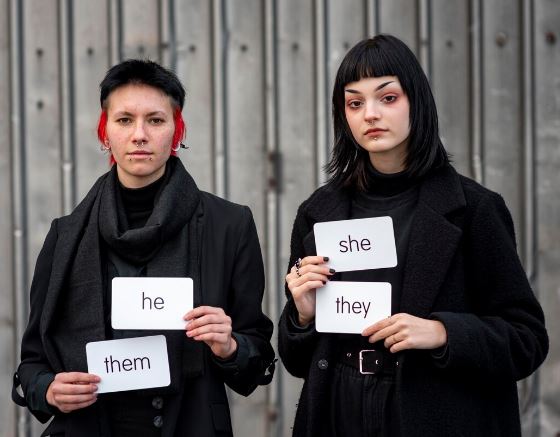
The political discourse heard last month while strolling through a Manchester market wasn’t ideological. Energy bills, rent, and doctors’ appointments made it feasible. However, on the internet, the discourse seems to be dominated by symbolic conflicts—statues, pronouns, and nuanced immigration statistics. It seems as though reality is waiting offstage while left and right are shadowboxing.
Politicians may be more aware of this dynamic than they acknowledge. There is a purpose to fabricated or exaggerated battles. They rally supporters, divert attention from systemic problems, and reduce complicated policies to easily understood outrage. It is quicker and less expensive to condemn a cultural “outrage” than to debate the specifics of housing reform.
What about reality? Reality moves more slowly. Spreadsheets, supply chains, court decisions, and hospital waiting lists are all involved. It defies catchphrases. Trending hashtags don’t interest investors who are researching Britain’s slow growth or the strain on public services. They are keeping an eye on labor shortages, borrowing costs, and productivity numbers. The gap between economic reality and online warfare is growing.
Additionally, there is a psychological cost. Psychologists caution that being exposed to false information breeds mistrust and anxiety. People may feel under siege if they are repeatedly exposed to inflated threats. Observing this, it seems to me that many Britons are just worn out—not by disagreement per se, but by the idea that disagreement is being manufactured.
Voters are not exempt from this. It’s easier to share a dramatic headline without verifying its source than to pause. Since emotional content seems urgent, it spreads. Additionally, urgency is addictive during uncertain times like pandemics, European wars, and economic strain. Even if clarity is illusory, people still desire it.
In a binary trench war, Britain is still in the game. According to research, the majority of people are pragmatic rather than ideological, and they fall somewhere in the middle. They rarely wake up excited for battle, though they may lean left or right. Algorithms that magnify the loudest factions may give the impression that the nation is more divided than it actually is.
The actual danger is not that right will triumph over left or vice versa. Reality turns into collateral damage. Institutional trust is undermined when both sides treat facts as negotiable. The media, courts, and even simple statistics are questioned. Furthermore, compromise is impossible once the truth seems negotiable.
It’s difficult to avoid feeling that British politics has devolved into a show over obstinate facts when you’re standing outside Parliament at dusk with lights blazing against the Thames. Ideology is irrelevant to inflation. Twitter trends about hospital wait times are short-lived. Bipartisan spin does not affect climate targets.
Theater that pits left against right is captivating. The real world is not as lenient. The question now is whether Britain can put an end to its fictitious conflicts long enough to face reality, and whether tired but receptive voters will insist on that change before the next spectacle starts.
