

This week’s news from Mooresville arrived quietly, as is typical in stock car racing. There was just a meeting room and a vice president named Matthew Lucas informing staff members that their jobs were being eliminated—no big press conference or farewell tour. In NASCAR’s second-tier O’Reilly Auto Parts Series, Ford-backed AM Racing had folded. Wondering what would happen next, dozens of people ventured out into a Carolina afternoon. In this sport, scenes like that have become unsettlingly common.
The middle class in NASCAR seems to have been steadily declining for some time. At the end of the 2024 season, Stewart-Haas Racing, a four-car Cup team run by a man who literally makes machine tools for a living, shut down and laid off up to 323 workers. Now, on a smaller scale, AM Racing, a much smaller shop, has done the same. There are differences in the mechanics. It is the same emotion.
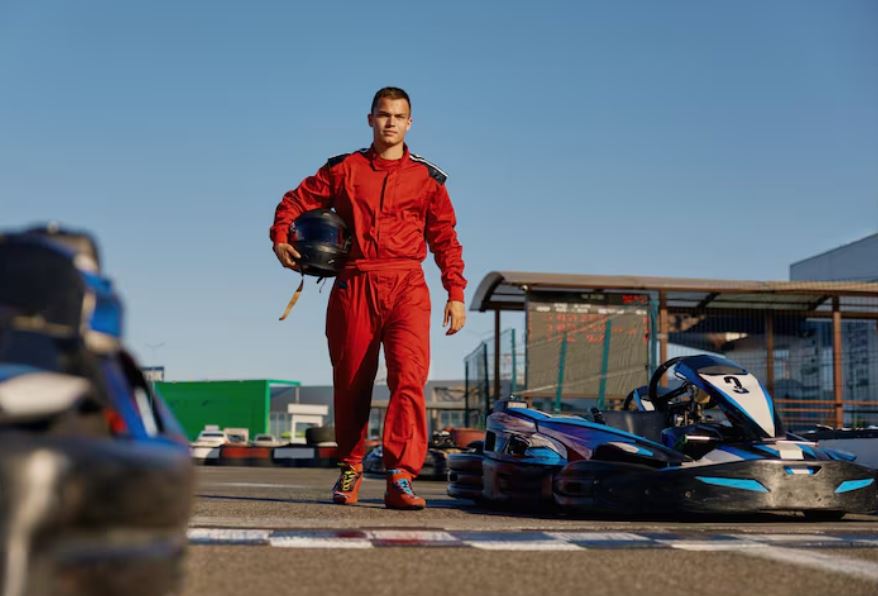
The timing is what makes the AM Racing story hurt a bit more. Nick Sanchez, a young driver who had recently been dropped by Big Machine Racing just days before the 2026 season opener, was signed by the team earlier this year, which was somewhat of a coup. Sanchez was meant to be the focal point of the rebuild. The optimism in the early press notes was almost audible. Paychecks then began to bounce, according to Matt Weaver’s reporting at Motorsport.com. More than any executive statement, that detail reveals the true nature of the shop’s problems.
According to reports, Lucas informed staff that he worked hard to bring things under control. That might be the case. Perhaps the math just didn’t work. Ford’s technical support can only cover a portion of the eight figures that a mid-tier Xfinity-level team can generate annually. The second-tier teams rely on sponsorship, hauler diesel, and hope in the absence of a charter-style guarantee that is present at the Cup level. Everything else stops when the sponsorship stops.
You can see the true nature of this business by taking a stroll through the industrial parks north of Charlotte. Before a race weekend, there are beige metal buildings, vinyl-wrapped haulers parked behind fences, and fabrication shops with lights left on past midnight. Those buildings don’t contain drivers. In their twenties, they work as marketing coordinators, social media managers, engine assemblers, tire specialists, fuelers, and chassis builders. The talent pool is suddenly expanded when a team closes, and the larger stores cherry-pick. Everyone else begins making phone calls and updating their LinkedIn profiles.
Most investors seem to think that NASCAR’s economic model is undergoing a gradual transition rather than a crisis. The new media agreement, the street race and international weekend expansion, the streaming experiments, and the charter system. The ship might eventually be stabilized by all of that. However, this month’s Mooresville families are not helped by it. A paycheck that bounced last week is not reimbursed.
It’s difficult to ignore how the sport continues to advance. The trucks moved on to the following track. The leaders were the focus of the cameras. A fire suit is still hanging in a locker somewhere in a now-closed store, waiting for an owner who isn’t returning. It’s still unclear if AM Racing’s demise was due to bad luck, poor timing, or simply the harsh realities of contemporary racing economics. It’s evident that the list of recent layoffs by NASCAR teams continues to expand, and no one in the garage appears to be particularly shocked anymore.
