

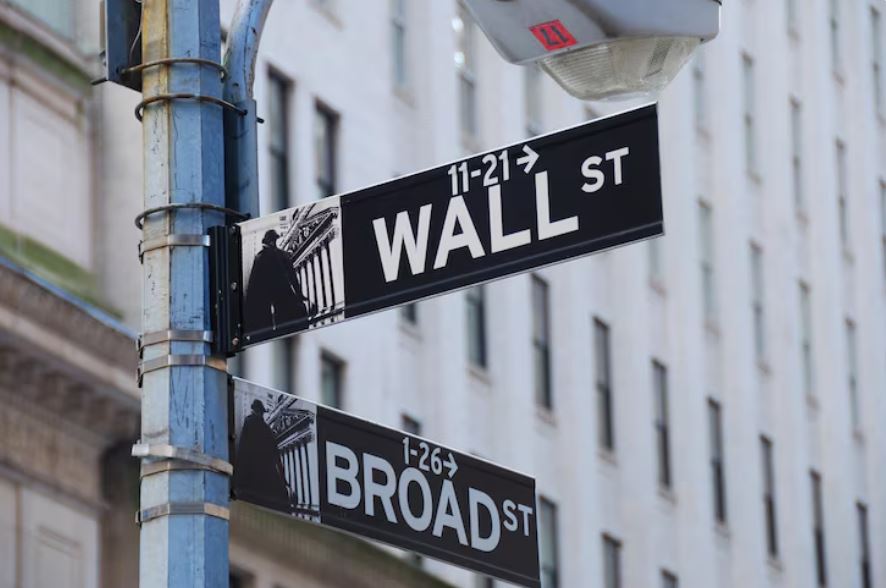
Since late February, there has been an odd atmosphere on the lower Manhattan trading floors. Not yet in a panic. but more subdued than normal. When no one wants to publicly discuss what they are modeling, a certain kind of silence falls on a desk. Since Iranian forces started blocking shipping through a 21-mile stretch of water that most Americans were unaware of prior to this year, that silence has hung over Wall Street for nearly three months.
Nearly one-fifth of the world’s daily petroleum supply passes through the Strait of Hormuz. It also transports massive amounts of liquefied natural gas and about 25% of the world’s fertilizer. No one notices when it’s working. The entire structure of the contemporary economy begins to falter when it stops. And it has stopped as of right now. In late April, the Wall Street Journal reported that crude was rising for the third session in a row, with WTI closing above $92 per barrel following Iran’s firing on three ships and the U.S. blockade of ships connected to Iran remaining in place. In the same week, Brent went over $100. Until you consider that every dollar spent on a barrel of crude is effectively a tax on global income, those figures seem abstract.
Smart money isn’t concerned about the price per se. It’s the length of time. If the closure continues past summer, Citigroup and JPMorgan have both proposed scenarios in which prices rise toward $150, and the math underlying those figures is unsettling. Only a small portion of the Gulf’s total output can be transported via alternate pipeline routes via Saudi Arabia and the United Arab Emirates. No patch is present. There isn’t a workaround. Either you reopen the strait or you bear the repercussions.
Last week, a friend who oversees a commodities desk informed me that his staff had stopped getting enough sleep. Like someone mentioning a sore back, he said it casually. “Every morning I check shipping data before I check my kids’ schools.” It’s difficult to ignore how traders are now talking about waiting for the crisis to end rather than positioning themselves around it. Early in May, Deutsche Bank issued a warning that has been repeatedly cited on financial Twitter: “As long as Hormuz remains closed, markets remain on a knife-edge.” Everyone knew it was true, which is why the phrase stuck.
Meanwhile, the Federal Reserve remains frozen. It would be foolish to lower rates during an oil-driven inflation spike. A deeper slowdown is assured if you hold them where they are. The fact that Jerome Powell hasn’t said much in public seems telling in and of itself. This is an ambiguous moment, and the Fed prefers to remain silent.
The second-order effects are beginning to emerge beyond crude. As we approach the next harvest cycle, there are serious concerns about food costs due to the sharp increase in fertilizer prices. Vessels operating anywhere close to the Persian Gulf now have more shipping insurance. The cost of almost everything imported will eventually increase due to rising freight rates. On Reddit, a reader from Dubai mentioned that her parents in New Delhi were already inquiring as to whether LPG prices would increase once more. It’s a small detail, but it conveys the object’s texture. Long before it makes headlines, this crisis spreads through electricity and grocery bills.
Every week, the geopolitics becomes more complicated. For decades, Western governments have referred to the strait as a “non-negotiable red line,” and there is a growing perception that a prolonged closure will force world powers into a conflict that few are ready for and nobody wants. In order to give Tehran space to negotiate, President Trump extended a cease-fire in late April. However, the proposals have been sluggish and the trust has diminished.
Wall Street is waiting. Energy stocks are now the only busy trade in town, gold is rising, and Treasuries are caught between safe-haven flows and inflation repricing. Week eleven of the “six-week war,” as the administration used to refer to it, has just begun. Walking past the trading floors after hours gives one the impression that the worst-case scenario is no longer the worst case at all. The base case is this. And no one has figured out how to price that yet.
