

There’s a good chance that someone in America has a two-pound bag of Lundberg jasmine white rice somewhere in the back of a pantry shelf—behind the pasta, next to the lentils, or perhaps next to a partially used bag of quinoa. They probably assume it’s okay. It is certified organic. It originated from a company with decades of reputation and a farming philosophy centered on trust and sustainability. Wegmans, Walmart, Target, Giant, and Hy-Vee all carried it. It has also been recalled.
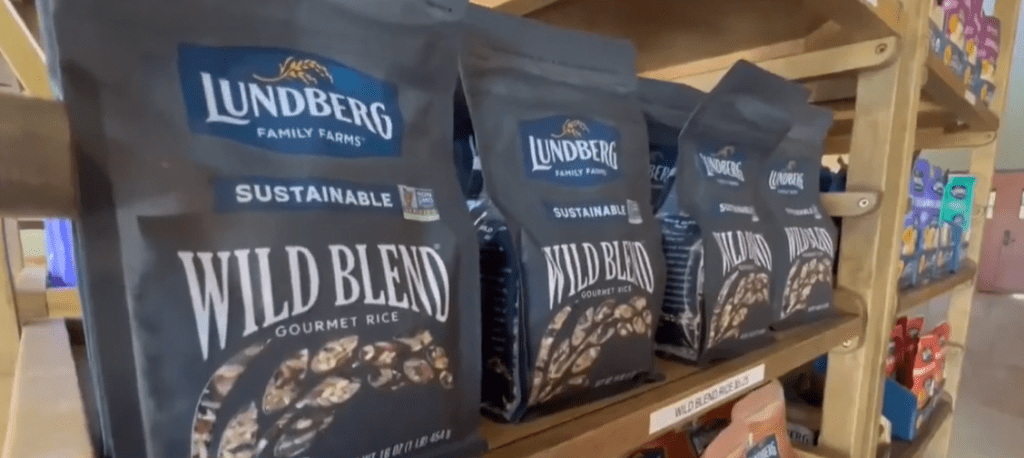
On April 1, Lundberg Family Farms voluntarily removed about 4,500 cases of its Regenerative Organic Certified White Jasmine Rice from store shelves nationwide. The potential presence of foreign material is the cause. The impacted bags are two-pound packages with lot codes 260201 and 260202, UPC 073416-040281, and best-by dates of February 1 and February 2, 2027. The advice is simple: if those figures match what’s in your kitchen, don’t eat it and either discard it or send it back for a refund.
| Category | Details |
|---|---|
| Recall Subject | Lundberg Family Farms Regenerative Organic Certified White Jasmine Rice |
| Pack Size | 2 lbs |
| UPC Code | 073416-040281 |
| Lot Codes | 260201 (Best By 02/01/2027) and 260202 (Best By 02/02/2027) |
| Quantity Affected | Approximately 4,500 cases |
| Reason for Recall | Possible presence of foreign material |
| Recall Class | Class II (possible temporary or medically reversible health effects) |
| Recall Type | Voluntary |
| Recall Announced | April 1, 2026 |
| Retailers Affected | Wegmans, Walmart, Target, Giant, Hy-Vee, and other nationwide chains |
| Illnesses Reported | None as of publication |
| What To Do | Do not consume; discard or return to place of purchase for refund |
| Refund Confirmed | Wegmans (full refund); other retailers — contact store directly |
| Reference | FDA Recall Database — fda.gov/safety/recalls-market-withdrawals-safety-alerts |
The FDA has categorized the recall as Class II, the second-highest risk tier. Simply put, that designation indicates that the possible health effects are not immediately life-threatening, but rather temporary or medically reversible. This type of language essentially tells you very little while sounding comforting in theory. It doesn’t explain what the foreign substance is. The thing that tends to worry people the most is the lack of information provided by officials regarding whether it is made of metal, plastic, wood, or something else entirely. This is not an exception to the rule that a contamination story without an identified contaminant tends to sit uneasily.
The Lundberg recall is noteworthy not only because of its size (4,500 cases is a significant volume), but also because of the brand that was involved. Lundberg Family Farms is not a low-cost brand. It is a California-based company that has a long history of producing organic and specialty rice.
This type of brand has built its reputation on the notion that the ingredients in the bag have been carefully monitored. Customers who made the extra effort to purchase this rice include health-conscious consumers, families who steer clear of processed foods, and individuals who are willing to pay more for the organic label. When a product is specifically selected due to its perceived safety and quality, the recall lands differently.
It’s difficult to ignore how this recall reflects a larger, somewhat unsettling trend in the organic food industry. Products advertised as safer, cleaner, and more meticulously made have frequently appeared in recall notices alongside their conventional counterparts in recent years. Certifications don’t really matter to contamination.
Regardless of what occurs in the field, processing and packaging facilities pose risks, and there are enough steps in the supply chain between a California rice farm and a Wegmans shelf in New York for something unforeseen to get in. It’s unclear if this is the case, but it’s the most plausible explanation for how this occurred.
Wegmans, the Western New York-based chain that first made the public announcement, is providing complete refunds for the impacted merchandise. The product has reportedly been removed from the shelves of other retailers, including Walmart, Target, Giant, and Hy-Vee, though it’s unclear how refunds work at those establishments.
Although the FDA had not released a formal consumer announcement as of the most recent reporting, Lundberg has confirmed the recall to several outlets and stated that the agency was informed. It’s worth pointing out that delay. It took a few days for the agency’s own communication to catch up after the recall was announced at the beginning of April. That gap is important for customers who don’t pay close attention to retailer notices.
How many of those 4,500 cases were opened, cooked, and eaten before anyone learned about this recall is a serious question. Before boiling, people don’t usually check the batch codes on jasmine rice. It is added to the pot. The Class II designation indicates that the risk is not serious, and the fact that no illnesses have been reported is truly encouraging. However, the lack of reported illness does not always indicate a lack of exposure; it can also indicate that there is no link between a stomach problem and a particular bag of rice that was bought two weeks ago.
The practical steps are straightforward for the time being. Verify the UPC. Verify the lot code. Don’t eat it if it matches. Wegmans will promptly reimburse you. It might be necessary to make a phone call, but other stores ought to follow suit. It is anticipated that Lundberg, a company that has spent decades building a reputation worth significantly more than 4,500 cases of rice, will act swiftly and openly to explain what was discovered and how it got there. That explanation is still in its early stages. It still must.
