

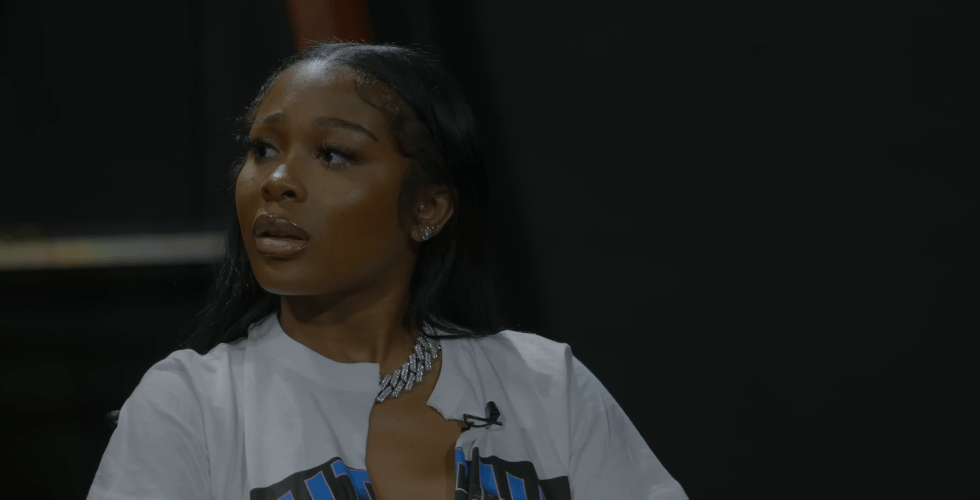
Credit: Breakbeat Media
For a while, Jayda Wayda’s name was circulated for unsettlingly familiar reasons, driven more by rumors that spread quickly through group chats and repost buttons than by facts. These rumors spread remarkably similar presumptions about what people believed they already knew about Wayda.
The details of the lawsuit have been repeatedly aired in the days since it gained new attention online, frequently condensed into headlines that ignored the slower, more thoughtful decisions that ultimately brought her to court rather than remaining silent.
| Name | Jayda “Wayda” Cheaves |
|---|---|
| Bio | American entrepreneur, influencer, and author |
| Background | Born in Savannah, Georgia; rose to fame via social media and business ventures |
| Career Highlights | Founder of Waydamin apparel, author of 15 Steps to Become a Young Boss, ex-partner of rapper Lil Baby |
| External Source | DancehallMag article on Jayda’s Jamaica legal incident |
The lawsuit against Walgreens began as a breach rather than a spectacle, and it was remarkably successful in illustrating how vulnerable privacy becomes when internal safeguards are handled carelessly rather than as unavoidable obligations.
Court documents claim that pharmacy staff obtained Jayda Cheaves’ medical records without permission and then disseminated the information in a way that made it possible for untrue statements regarding her health to spread widely, turning private information into fodder for conversation.
Especially for someone whose reputation is strongly linked to trust, credibility, and consistency, that type of violation does not come with flashing lights; rather, it comes subtly, like a door left open overnight, and by morning, the damage has already been done.
Jayda made a much better choice by using the legal system instead of online outrage, opting for a slower but far more effective process than the more popular reactive statement approach.
Rumors about public figures can act like smoke, spreading swiftly and clinging tenaciously even in the absence of a fire. This case demonstrated how effectively institutions can create smoke when they neglect to protect confidential information.
Her lawsuit sought $30 million, a sum that attracted attention right away. However, the sum served more as a signal than as bravado, and it was especially creative in that it reframed the cost of negligence as something tangible rather than abstract.
A privacy breach in the context of digital visibility, where influencers function similarly to brands, is more than just emotional harm; it is reputational erosion that gradually erodes opportunities, alliances, and public goodwill.
Support and skepticism coexisted side by side in the online response, which was divided but illuminating. It demonstrated how unequally empathy is distributed when women assertively rather than apologetically defend themselves.
Jayda had already experienced untrustworthy legal systems over the previous few years, such as her much-discussed arrest in Jamaica in 2021, during which she later described feeling both scared and calm while navigating strange laws and dubious legal counsel.
A lesson that many people learn the hard way—that paying for protection does not always guarantee it, especially when power dynamics tilt away from transparency—was reinforced by that prior experience, which involved an expensive legal retainer and a surprisingly small court fine.
When she talked about maintaining her composure in that courtroom, I recall pausing because it sounded more like practiced survival than bravado.
By the time the Walgreens case proceeded, her strategy seemed noticeably more sophisticated, molded by previous errors and directed by the realization that volume is frequently less important than preparation.
Even against a large corporation, the final result—which was widely reported as a sizable settlement—showed how successful perseverance can be when combined with documentation, patience, and legal clarity.
In settings where access to sensitive data should be highly dependable rather than loosely monitored, Walgreens’ internal controls and employee accountability were called into question.
For those who were closely observing, the lawsuit served as a warning label, indicating that privacy violations are actionable mistakes with quantifiable repercussions rather than innocuous mistakes.
By taking calculated legal action, Jayda changed the focus from rumors to accountability, which was especially helpful in redefining the public discourse surrounding these cases.
Her choice to seek accountability rather than quietly back down demonstrated a forward-thinking confidence that used the incident as leverage to establish stronger boundaries rather than as an end in and of itself.
Cases like these will probably influence how businesses approach data protection in the years to come, not by making moral arguments but rather by using the terminology that institutions are most familiar with: risk, liability, and cost.
Although Jayda Wayda’s lawsuit did not completely stop the rumor cycle, it did greatly lessen its influence by substituting records for conjecture and consequences for gossip.
What’s left is a more lucid illustration of how people, even those who are continuously watched, can regain agency by adamantly stating that privacy is a necessity, even in situations where visibility is inevitable.
The case serves as a reminder that progress frequently comes subtly—not with cheers, but with documentation, perseverance, and a resolute refusal to accept negligent behavior as the norm.
