

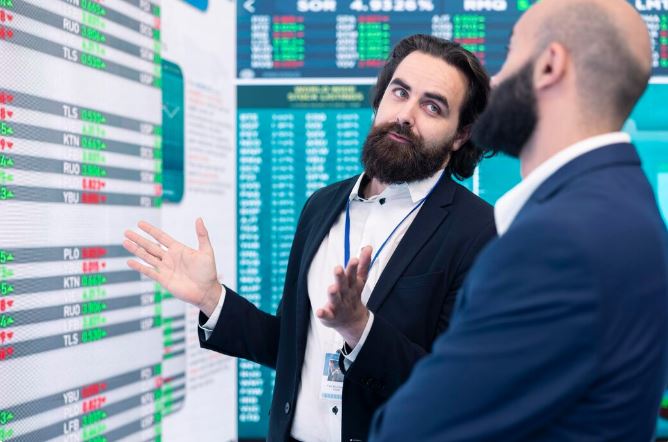
With coffee cups in hand and screens glowing behind glass, traders moved in and out of the New York Stock Exchange on a winter morning with a sort of practiced urgency. Nothing seemed out of the ordinary. Nevertheless, the numbers inside those screens were silently creating history. The S&P 500, edging toward 7,000, has become less of a milestone and more of a moving target.
Once more, the market is at an all-time high. That much is evident. It’s unclear if this is a sign of true confidence or something more brittle, more akin to complacency.
Optimism has merit and is not wholly irrational. Despite rising borrowing costs and lingering global tensions, corporate earnings have held up better than many anticipated. Businesses continue to report results that feel, at times, surprisingly resilient, particularly in the technology sector. Watching firms tied to artificial intelligence report expanding revenues, there’s a sense that investors aren’t just buying hype. They are purchasing growth that appears genuine, at least for the time being.
| Category | Details |
|---|---|
| Topic | U.S. Stock Market (2026 Record Highs) |
| Key Index | S&P 500 nearing 7000 |
| Main Drivers | Strong earnings, AI boom, economic resilience |
| Key Risks | High valuations, inflation, policy uncertainty |
| Market Sentiment | Optimistic with signs of complacency |
| Notable Sectors | Technology, semiconductors, banking |
| Reference Website | https://www.cnbc.com |
Conversations in any financial district, whether in London or Manhattan, invariably center on the same few firms. Alphabet, Microsoft, Nvidia. the typical suspects. It’s difficult to ignore how much of the market’s power is concentrated in a small number of powerful companies, driving indices higher virtually by sheer force. There are historical parallels to that focus, but it also raises subtle concerns about equilibrium.
However, the overall economy hasn’t collapsed. Consumer spending hasn’t plummeted, job numbers are steady, and inflation hasn’t gotten out of hand despite its stubbornness. Investors appear to think that once the worst-case scenarios are widely discussed, they won’t actually happen. They might be correct. However, markets tend to assume that things will go smoothly until they don’t.
Valuation comes next. The tone changes at this point, almost imperceptibly. The market appears pricey by historical standards. Not just a little stretched, but noticeably so. According to certain metrics, valuations appear to be significantly higher than long-term averages, which have seldom been maintained without correction. However, there isn’t much obvious discomfort. The response has, if anything, been subdued.
It seems like risk has become more commonplace as we watch this play out. Instead of asking if stocks are pricey, investors now want to know if they can get even more costly. It’s a small but significant change. It appears that the well-known market emotion of FOMO is more significant than most people would acknowledge.
Another layer is added by policy uncertainty, which seems strangely undervalued. Tariff proposals, changing regulatory environments, and trade tensions are all significant factors. However, markets seem to believe that results will continue to be generally positive. It’s still unclear if this confidence stems from a straightforward habit or from thorough analysis. After all, markets have been rewarded for ignoring risks for a long time.
The story of credit markets is similar. Spreads are narrow, indicating that investors aren’t asking for high returns on their risk. That type of environment has historically been short-lived. When it changes, it usually does so quickly, but it can last longer than anticipated—sometimes much longer.
Charts could never adequately convey this mood, but some moments do. During a lunch break, a retail investor uses a phone to check stock prices, grinning at gains that seem almost normal. A fund manager on a panel shrugged off worries about valuations, citing “momentum” instead. Even though these are insignificant moments, they add up.
The similarities to previous cycles are difficult to ignore. Similar energy was present in the late 1990s, when innovation drove valuations higher, and skepticism gradually subsided. Despite lasting longer than many anticipated, that time didn’t end well. The analogy is not entirely accurate. It never is. However, the beat seems familiar.
However, it might be too easy to write off the current rally as pure complacency. In certain areas, the economy is truly strong. Genuine technological advancements are occurring, especially in AI, which may eventually support increased valuations. Investors are not wholly unreasonable. They are reacting to signals that seem credible, at least right now.
Therefore, whether the market is right or wrong is not the question. It’s the amount of error margin. That margin feels narrow right now. Small shocks could have disproportionate effects, whether they come from geopolitical events, unexpected inflation, or poor policy. Disappointment doesn’t have to be severe to be significant when expectations are high.
There’s a certain serenity that feels almost too cozy when you watch the market rise day after day. Gains are anticipated. Dips are short. As confidence grows, the notion that the system is stable is strengthened.
However, just like people, markets often only show their weaknesses when put to the test. Furthermore, it’s still unclear when or how that test will be administered.
The rally is ongoing for the time being. Green flashes appear on screens. Traders never stop moving. Beneath the surface, the question remains: is this confidence, or is it just the lack of doubt? With coffee cups in hand and screens glowing behind glass, traders moved in and out of the New York Stock Exchange on a winter morning with a sort of practiced urgency. Nothing seemed out of the ordinary. Nevertheless, the numbers inside those screens were silently creating history. With the S&P 500 approaching 7,000, it is now more of a moving target than a landmark.
Once more, the market is at an all-time high. That much is evident. It’s unclear if this is a sign of true confidence or something more brittle, more akin to complacency.
Optimism has merit and is not wholly irrational. Despite rising borrowing costs and lingering global tensions, corporate earnings have held up better than many anticipated. Businesses continue to report results that feel, at times, surprisingly resilient, particularly in the technology sector. There’s a feeling that investors aren’t just buying hype when artificial intelligence-related businesses report growing revenues. They are purchasing growth that appears genuine, at least for the time being.
Conversations in any financial district, whether in London or Manhattan, invariably center on the same few firms. Alphabet, Microsoft, Nvidia. the typical suspects. It’s difficult to ignore how much of the market’s power is concentrated in a small number of powerful companies, driving indices higher virtually by sheer force. There are historical parallels to that focus, but it also raises subtle concerns about equilibrium.
However, the overall economy hasn’t collapsed. Consumer spending hasn’t plummeted, job numbers are steady, and inflation hasn’t gotten out of hand despite its stubbornness. Investors appear to think that once the worst-case scenarios are widely discussed, they won’t actually happen. They might be correct. However, markets tend to assume that things will go smoothly until they don’t.
Valuation comes next. The tone changes at this point, almost imperceptibly. The market appears pricey by historical standards. Not just a little stretched, but noticeably so. According to certain metrics, valuations appear to be significantly higher than long-term averages, which have seldom been maintained without correction. However, there isn’t much obvious discomfort. The response has, if anything, been subdued.
It seems like risk has become more commonplace as we watch this play out. Instead of asking if stocks are pricey, investors now want to know if they can get even more costly. It’s a small but significant change. It appears that the well-known market emotion of FOMO is more significant than most people would acknowledge.
Another layer is added by policy uncertainty, which seems strangely undervalued. Tariff proposals, changing regulatory environments, and trade tensions are all significant factors. However, markets seem to believe that results will continue to be generally positive. It’s still unclear if this confidence stems from a straightforward habit or from thorough analysis. After all, markets have been rewarded for ignoring risks for a long time.
The story of credit markets is similar. Spreads are narrow, indicating that investors aren’t asking for high returns on their risk. That type of environment has historically been short-lived. When it changes, it usually does so quickly, but it can last longer than anticipated—sometimes much longer.
Charts could never adequately convey this mood, but some moments do. During a lunch break, a retail investor uses a phone to check stock prices, grinning at gains that seem almost normal. A fund manager on a panel shrugged off worries about valuations, citing “momentum” instead. Even though these are insignificant moments, they add up.
The similarities to previous cycles are difficult to ignore. Similar energy was present in the late 1990s, when innovation drove valuations higher, and skepticism gradually subsided. Despite lasting longer than many anticipated, that time didn’t end well. The analogy is not entirely accurate. It never is. However, the beat seems familiar.
However, it might be too easy to write off the current rally as pure complacency. In certain areas, the economy is truly strong. Genuine technological advancements are occurring, especially in AI, which may eventually support increased valuations. Investors are not wholly unreasonable. They are reacting to signals that seem credible, at least right now.
Therefore, whether the market is right or wrong is not the question. It’s the amount of error margin. That margin feels narrow right now. Small shocks could have disproportionate effects, whether they come from geopolitical events, unexpected inflation, or poor policy. Disappointment doesn’t have to be severe to be significant when expectations are high.
There’s a certain serenity that feels almost too cozy when you watch the market rise day after day. Gains are anticipated. Dips are short. As confidence grows, the notion that the system is stable is strengthened.
However, just like people, markets often only show their weaknesses when put to the test. Furthermore, it’s still unclear when or how that test will be administered.
The rally is ongoing for the time being. Green flashes appear on screens. Traders never stop moving. Beneath the surface, the question remains: is this confidence, or is it just the lack of doubt?
