

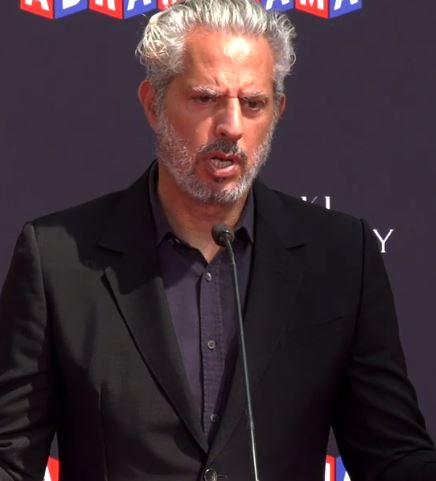
Guy Oseary’s net worth is frequently reported to be around $90 million, which seems reasonable until you examine the architecture that lies behind it. That figure has begun to feel more like a floor than a ceiling in recent years due to the increased transparency of venture capital disclosures.
Oseary, who was born in Jerusalem and grew up in Los Angeles, started working as an A&R representative at the age of 17. His confidence was significantly enhanced by instinct rather than ancestry. By the age of 19, he was one of the first workers at Maverick Records, the label that Madonna co-founded. He picked things up fast and adjusted with a remarkable degree of similarity to the artists he supported.
| Field | Details |
|---|---|
| Full Name | Guy Harley Oseary |
| Date of Birth | October 3, 1972 |
| Place of Birth | Jerusalem, Israel |
| Citizenship | United States |
| Education | Beverly Hills High School |
| Primary Roles | Talent Manager, Venture Capitalist, Entrepreneur, Author |
| Major Clients | Madonna, U2, Red Hot Chili Peppers, Amy Schumer |
| Investment Firms | A-Grade Investments, Sound Ventures |
| Estimated Net Worth | Commonly reported around $90 million; potentially higher with tech holdings |
| Reference | Market Realist profile on Guy Oseary |
His career has developed over the last thirty years like a meticulously drawn investment chart, rising steadily, dipping occasionally, and then rising again with noticeably greater momentum. He assisted in directing Alanis Morissette’s “Jagged Little Pill” album at Maverick, which sold over 33 million copies. This album turned a young singer into a voice for generations and made Oseary a remarkably dependable executive.
He rose to the position of chairman by the late 1990s, managing a catalog that featured artists such as Deftones, Muse, and The Prodigy. He also contributed to movie soundtracks that were incredibly successful at ingraining music into popular culture memory. According to reports, the label sold over 100 million units worldwide—numbers that still seem a bit hazy in the age of streaming.
But his most creative shift was in management rather than hitmaking. He officially took over as Madonna’s manager in 2005, arranging a $120 million deal with Live Nation that was remarkably ambitious at the time. It would soon be commonplace to combine tours, recordings, and branding into a 360-degree deal model.
He helped lead Madonna’s Confessions, Sticky & Sweet, and MDNA tours into the highest-grossing concert runs ever by using strategic negotiation and long-term planning. He was repeatedly named Top Manager by the Billboard Touring Awards, demonstrating how effective his strategy had become.
He reportedly paid $30 million to take over U2’s management in 2013, replacing the band’s longtime manager in a move that industry watchers said went surprisingly well. In addition to feeling like a passing of the torch, that moment also felt like a calculated consolidation of power.
When the U2 announcement was made, I recall sitting in a packed press lounge. The response was more recognition than shock, as if everyone had subtly anticipated this move.
The second act, which may turn out to be even more significant than the first, followed.
Oseary co-founded A-Grade Investments in 2010 with Ashton Kutcher and Ron Burkle, directing the profits from entertainment into tech startups in their infancy. The company made early investments in Shazam, Uber, Spotify, and Airbnb by utilizing founder relationships and advanced analytics, resulting in a portfolio that was significantly enhanced by timing rather than hype.
Obtaining funding is often crucial for early-stage startups, and Oseary positioned himself as a cultural interpreter and investor, connecting tech founders with celebrity networks in a highly adaptable manner. Access was more important than glamour, and cap tables were more important than headlines.
He and Kutcher founded Sound Ventures in 2015 with an emphasis on cutting-edge technologies at the nexus of artificial intelligence and media. The company has managed more than $1 billion in assets in recent years, and in 2024 it will launch a $243 million AI-focused fund and support businesses like Anthropic and OpenAI.
With the steady coordination of a swarm of bees, AI is predicted to transform industries in the upcoming years. Each agent will carry out minor tasks while contributing to a larger system. By investing in infrastructure rather than following flimsy trends, Oseary appears to recognize that pattern early.
Not all of the wagers have held up very well. Once valued at billions, his involvement with Yuga Labs and the Bored Ape Yacht Club later saw valuations drastically drop, underscoring the volatility that looms over innovation. However, interacting with NFTs demonstrated a readiness to venture into new ecosystems as opposed to withdrawing into familiar surroundings.
In addition to capital allocation, Oseary has authored books such as “Jews Who Rock” and “On the Record,” which preserve artist and executive oral histories while documenting industry insights. For him, writing is more like archiving, documenting lessons learned while gaining momentum, rather than branding.
He also co-founded Good Today, a nonprofit platform that promotes micro-donations as small as 25 cents through strategic partnerships, democratizing philanthropy in a way that is surprisingly affordable for regular contributors. Although the structure is straightforward, scale significantly improves the goal.
Although he married Brazilian model Michelle Alves in 2017 and has four children, his personal life is still kept fairly private. According to his friends, he is a very dependable executive who takes calls at strange hours and carefully examines contracts to find leverage points that others might miss.
What is the actual net worth of Guy Oseary?
About $90 million on paper. When accounting for carried interest, equity stakes, and fund appreciation, the actual amount could be significantly higher, especially as AI investments get more established. The math of venture capital rarely shows up right away; it often compounds in silence before revealing results years later.
More significantly, his financial history serves as an example of a larger lesson. He developed a diversified platform that is incredibly good at absorbing changes in the industry by fusing his instincts for entertainment with technological foresight. He embraced convergence instead of holding onto legacy models, which simplified processes and allowed creative partners to concentrate on output.
His journey provides a blueprint for the future for aspirational managers and founders who are observing from the sidelines. Get started early. Remain flexible. Make an infrastructure investment. Consider the long term.
In this instance, money is more of a result of decades of calculated risk and disciplined decision-making than it is a headline. And his portfolio might still grow much more quickly than even its early backers anticipated if current trends continue, especially in artificial intelligence and digital platforms.
