

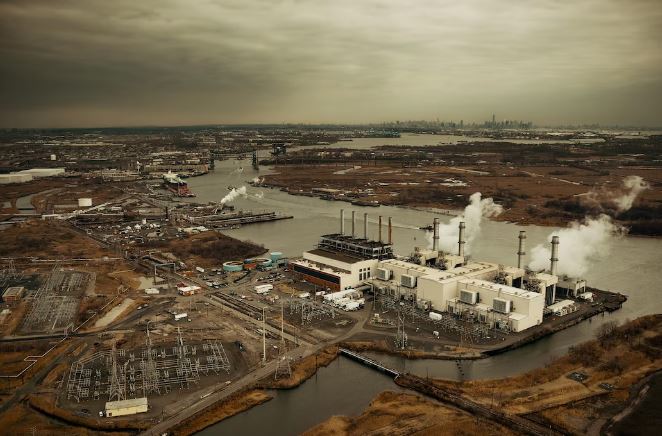
Not too long ago, there was a moment when it seemed as though oil had finally started to lose its hold. Policymakers were speaking with a kind of cautious optimism about a post-fossil future, solar farms were expanding across deserts, and electric vehicles were rolling out in glossy advertisements. Nevertheless, that optimism seems… premature as I stand today next to a busy highway outside of Lahore and watch diesel trucks rumble past in thick waves of heat and exhaust.
The oil did not vanish. It held out.
The return isn’t as dramatic as headlines frequently imply. It’s more sensible, quieter, and practically unavoidable. Global demand has been steadily increasing, surpassing 100 million barrels per day, and it doesn’t seem like this number will drop anytime soon. Despite ongoing public pledges to decarbonize, investors appear to share this belief, discreetly directing funds back into oil projects. Ambition on paper, dependency in reality—it’s an odd dual reality.
| Category | Details |
|---|---|
| Topic | Global Oil Industry & Fossil Fuel Dependence |
| Key Organizations | International Energy Agency (IEA), OPEC |
| Daily Global Oil Use | ~103–104 million barrels per day |
| Main Drivers of Comeback | Energy security, rising demand, infrastructure gaps |
| Economic Impact | Major revenue source for both developed and developing nations |
| Transition Status | Ongoing but uneven and slow |
| Reference Website | https://www.iea.org |
A portion of the narrative starts with the term “energy security,” which has become more controversial in recent years. Countries rely on what they know works when geopolitical tensions escalate, whether in the Middle East or Eastern Europe. Despite their potential, renewable energy sources aren’t always as dependable as oil and gas. Governments may discuss transition while acting fearfully. aversion to blackouts. fear of a disruption to the economy. apprehension about losing control.
This tension is evident when strolling through industrial areas. The machinery in factories simply cannot operate on sporadic energy sources. Fossil fuels were the foundation of steel plants, chemical plants, and freight fleets. In addition to being costly, rebuilding them is extremely difficult. Policy papers often ignore the physical reality that exists here.
Then there is the issue of infrastructure, which seldom receives the proper attention. A completely different foundation—grids, storage systems, and mineral supply chains—is needed for renewable energy. They don’t show up right away. In certain areas, solar panels are installed more quickly than the grids can manage, resulting in bottlenecks that impede advancement. It’s difficult to ignore the discrepancy between potential and consistency when you watch brand-new wind turbines stand motionless on calm days.
Another layer is added by economic dependence, which is even more difficult to unravel. Oil revenues form the foundation of entire national budgets. Exports of fossil fuels are a major source of income for nations in the Middle East, parts of Africa, and even parts of North America. It’s not just a climate issue to ask them to leave quickly; it’s also a financial one. Whether other industries can replace that level of income without creating severe instability is still up for debate.
Additionally, there is a cultural component that is subtly significant but less talked about. The modern world was built on oil. It drove the automobiles, aircraft, and businesses that influenced day-to-day existence. That legacy endures. The majority of the world’s transportation system still uses refined petroleum, despite the growing popularity of electric vehicles. Observing lengthy lines at gas stations during price increases serves as a reminder of how ingrained oil is in daily life.
It’s interesting to note that renewable energy is frequently merely supplementing the overall energy mix rather than swiftly displacing fossil fuels as many had hoped. Demand is rising due to new technologies, urbanization, and population growth. For instance, data centers use a lot of electricity, and not all of it is clean. Contrary to popular belief, the world is using more energy overall even as it develops greener systems.
The actions of corporations reveal their own narrative. Once eager to showcase their transition plans, a few large energy companies have quietly adjusted. Priorities tend to change in response to record oil profits. It’s difficult to ignore the reluctance—public statements about sustainability combined with ongoing funding for conventional extraction. Maybe it’s pragmatism. Or maybe it’s uncertainty.
There’s a sense that this transition isn’t linear as you watch it happen. It is disorganized, erratic, and riddled with contradictions. There is progress, but there is also resistance, which can be structural or deliberate. Renewable energy is not being rejected by the world. It simply isn’t prepared to fully rely on them.
Perhaps the most unsettling reality is that. Simply “switching off” fossil fuels was always a little too idealistic and clean. That is not how real systems change. They are shaped by politics, economics, and human behavior, and they change gradually and frequently with resistance.
Therefore, the return of oil isn’t really a return at all. It resembles a reminder more. A reminder that it is more difficult than we thought to replace the pillars of contemporary life. It’s not always the case that ambition results in action. And despite all the talk about a new era of energy, the old one is still very much alive, quietly supplying the world with fuel one barrel at a time.
