

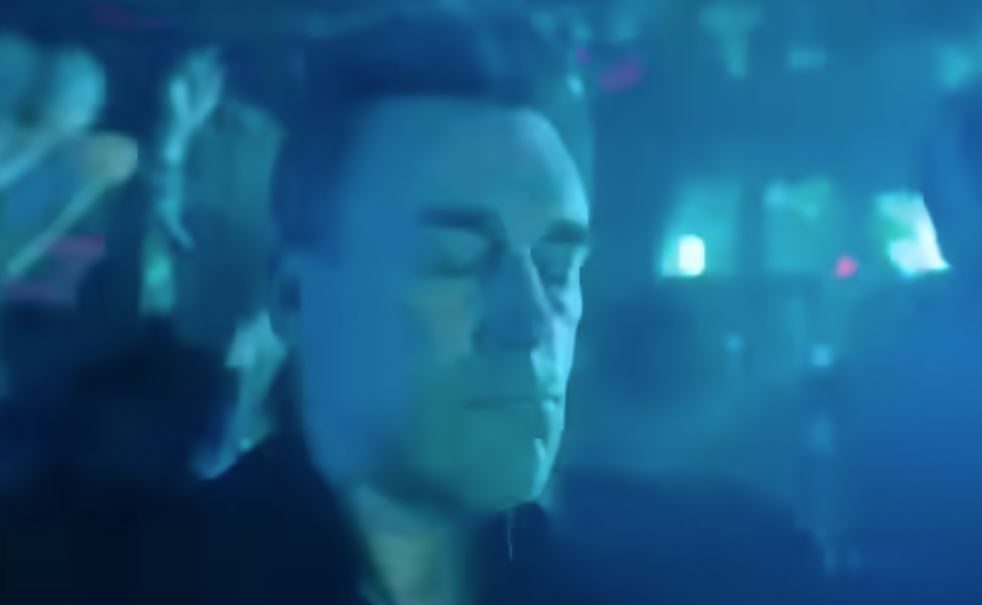
The Jon Hamm viral video appeared on phones in the same way that a well-known song drifts out of a passing car—first unnoticed, then suddenly everywhere—and spread with a kind of serene inevitability. A brief scene of Hamm dancing in a nightclub, eyes closed and shoulders loose, as though the noise around him had subtly subsided, has been featured in feeds in recent days.
The clip resonated because of something remarkably similar to a common emotional reflex rather than technical mastery or comedic exaggeration. Hamm isn’t entertaining the audience. Like a commuter leaning back when the train finally starts moving, he is withdrawing into himself, swaying with the quiet confidence of someone momentarily unburdened by expectations.
| Field | Information |
|---|---|
| Full Name | Jonathan Daniel Hamm |
| Date of Birth | March 10, 1971 |
| Age | 54 |
| Nationality | American |
| Profession | Actor, Producer |
| Breakthrough Role | Don Draper in Mad Men |
| Recent Project | Your Friends & Neighbors (Apple TV+) |
| Viral Moment | Club dancing scene from the series |
| Known For | Dramatic depth, understated comedy |
| Awards | Emmy Award, Golden Globe Award |
| Reference | https://www.usatoday.com |
The scene is from Your Friends & Neighbors on Apple TV+, a show that aired earlier this year and used a sardonic, perceptive tone to examine wealth, discontent, and moral compromise. In the original setting, Andrew “Coop” Cooper, played by Hamm, is in disarray, having just been fired, divorced, and struggling to maintain a lifestyle that no longer suits him.
Even though many people never watch the entire episode, that background is important. It is not a triumphal dance. It’s an escape. In a culture that has been conditioned to keep moving forward, it captures a moment when pressure releases its hold.
The scene was reduced to its most basic emotional elements by online creators. They combined it with Danish DJ Kato’s 2010 dance song “Turn the Lights Off,” turning a fleeting TV moment into a well-known reaction image. The outcome was incredibly powerful, transforming a single gesture into a universal, wordless punchline.
The meme format changed rapidly. After describing a small triumph in the caption, the scene shifts to Hamm dancing as though the universe has silently nodded in agreement. You found the charger you believed you had misplaced. Hamm moves. Someone cancels plans. Hamm moves. On the first attempt, the printer functions. Hamm moves.
Because the victories were purposefully modest, this repetition was effective. Milestones were not celebrated in the clip. Relief was praised. Due to this feature, it was extremely adaptable, allowing users to overlay their own narratives onto the same brief video clips.
The song quickly rose to the top of Spotify’s viral charts, and a generation rediscovering a sound that once characterized late nights and sticky dance floors significantly increased its streaming numbers. Without a campaign, the revival took place, proving that cultural momentum can still outpace strategy.
The Jon Hamm viral video opened up sentimental nostalgia for a lot of millennials. It brought back memories of a time when dancing meant losing oneself in the music rather than recording it, when happiness was experienced in private even in large gatherings.
That sensation was heightened by Hamm’s presence. He has been linked for years to the character of Don Draper, who is characterized by restraint, control, and a polished distance. It was like watching a tightly wound spring finally loosen when Hamm broke that pose, even for a moment.
Throughout his career, that disparity has been growing. Since the conclusion of Mad Men, Hamm has tended to play parts that subtly challenge his own reputation, showing up in comedies, parodies, and supporting roles that emphasize self-awareness over authority. That trajectory is perfectly aligned with the viral clip.
In interviews earlier this year, Hamm characterized Your Friends & Neighbors as a commentary on excess, pointing out that the cultural ideal of “enough” has been supplanted by “more.” Inadvertently, the dance scene visualizes that concept by providing a moment in which desire completely ceases.
Texture is added by the bruises on his face, which are hardly noticeable at first. They imply repercussions without providing an explanation, reminding viewers that happiness frequently arises in the midst of chaos rather than after it has been cleared away.
Compared to similar trends a few years ago, social media platforms responded with a speed that seemed noticeably faster. Instagram reels followed, TikTok edits proliferated, and YouTube tutorials appeared, instructing users on how to replicate the precise cut and pacing, akin to teaching choreography for an emotion.
The meme was notable for its lack of irony. This trend flourished on sincerity, in contrast to those based on ridicule or exaggeration. No wink was given. Not a joke. Just a mutual understanding of emotion.
In terms of culture, timing was important. The video provided a counterbalance after years of constant commentary and performative outrage. It implied that meaningful content does not always require self-explanation.
Hamm’s choice to remain silent was especially successful. By remaining silent, he prevented the moment from becoming a promotional artifact and instead gave it to the audience. Rather than weakening authenticity, that restraint felt incredibly dependable.
The entertainment sector paid attention. When a moment feels genuine, audience-driven discovery can surpass traditional marketing, as demonstrated by the unexpected surge in popularity of a little-discussed series.
Music executives also noticed the knock-on effect. The resuscitation of a song from fifteen years ago demonstrated how digital culture now prioritizes emotional resonance over originality, bringing back sounds that are more emotionally recognizable than technically up to date.
Additionally, the Jon Hamm viral video questioned presumptions regarding relevance and age. Hamm, who is 54 years old, became the face of a trend that younger users adopted, demonstrating that when emotion is evident, resonance transcends demographic boundaries.
This instance is similar to other recent viral flashes that focus more on warmth than shock. When taken as a whole, they imply a desire for information that offers relief rather than conflict and reassures rather than provokes.
Satire and criticism are not eliminated by that change. It enhances them. The clip serves as a pause that permits everything else to proceed, much like a deep breath in between conversations.
The incident strengthened Hamm’s reputation as an actor whose work naturally changes to reflect cultural changes. He didn’t try to go viral or modify his performance for different platforms. The audience’s interpretation allowed the clip to escape on its own.
The lesson as a whole is subtly uplifting. Simple human moments that reflect something people recognize in themselves can still emerge and connect widely, even in an environment shaped by algorithms and acceleration.
Because it didn’t aim to be universal, the Jon Hamm viral clip was successful. It was small, unguarded, and specific. As it spread, it served as a reminder to viewers that happiness is not always accompanied by news or explanations.
