

Credit: Entertainment Tonight
It may seem straightforward, but did Doug Mason really file a lawsuit? However, the answer is not as obvious as the headlines imply, as is the case with many issues surrounding reality television. A narrative that seems plausible at first but quickly falls apart upon closer examination started to take shape somewhere between Instagram posts, cancelled TV shows, and viral Facebook claims.
The rumor is dramatic in and of itself. A $100 million racketeering lawsuit started making the rounds on social media, allegedly targeting Taylor Frankie Paul. The scale of the numbers is almost cinematic, making them large enough to draw attention.
| Category | Details |
|---|---|
| Full Name | Doug Mason |
| Age | Approx. late 20s |
| Profession | Reality TV Contestant |
| Known For | Contestant on The Bachelorette (Season 22, canceled) |
| Relationship Status | Rumored winner of Taylor Frankie Paul’s season |
| Public Activity | Social media statements, media attention post-cancellation |
| Legal Status | No confirmed lawsuit filing (as of now) |
| Associated Show | The Bachelorette |
| Reference | https://ew.com |
However, when the claim’s origins are examined, it seems to rely more on unreliable posts than on official court documents or reliable reporting. Although it is frequently overlooked due to the rapidity of online storytelling, this distinction is important.
What is confirmed is much more muted. Mason did make a public statement, but it wasn’t legal in tone. Mason was rumored to be the last pick in the now-canceled season of The Bachelorette. If anything, it was surprisingly soft. He offered Paul his support, calling the circumstances regrettable and encouraging optimism. That message and the notion of a high-stakes, aggressive lawsuit developing behind the scenes are difficult to reconcile.
It’s worth stopping to consider the context of all of this. Days before its premiere, the season was canceled due to re-emerging accusations against Paul and her ex-partner. Promotional materials were removed, production stopped, and contestants were left in an odd state. Cast members who had filmed an entire season suddenly having their story erased before it even aired has an almost surreal quality to it.
Speculation flooded in during that void. It frequently does. Without a broadcast story to follow, viewers started creating their own by assembling bits and pieces from social media posts, blogs, and leaked information. Because it fit the emotional tone of the moment—chaotic, dramatic, and unresolved—the lawsuit rumor appears to have sprung from that setting and quickly spread.
There is still a chance that legal action will be taken. Contracts for reality TV are infamously complicated, frequently containing provisions pertaining to conduct, public perception, and production interruptions. Naturally, concerns about compensation and liability arise when a show is canceled under contentious circumstances. However, there is currently no concrete proof that Mason has done so.
Additionally, there is a human component that is sometimes overlooked. Mason has presented himself as helpful rather than combative, at least in public. That doesn’t mean he isn’t frustrated, though; one can only imagine how disappointing it would be to put in time and emotional effort for a show only to have it vanish overnight. However, dissatisfaction does not always result in legal action. Sometimes it just lingers, unsolved.
As this develops, a larger pattern emerges that is hard to overlook. Narrative tension is the lifeblood of reality television, but more and more of it extends beyond the screen. Even after the cameras stop filming, legal threats, public declarations, and viral rumors all become part of the show. In certain respects, the drama that took place off-screen now has the same significance as the episodes that were never broadcast.
Additionally, social media plays a part in amplifying everything. Within hours, a single, loosely worded, widely shared post can appear to be fact. The story has already become ingrained in people’s minds by the time corrections are made, if they are made at all. Stories like this typically flourish in a system that prioritizes immediacy over accuracy.
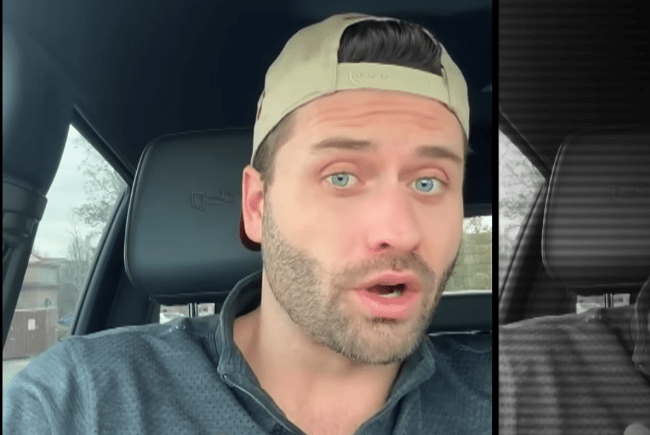
There’s a moment to think about: Mason uploads a brief video, speaks calmly, and offers support, while headlines elsewhere on the internet announce financial disputes and lawsuits. It’s a remarkable contrast. It implies two distinct realities, one based on actual words and deeds and the other formed by amplification and interpretation.
Whether this situation will get worse is still up in the air. The entertainment industry is no stranger to the tendency for legal disputes to start quietly before going public. However, as of right now, the most straightforward response seems to be the most accurate: Doug Mason has not yet filed a lawsuit.
Still, the question remains. Not because of the evidence, but rather because of the rapid, disjointed, and frequently incomplete way stories now spread.
