

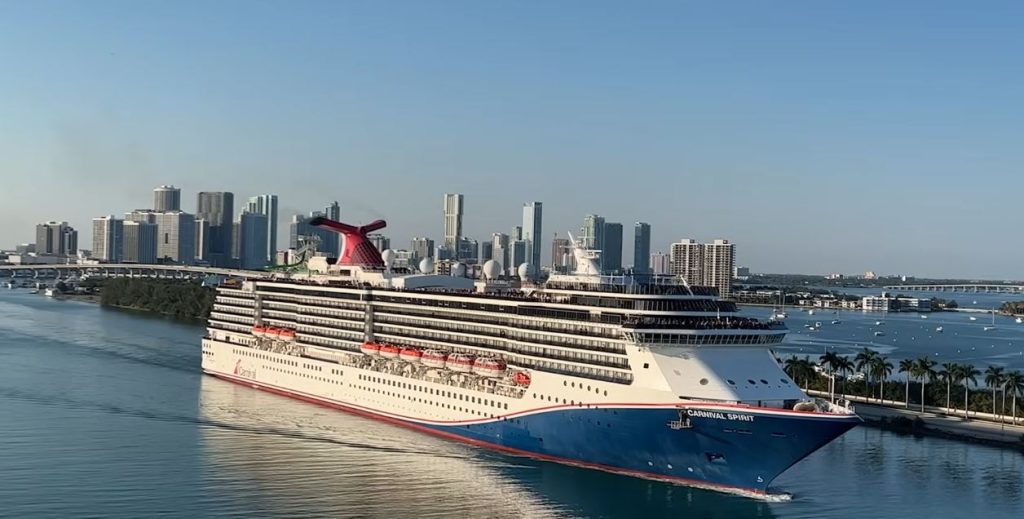
Before a cruise ship departs port, there is a specific moment that takes place. Passengers congregate along the railings, phones out, drinks already in hand, as the ropes are loosened and the long, dramatic horn sounds. It’s simple to see Carnival Cruise Line’s appeal when you watch a ship depart from a location like Long Beach or Miami. It offers a straightforward product: escape. However, that promise seems a little more difficult these days.
Eleven sailings that were planned for late 2026 and were all connected to the Firenze were discreetly canceled by Carnival this week. “Changes to itinerary plans” is a succinct explanation that sounds professional but doesn’t say much. As is customary, travelers were given the option to rebook or receive refunds. However, there is a feeling that these choices have a knock-on effect that impacts not only travelers but also travel agencies, port employees, and entire local economies.
| Category | Details |
|---|---|
| Company Name | Carnival Cruise Line |
| Parent Company | Carnival Corporation & plc |
| Headquarters | Doral |
| Founded | 1972 |
| Industry | Cruise / Travel & Tourism |
| Fleet Size | 20+ ships |
| Known For | Affordable cruises, entertainment-focused experiences |
| Recent News | Cancellation of 11 sailings (2026) |
| Key Routes | Caribbean, Mexico, Bahamas, Alaska |
| Official Website | https://www.carnival.com |
It’s almost festive to stroll through a cruise terminal during boarding hours. Couples arguing about outings, families hauling suitcases, and staff members patiently directing lines. Carnival’s brand has been built on accessibility—cruising as something more akin to an affordable floating resort rather than as a luxury. Despite rivals like Royal Caribbean leaning more toward spectacle and scale, that positioning has been successful for decades.
However, the industry is changing, and Carnival appears to be more aware of this than some of its competitors. For example, rising fuel prices are a structural problem rather than just a line item. Carnival is more vulnerable to unexpected spikes because it does not hedge its fuel prices in the same manner as some of its rivals. Even a slight rise in oil prices, according to analysts, could drastically reduce profits. It’s the kind of vulnerability that subtly influences choices like cancelled routes but doesn’t appear in glossy brochures.
Additionally, there is the issue of perception. Many tourists associate Carnival with having a good time—loud decks, late-night buffets, and poolside competitions that eventually merge into one another. Although that identity has great power, it can also feel constrictive. The business seems to be torn between upholding that approachable image and adjusting to a market that is growing more specialized, demanding, and, in certain situations, more costly.
There is still a certain rhythm to the experience on board. Early morning coffee lines form, travelers reserve lounge chairs prior to breakfast, and employees move quickly through cramped hallways. It’s difficult to ignore how much the operation relies on accuracy and timing. Crews oversee everything from entertainment schedules to waste systems behind the scenes, making the setting seem effortless to visitors. However, that effortlessness is actually carefully crafted.
A subtle but significant question is brought up by the Firenze cancellations: how stable are cruise itineraries in a time of fluctuating prices and erratic demand? The current situation may be more of an adjustment than an anomaly. Although cruise lines have always made changes to their routes, it appears that these changes are becoming more frequent and noticeable.
Additionally, there is a more comprehensive cultural perspective. Once thought of as a slow, almost antiquated mode of transportation, cruising has evolved. Ships became destinations in and of themselves, thanks in large part to Carnival. Features like water parks, themed restaurants, and live entertainment make it difficult to distinguish between travel and entertainment. As this develops, it seems as though the company helped millions of people redefine what a vacation could entail.
However, the present moment seems less certain. Traveler expectations, environmental concerns, and economic pressures are all coming together at the same time. While they board ships, order drinks, and watch the horizon fade into open water, some passengers might not be aware of the underlying changes. Others may begin to doubt how predictable these vacations are, particularly those impacted by cancellations.
The contrast is difficult to ignore. Carnival still promotes happiness, leisure, and escape, on the one hand. On the other hand, it involves overcoming a number of difficulties that are anything but easy. The decks are still packed, and the ships are still at sea. Beneath that exterior, however, something is changing—slowly, unevenly, and with just enough ambiguity to draw attention.
