

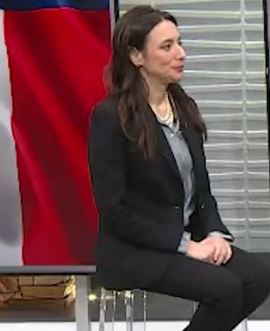
The way American political curiosity operates these days is almost predictable. After a little-known state lawmaker declares her intention to run for governor, search engines are inundated with inquiries about her upbringing, family, religion, and, of course, her ethnicity. Gina Hinojosa, a Democrat from Austin who is currently vying to unseat Greg Abbott in the 2026 Texas governor’s race, experienced exactly that. The question “Gina Hinojosa ethnicity” has been climbing search trends steadily since she won the Democratic primary in March with nearly sixty percent of the vote, and the answer, while straightforward, opens up a much richer story than a single label can contain.
Hinojosa is American-Mexican. She was raised in Brownsville, which is close to the border between the United States and Mexico, after being born in McAllen, Texas, in 1973. She spent her summers with her grandparents in Mission, a small Rio Grande Valley city encircled by citrus groves and scorching heat. Her father, Gilberto Hinojosa, is himself a well-known figure in Texas politics — a former Cameron County judge and the longtime chair of the Texas Democratic Party, serving from 2012 until 2025. The family’s roots in South Texas are deep, spanning generations tied to the border region’s particular blend of American and Mexican culture. It’s a world of quinceañeras and high school football, of Spanish at the dinner table and English in the classroom. Anyone who has driven through the Valley on a summer afternoon — past the tamale vendors and the hand-painted signs for notaries — would recognize the landscape that shaped her.
However, timing is what makes the ethnicity question politically significant. The Rio Grande Valley, once a reliable Democratic bastion buoyed by its heavily Latino population, has shifted notably in recent election cycles. Donald Trump made surprising inroads there in 2020 and again in 2024. The old assumption that Mexican-American voters would automatically support Democratic candidates has frayed, and candidates like Hinojosa are now forced to earn those votes in ways that earlier generations of Texas Democrats never had to consider. Her Valley roots are perceived as both a test and an asset; to some voters, they are evidence of authenticity, but to others who are more interested in policy than heritage, they are insufficient credentials.
After graduating from Brownsville’s Homer Hanna High School in 1992, Hinojosa enrolled in the University of Texas at Austin’s selective Plan II Honors program to study government. She went on to graduate from George Washington University with a law degree, making her one of the comparatively few Texas gubernatorial candidates with a solid legal background before entering politics. She represented union members as a civil rights attorney before entering the legislature. After the district threatened to close her son’s elementary school, she went on to serve on the board of the Austin Independent School District. Instead of being put together for a campaign, it is a biographical arc that feels authentically lived in.
Her announcement of her candidacy for governor last October was made in Brownsville, not Austin, Houston, or Dallas. The location selection made a subtle statement about identity and belonging. It’s unclear if Texas voters are ultimately more concerned with border policy, education funding, or ethnicity. For the time being, however, the question is genuine, and the solution lies in the same sun-baked, dusty area of border country that has produced more Texas politicians than most outsiders are aware.
