

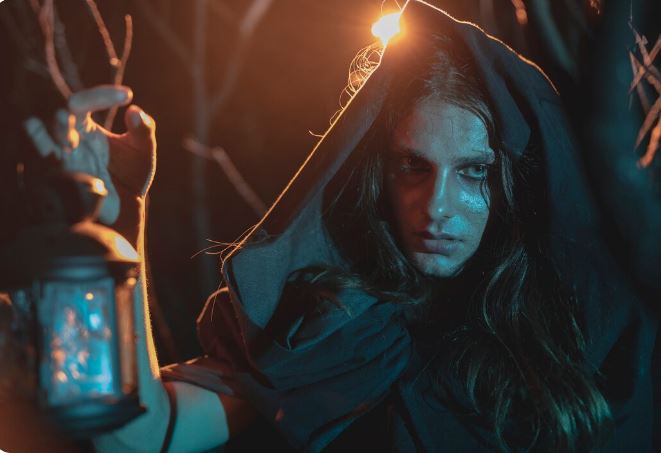
Longtime Diablo players have been responding to an announcement that few anticipated coming in recent days with a mixture of cautious optimism and disbelief: There is a new class in Diablo II. Not a change in balance. Not a reset of the ladder. Twenty-five years after the initial release, a fully realized Warlock was added.
This is a significant change for a game that many fans consider to be sacred text. Historically, Diablo II has been meticulously preserved like a museum, and its mechanics have been examined and discussed with a fervor remarkably akin to that of chess theory. It’s like adding a new piece to the board when you add a new class.
| Aspect | Details |
|---|---|
| Game | Diablo II: Resurrected |
| New Class | Warlock |
| Release Date | February 2026 |
| DLC Name | Reign of the Warlock |
| DLC Price | $24.99 standalone / $39.99 Infernal Edition bundle |
| Core Mechanics | Demon summoning, binding, and consuming |
| Skill Highlights | Goatman, Tainted, Defiler summons; Eldritch melee path |
| Franchise Expansion | Also coming to Diablo IV (April 28) and Diablo Immortal (Summer 2026) |
| Official Source | Blizzard Entertainment Announcement, February 2026 |
However, the Warlock feels more like a missing page that has been restored than an intrusion.
Blizzard conveyed confidence rather than nostalgia by releasing the Reign of the Warlock DLC at the franchise’s 30th anniversary. This isn’t a last-minute update. It is an ambitious expansion that honors the past while subtly pushing the limits of what Diablo II is still capable of.
The Warlock is based on manipulation and mastery from a gameplay standpoint. The Goatman, the Tainted, and the Defiler are the three main demon types he calls forth. However, these summons are more than just throwaway damage sources, in contrast to conventional pet-based classes. They are useful resources.
Players can access special abilities by binding a demon. Consuming that demon causes them to absorb its lifeforce, which results in momentary boosts that have the power to drastically alter the outcome of a fight. Only one demon can be bound at a time, requiring conscious decision-making as opposed to impulsive button-mashing.
In practice, that tension feels particularly evident.
I held a Tainted back while negotiating a crowded crowd in the Chaos Sanctuary during my first prolonged session. I ingested it for a quick boost in damage resistance when the pressure increased. Although the maneuver was very effective, there was a subtle weight to the silence that followed—fighting alone once more.
The design promotes preparation, foresight, and calculation. Players who anticipate two encounters ahead of time instead of two seconds ahead are rewarded.
The Eldritch skill tree is what makes the class even better. This path combines martial aggression with arcane calculation, enabling the Warlock to wield a grimoire in addition to a two-handed weapon. The end effect is a highly adaptable archetype that is both recognizable and notably novel.
This hybrid strategy is not only novel to veterans used to well-established metas, but it is also destabilizing in a positive way. Once-fixed builds are now being reexamined, reformulated theoretically, and vigorously discussed in various forums.
Stasis is frequently the silent killer of long-running online communities. Blizzard has significantly increased player engagement by adding the Warlock without sacrificing the game’s essential character. It is not a reinvention, but a methodical expansion.
It’s surprising how elegant the mechanics are. Demon binding functions similarly to a contract, with opportunity cost associated with every decision. Like closing a risky investment at the ideal time, consuming a summon feels definitive, almost transactional. There isn’t too much spectacle in the class. It uses consequences to persuade.
The Warlock has a menacing yet restrained appearance. Instead of being over-the-top, spell effects are gently animated, shimmering with corrupted energy. Summons appears with a disconcerting poise, highlighting the character’s intellectual threat instead of his savagery.
That moderation is important.
Diablo II benefits greatly from a deliberate pace. Fighting is intentional. The progression of loot is gradual. Instead of artificially speeding up that rhythm, the Warlock becomes part of it. His power is not recklessly explosive; rather, it is managed, harnessed, and used strategically.
Overpowering novelty is a common mistake that Blizzard avoided by coordinating the class with this tempo.
Additionally, a more comprehensive plan is in operation. The Warlock is making its appearance in Diablo II, Diablo IV, and Diablo Immortal through synchronized releases. Blizzard is establishing a particularly coherent thematic throughline by coordinating the archetype across titles.
It is especially helpful for players who switch between games. While enabling each iteration of the Warlock to develop uniquely, it forges a common identity. Diablo II has an academic, calculating feel to it. According to previews, the Diablo IV version looks more dramatic and heavy.
That multi-layered strategy works incredibly well to connect players of different generations.
Remasters have frequently depended solely on visual enhancements during the last ten years. Diablo II: Resurrected already had updated visuals while maintaining gameplay. Adding a new class is more advanced. It implies that the game is actively maintained rather than just archived.
The Warlock’s seamless integration into Sanctuary’s mythology as though he had always existed just out of the player’s line of sight surprised me.
The initial skepticism of the community has given way to active experimentation. The best cycles for demon consumption are being mapped by theorycrafters. Eldritch builds are being tested by speedrunners to see if they are noticeably faster in high-density areas. Casual gamers are just taking pleasure in the novelty of making new choices.
That range of involvement is a positive indication.
The Warlock symbolizes rebirth without erasure for a game that has withstood innumerable ladder resets, bot waves, and patch arguments. This class rewards calculated aggression, discourages complacency, and promotes risk-taking.
The full effect will become evident in the upcoming months as optimized builds appear and competitive ladders incorporate the Warlock. Even now, though, the addition feels functional rather than decorative.
Blizzard had the option to preserve Diablo II as a static artifact by leaving it unaltered. Rather, the studio has shown its audience that it trusts them by introducing a class that is based on transformation and trade-offs.
The foundation is not disturbed by the Warlock. He gives it a try.
By doing this, he demonstrates that even a game that is getting close to its third decade can develop carefully, preserving its identity while extending its potential in ways that seem purposeful, well-balanced, and assuredly forward-looking.
