

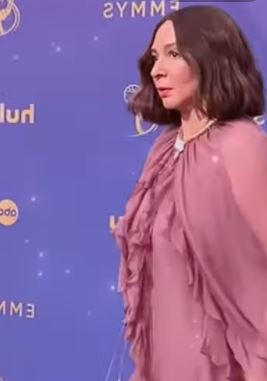
There is a version of Maya Rudolph’s story that follows a straight career path, starting with SNL, moving on to movies and prestige television before amassing a net worth that is currently estimated to be $20 million. That’s the correct version. The majority of what makes her financial trajectory noteworthy is also absent.
In 2000, Rudolph made his debut on Saturday Night Live as a featured player for the last three episodes of the season, which is about as low-key an entrance as the program permits. She spent seven years there. She wasn’t the cast member with the loudest cultural presence or the most viral moments during that time; those things usually belonged to other people. Instead, she created something more difficult to measure: a reputation for dependability, versatility, and the kind of presence that attracts directors. She may have avoided the sophomore slump that befell some of her peers after leaving SNL in 2007 because of this.
Bridesmaids made significant contributions that are still underappreciated. Despite having a relatively small budget, the 2011 movie made $288 million worldwide and went on to become one of the decade’s most talked-about comedies. Lillian, the bride at the center of it all, was portrayed by Rudolph as the emotional anchor rather than the lead or the scene-stealing chaos agent. She completed the task without drawing attention to herself, despite the fact that it is more difficult than it appears. It turns out that this type of restraint has commercial value. The success of the movie gave her access to previously unattainable opportunities.
Voice acting developed into a discreetly profitable side gig. Globally, Big Hero 6 brought in over $657 million. An additional $352 million was added by the Angry Birds movie. Although these numbers don’t directly translate into individual actor compensation, they do show the commercial significance of the projects Rudolph consistently worked on over ten years. Compared to live-action, animation work is consistent, repeatable, and much less physically demanding. It’s a logical addition to a portfolio for an actress who has publicly discussed attempting to maintain some sort of personal equilibrium.
From 2022 to 2024, she executive-produced and starred in the Apple TV+ series Loot, which was a different kind of move. Not only was she performing, but she was also developing intellectual property, constructing infrastructure, and acting as a creative decision-maker with a financial interest in the result. Before Rudolph reportedly started producing independently in late 2023, her production company Animal Pictures, which she co-founded with Natasha Lyonne, supported films like Poker Face and Russian Doll. She was never just waiting for the phone to ring, regardless of the internal dynamics of that breakup.
Without the typical celebrity amplifiers—no lifestyle brand, no fragrance line, and no public marital drama creating tabloid oxygen—it’s difficult to ignore the fact that Rudolph has reached $20 million. Since 2001, she has been in a committed relationship with filmmaker Paul Thomas Anderson; the two have four kids and are not married. Early in 2026, she made headlines for her Broadway debut in Oh, Mary!, where she played Mary Todd Lincoln for ten weeks. That’s a very particular kind of ambition, one that prioritizes craft over profile.
Her five Emmy victories—including multiple wins for voicing Connie the Hormone Monstress on Big Mouth and Outstanding Guest Actress in a Comedy Series for her recurrent role as Kamala Harris on Saturday Night Live—indicate that the industry has recognized what viewers have taken longer to express: she is truly exceptional at a variety of things. What she decides to do next will determine whether or not that range eventually increases her net worth. There isn’t a visible ceiling.
