

Now, there is a moment that occurs almost unconsciously. It becomes challenging, if not impossible, to distinguish one smartphone from another in a crowded electronics store with rows of glowing screens. The patterns blend together. The advancements seem gradual. A suspicion that perhaps the smartphone era—at least as we know it—has already reached its zenith starts to emerge somewhere in that subdued sameness.
If you look closely, the numbers appear to line up. International shipments have slowed, occasionally declining in ways that seem more like a structural change than brief downturns. Upgrade cycles are now three or four years long because people are keeping their devices longer. The excitement has subsided outside of flagship launch events, those meticulously staged spectacles. The advancement of phones hasn’t stopped. It’s because the advancements seem… predictable.
| Category | Details |
| Industry | Consumer Technology / Mobile Devices |
| Core Players | Apple, Samsung, Google |
| Current Phase | Late maturity / saturation |
| Key Shift | Transition from hardware-driven to AI-driven innovation |
| Market Trend | Slowing sales, longer upgrade cycles |
| AI Role | Context-aware assistants, automation, personalization |
| Future Outlook | Smartphone as central AI hub |
| Reference Website | https://www.economist.com |
You can see it in any café, whether you’re in London or Karachi. On devices that are frequently a few years old and still functioning perfectly, people are scrolling, typing, and watching videos. A subtle pragmatism is at work. Increased battery life is important. Storage is important. Cameras are still important. But slightly brighter screens or faster chips? Not so much. There is no longer any urgency.
And then there’s AI, which, strangely, hasn’t quite caught on with consumers despite making all the noise of a purported revolution. Only a small percentage of users actually upgrade their phones for AI features, according to surveys. Many people don’t even utilize them. They are not trusted by some. Companies seem to be pushing AI more than people are. Beneath the surface, however, something is changing.
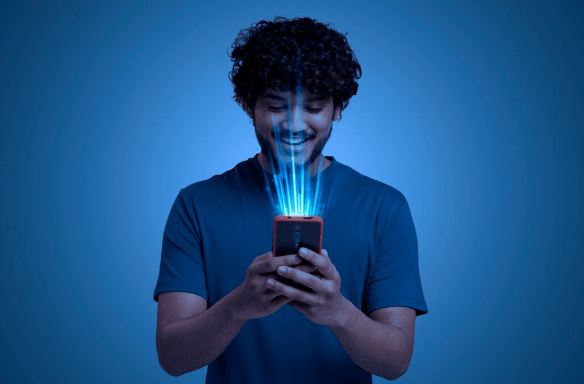
Unlike the initial touchscreen phones, the change isn’t immediately apparent. It is more subdued and quieter. The behavior of phones is starting to change. anticipating as well as reacting. suggesting responses prior to the completion of messages. summarizing emails that are forgotten. modifying battery usage in subtle ways that become apparent over time. As this develops, it’s difficult to ignore the fact that AI is changing the smartphone’s function rather than taking its place.
Smartphones have been tools for years. You launch an application, complete a task, and then close it. It’s a methodical, nearly robotic process. But that structure is beginning to become hazy due to AI. Users are starting to engage with something more fluid—a layer that sits above everything, connecting tasks in ways that feel less fragmented—instead of switching between apps.
A future without traditional apps is currently being discussed, particularly among developers. A digital concierge that responds to requests in a conversational manner. You don’t need to tap through five different interfaces to book a flight, summarize a document, or change your schedule. It sounds ambitious, perhaps even impractical in the near future. However, some of it is already apparent.
One of the most obvious examples is found in photography. Algorithms have subtly replaced lenses and sensors as the main focus. On mid-range devices, night shots that previously required expensive equipment now appear effortlessly. In milliseconds, scenes are recreated, faces are improved, and lighting is adjusted. The picture you take is more than what the camera saw. It is the appearance that the AI determined it should have. Nevertheless, skepticism persists in spite of everything.
Fatigue is a part of it. 5G, foldable, and augmented reality are just a few of the revolutions that consumers have previously been promised, and many of those promises have come slowly or unevenly. Trust is a component of it. Despite all of its potential, AI raises concerns about accuracy, control, and privacy. It’s difficult to ignore the hesitation.
Concurrently, businesses are placing large bets that this reluctance will lessen. On-device AI, which makes phones smarter without totally depending on the cloud, is receiving enormous investment. For AI workloads, new chips are being created. Even pricing strategies are changing, with some businesses implying that sophisticated AI features might eventually cost money. That might be a mistake or a turning point. Because consumers are picky about what they value, if the last few years have demonstrated anything. If it seems necessary, they will pay for it. However, they tend to overlook things that seem excessive.
A larger ecosystem is emerging that goes beyond the phone itself. Wearable technology, AI companions, and smart glasses all promise to enhance or even completely replace the smartphone experience. However, the majority of them still use their phones as their anchor for the time being. It stays in the middle, a little obstinately.
This centrality might last longer than anticipated. Smartphones are useful, not because they are flawless. Well-known. deeply ingrained in day-to-day existence. It would take something fundamentally different, not just better, to replace them. And perhaps AI is attempting to become that. Not a characteristic. Not an improvement. but a complete change in how people engage with technology.
But for the time being, the smartphone is in a unique position—it’s not as exciting as it once was, but it’s also not outdated. Maybe mature. Resolved. waiting. And the next iteration of itself is quietly developing somewhere within it.
