

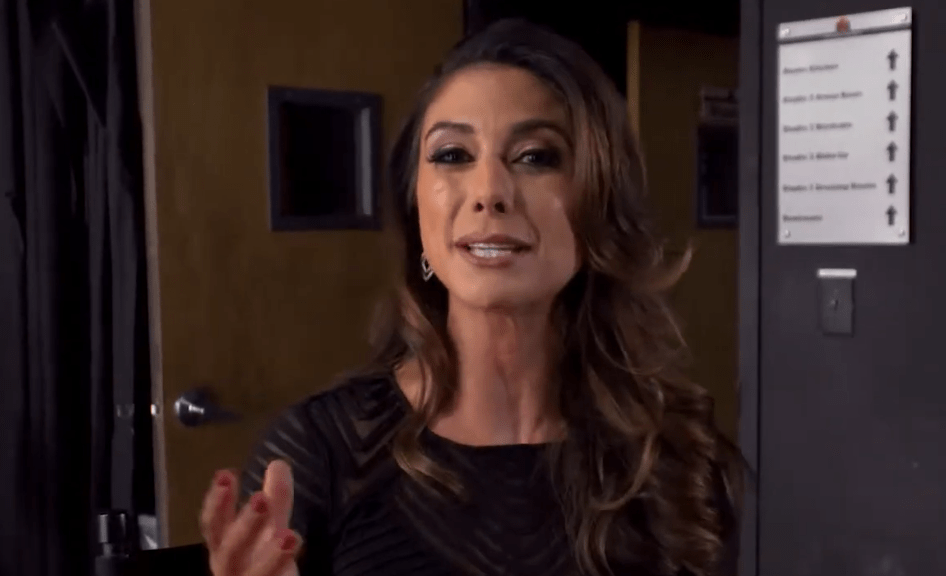
Credit: Court TV
This week, there was a change in the world of televised courtroom drama that longtime viewers noticed almost instantly. The dynamic legal analyst Julie Grant, who hosted “Opening Statements” on Court TV, is leaving the network. This announcement came as a surprise, and based on the online response, there was a lot of confusion.
Neither a glossy press release nor a well-planned farewell segment broke the news. Rather, it emerged in the manner that many contemporary media stories do: through sporadic social media posts, fan comments, and a few subdued confirmations making the rounds in legal news circles. It seemed as though viewers were piecing together the story in real time as they watched the response develop online.
| Information | Details |
|---|---|
| Full Name | Julie Grant |
| Profession | Television Anchor, Legal Analyst, Former Prosecutor |
| Known For | Host of “Opening Statements with Julie Grant” on Court TV |
| Education | University of Akron School of Law |
| Previous Career | Assistant District Attorney, TV reporter/anchor |
| Joined Court TV | 2019 (network relaunch era) |
| Notable Work | Legal commentary, live trial coverage |
| Based In | Atlanta, Georgia (Court TV studio) |
| Field | Law, Journalism, Trial Analysis |
| Reference | https://www.courttv.com |
Julie Grant had become a familiar figure for those who follow courtroom coverage in the same way that sports fans follow playoff brackets. Her program, “Opening Statements,” was typically broadcast from Court TV’s Atlanta studio, where courtroom feeds from across the nation were shown on bright monitors. Seated behind a modern desk filled with piles of case files and legal notes, Grant led viewers through trials that were frequently chaotic, poignant, and even startling.
The format worked because of her background. Grant worked as an assistant district attorney in Allegheny County, Pennsylvania, before the arrival of television cameras. Compared to standard broadcast analysis, her commentary had a slightly sharper edge because of her legal training. It felt less like conjecture and more like someone recalling what it’s like to stand in court when she described the rationale behind a prosecutor’s question or the subtle hesitation in a witness’s testimony.
The path that brought her to Court TV began years earlier in local newsrooms. Before departing in 2019 to join the resurrected Court TV network, Grant was an anchor and legal editor at Pittsburgh’s KDKA-TV. She called the relocation a “dream job” at the time, fusing two passions of hers: law and journalism. It’s clear why she was drawn to the role. A former prosecutor can examine actual trials in real time on very few television platforms.
The arrangement appeared to be successful for a number of years. In an attempt to see if Americans were still interested in live trial coverage, Court TV itself had been brought back after a protracted hiatus. Occasionally, the audience validated their claims. The network’s broadcasts felt like national events once more during significant cases, especially those involving high-profile criminal trials.
Media companies, however, are quick to change course. Additionally, the events of this week indicate that something noteworthy is taking place at Court TV behind the scenes.
According to rumors that are making the rounds among media observers, the network recently underwent a change in ownership, which resulted in program cuts and layoffs. It seems that Julie Grant and other on-air personalities are among those impacted. If the ruling is fully confirmed, it would be a significant change for a channel that relies on well-known courtroom analysts.
Fans’ reactions are striking in their emotional tone. Some viewers claim that they watched Grant’s show every day while working from home, with the sound of the courtroom playing in the background like legal enthusiasts’ talk radio. Others characterize her method as exceptionally lucid, converting intricate legal strategies into simple language.
It’s difficult to ignore the loyalty. In a time when TV stars frequently switch networks, Grant appeared to gain a consistent fan base. Her delivery, which is composed but straightforward and occasionally leans forward as if addressing viewers in private, might be a contributing factor.
Additionally, the response suggests a more general truth about Court TV. When its hosts feel guided through challenging situations, the network flourishes. The experience abruptly shifts when a familiar guide is removed.
It’s unclear exactly what will happen next. Although Grant’s social media presence indicates that she is still passionate about legal storytelling, she has not yet disclosed a comprehensive plan for the future. Given her background as a journalist, educator, and lawyer, she has a number of options.
One option is television. Digital media, where legal commentary has expanded quickly, may be another. Surprisingly large audiences are drawn to independent streaming series and podcasts about criminal trials. It’s easy to see Grant entering that field with fewer network restrictions and the same level of courtroom experience.
Court TV has its own issues in the meantime. After losing well-known hosts, networks that rely on personality-driven commentary seldom make a seamless transition. A few viewers will stick around. Others might gravitate toward rival platforms that provide comparable trial coverage.
Additionally, the larger media environment must be taken into account. Once a specialized television genre, legal analysis is now widely available on streaming services, YouTube commentary, and podcast networks. The way audiences watch those moments is changing, but the courtroom itself hasn’t changed—judges still preside under state flags, juries still lean forward to hear testimony.
It seems as though Julie Grant’s departure from Court TV speaks more about the changing economics of television than it does about any one host. Networks reorganize. Programs vanish. Careers change.
However, the audience’s response also points to another possibility: people develop attachments to voices that help them understand complex narratives. And even a courtroom channel can feel surprisingly quiet when one of those voices abruptly vanishes from the broadcast.
It’s still unclear where Julie Grant will go next. However, based on the response, a large number of viewers are likely to follow.
