

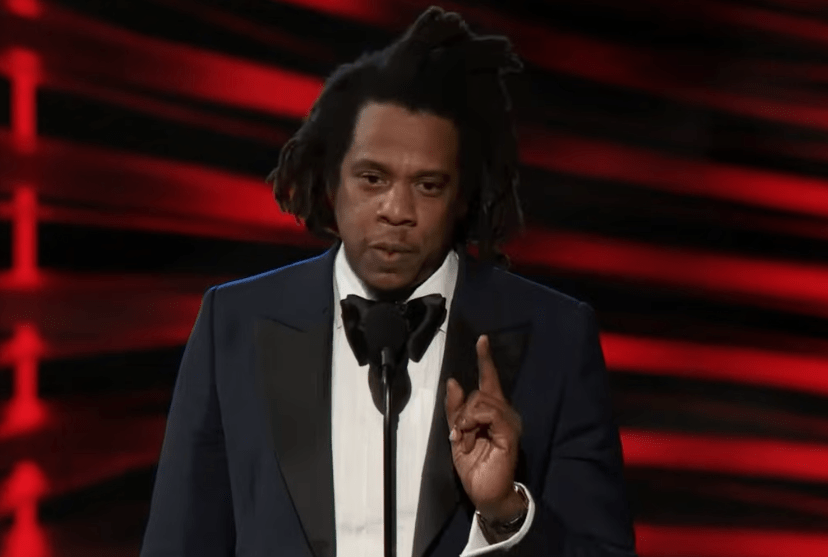
Credit: Rock’n Roll Hall of Fame
Jay-Z was followed for over ten years by a quiet legal storm—a persistent paternity dispute that would not go away despite courts’ repeated refusal to recognize it. At last, the storm has passed. The rapper and business tycoon not only ended the case with a definitive decision, but he also received a $119,235.45 judgment in his favor.
Rymir Satterthwaite, who has openly asserted since the early 2010s that Jay-Z is his biological father, started the legal dispute. In an affidavit, his late mother, Wanda Satterthwaite, claimed to have met Jay-Z, who was 22 at the time, in 1992 when she was 16. She claimed the incident happened at Jay-Z’s aunt’s Brooklyn house, according to court documents.
| Category | Details |
|---|---|
| Full Name | Shawn Corey Carter |
| Known As | Jay-Z |
| Occupation | Rapper, entrepreneur, business executive |
| Legal Milestone | Awarded $119,235.45 in legal fees after paternity lawsuit dismissed |
| Court Ruling Date | January 2026 |
| Case Opponent | Lillie Coley, godmother of Rymir Satterthwaite |
| Legal Grounds | California’s anti-SLAPP statute |
| Source | HOT 97, AllHipHop, Black Enterprise |
Satterthwaite brought several lawsuits over the years in an effort to force DNA testing. Instead of focusing on monetary compensation, he frequently presented the pursuit as an emotional quest for closure. In interviews, he insisted that truth, not attention, was his aim. Nevertheless, none of the cases gained traction in spite of the persistence. A judge in New Jersey forbade him and his godmother from bringing new lawsuits without permission in 2022 after courts refused to step in.
The case persisted even after that. Lillie Coley, Satterthwaite’s godmother, took the initiative to file her own complaint in federal court in California after he withdrew it in 2025 without providing an explanation. Her lawsuit included new allegations of misconduct in addition to many of the same ones, claiming that state officials and Jay-Z had blocked her efforts using out-of-date rulings and that the legal strategies had driven her into financial ruin.
The judge’s answer was very clear: there was no legal standing for the case. Coley is unable to amend or refile the complaint because it was dismissed with prejudice. Although that decision was landmark in and of itself, the ramifications went beyond that.
The case was pursued by Jay-Z’s lawyers under California’s anti-SLAPP statute, which shields people from retaliatory lawsuits that violate their rights to free speech and legal participation. Coley was ordered to pay Jay-Z’s legal fees in full by the judge, who sided with his team.
It was a calculated, silent move. And incredibly efficient.
Jay-Z’s attorneys reframed the case as an abuse of legal process rather than just a nuisance by utilizing anti-SLAPP protections. As a result, they were able to recover almost $120,000 in fees, which is not often the case in cases involving personal accusations.
It had a significant financial impact on Coley. She stated in her filings that a case-related lien cost her $25,000 when she sold her house. She maintained that she filed for bankruptcy as a result of numerous setbacks and legal pressure. The court remained unconvinced.
The 31-year-old Satterthwaite still expresses his annoyance in public. He started criticizing the court’s ruling and the application of the anti-SLAPP statute on social media at the beginning of 2026. He maintains that his main demand—a DNA test that, in his opinion, would settle everything—was not met by the legal system. Although the courts have consistently denied the legal validity of his claims, his sentiment is very personal.
The fact that the case has been heard by courts in several states, including the Supreme Court of New Jersey, and that they have all come to the same conclusion—that there are insufficient grounds to proceed—stuck with me.
For his part, Jay-Z has said very little about the case. The legal filings have all the space they require to speak because of this silence, whether it was deliberate or just a choice. Over time, the rulings have reinforced his legal team’s persistent framing of the dispute as unfounded.
Coley even tried to prevent Jay-Z from pursuing court sanctions in the most recent filing by asking for a restraining order, arguing that the pursuit of penalties was retaliatory. That motion was also turned down.
Judges from various jurisdictions have now made resolute statements that are layered throughout the legal record and all point to the same conclusion. Furthermore, the law is based on facts and clarity, whereas public opinion may persist on unresolved feelings or unanswered questions.
In addition to defending his stance, Jay-Z reclaimed the narrative by utilizing legal safeguards that were initially intended to protect free speech and equitable participation. Given how closely history, sentiment, and celebrity are intertwined, that is especially inventive.
Some people are still debating whether the issue is resolved because a DNA test was not performed. However, speculation is not the basis for closure in the courtroom. It depends on precedent, structure, and appropriately applied legal norms.
This result upholds the legal limits surrounding perseverance, proof, and accountability in addition to ending a private dispute. It serves as a stark reminder that long-standing charges still need legal support in order to proceed, regardless of how strongly felt they may be.
Although Jay-Z’s win wasn’t particularly noteworthy, it was unquestionable. After numerous rulings by the courts, the case is now closed both procedurally and financially. The discussion might go on somewhere else, but not in a courtroom. And not at his expense.
