

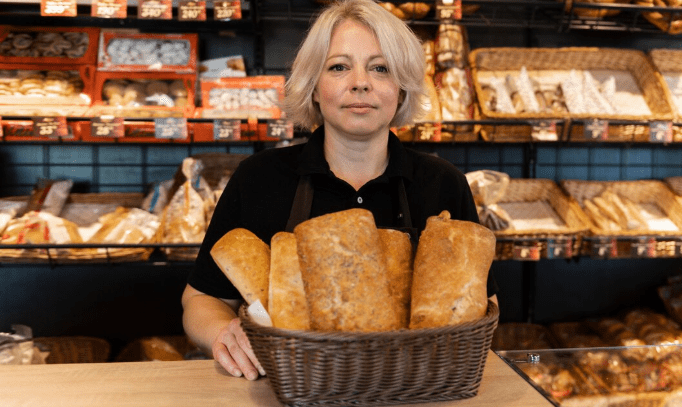
On a bright afternoon in Redondo Beach, the line at Little French Bakery curls out the door. The aroma of espresso and butter permeates the space, and croissants, kouign-amann, and seasonal fruit tarts are listed in looping script on a chalkboard menu. One Instagram reel at a time, The Little Cake, another tiny bakery a few miles away, is growing its own following by piping frosting onto cupcakes under pendant lights.
The two are now battling it out in federal court rather than exchanging pastry tips.
| Plaintiff | Little French Bakery LLC |
|---|---|
| Defendants | The Little Cake LLC & Monica L. Goncalves |
| Court | U.S. District Court, Central District of California |
| Case Number | 2:26-cv-00839 |
| Date Filed | January 27, 2026 |
| Claims | Trademark Infringement, False Designation of Origin |
| Locations Involved | Redondo Beach & Los Angeles County, CA |
| Reference | https://www.law.com |
The Little Cake and its owner, Monica L. Goncalves, are accused of trademark infringement and false designation of origin in the lawsuit, which was filed on January 27 in the U.S. District Court for the Central District of California. Little French Bakery claims in the complaint that after opening for business in October 2025, the newer bakery purposefully imitated its branding, merchandise, and advertising approach, causing documented consumer confusion.
The legal arguments might be more complex than they seem on social media. However, the response on the internet has been quick and generally unsupportive of the plaintiff.
Customers frequently ask the same question when browsing Instagram and TikTok: How can you trademark “little”? Some commenters liken it to a boba shop suing another for using the word “boba” in its name. Others say they find it hard to believe that two bakeries, one in Redondo Beach and the other farther out in Los Angeles County, could mislead customers.
Trademark law, however, is not based on feelings. It activates market overlap, branding similarities, and the possibility of confusion. According to the complaint, The Little Cake filed its own trademark application and kept using branding that mirrored Little French Bakery’s style after getting a cease-and-desist letter in December 2025. Details that most customers never see will determine whether or not that claim is valid.
It’s difficult to overlook the attention to detail when you’re standing outside Little French Bakery one morning and seeing regulars leave with white pastry boxes that have been neatly tied with twine. Here, branding is important. The store’s name appears on cream-colored packaging in a serif font. Instagram posts frequently feature rustic wood tables and soft lighting. The owner might understandably feel defensive if another bakery adopted a similar color scheme and rhythm.
However, it is also unsettling to witness a small business suing another.
These are local stores, not global corporations fighting over logos. Regulars are known by name to their staff. They have narrow margins. Even before a judge makes a decision, the cost of legal defense alone can reach tens of thousands of dollars. Even a “frivolous” claim wastes time and money, according to a Reddit commenter who claimed to have dealt with a small business lawsuit of their own.
Additionally, the cultural moment is important. In the post-pandemic economy, small businesses—particularly those in the food industry—have been portrayed as local heroes for surviving lockdowns, escalating ingredient costs, and erratic foot traffic. Some observers believe that suing another independent store is like breaching an unwritten agreement.
However, there is a purpose for trademark law. Often, a company’s most valuable asset is its brand identity. Names and visual cues may blend in crowded markets like Los Angeles, where bakeries are opening up more quickly than strip mall renovations. It’s not insignificant if customers are actually perplexed, entering one store believing it’s connected to another.
Collateral confusion has already resulted from the lawsuit’s filing. Little France Bakery, an unaffiliated bakery, made it clear on Instagram that it was “completely unrelated” to the case. Even though it feeds criticism, that kind of confusion strengthens the plaintiff’s case.
Whether the case will go to trial or end amicably is still up in the air. Rebranding agreements or coexistence terms are frequently involved in trademark cases that end before a courtroom showdown. However, social media has altered the equation. Nowadays, public opinion is formed almost instantly, putting pressure on companies to protect both their reputations and their legal positions.
One gets the impression that something bigger is going on as you watch this play out. The conflict between community development and intellectual property protection is not new. Similar conflicts frequently arise in the fields of fashion, technology, and even craft beer. The intimacy is what makes this place feel different. Software is not a croissant. A bakery serves as a meeting spot.
The proportionality issue is another. As claimed, is this an instance of intentional mimicry? Or is it a case where, in a tradition-based industry, common descriptors like “little,” “French,” and pastel branding naturally overlap? Perhaps the court will draw a distinct line. It’s also possible that the answer will stay unclear.
Customers are still waiting in line for sugared brioche and laminated dough. Most of them are probably drinking lattes and deciphering federal case numbers. However, they are listening to the tone. Foot traffic can be influenced by social media backlash just as much as by positive reviews.
The Little French Bakery lawsuit may ultimately depend on technical definitions of confusion and similarity. However, the emotional undercurrent—the defensiveness some justify, the sense of betrayal others feel—may endure longer than any decision.
Because brand identity is personal in a local bakery. And the consequences of flour-dusted dreams colliding in court go beyond the legal briefs.
