

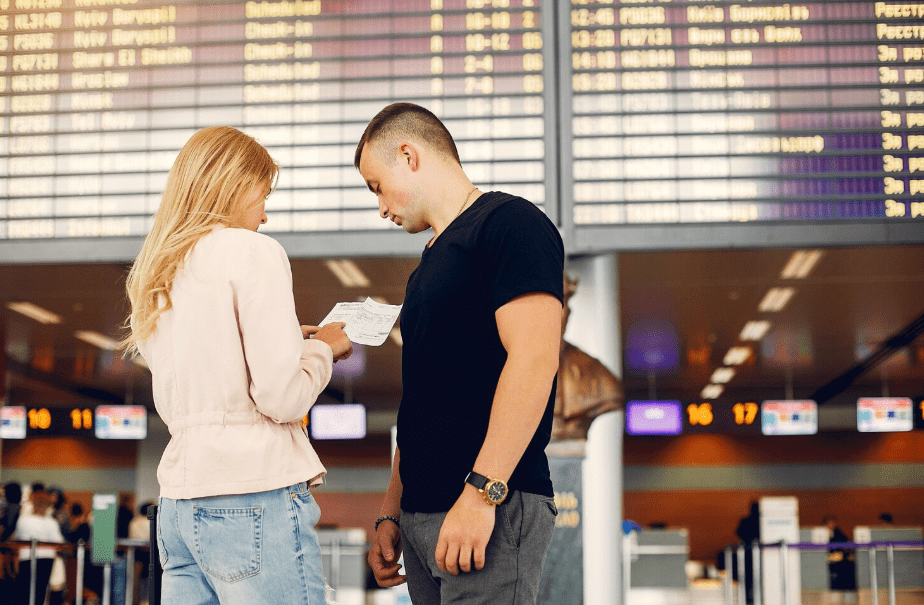
Although the size of Atlanta’s airport is always overwhelming, the lines are what really stand out these days. Long, sluggish, tense lines that seem to go farther than they should. There’s a feeling that something more serious than normal traffic congestion is at work as you watch them slowly move forward.
Despite its size, Hartsfield-Jackson Atlanta International Airport was considered efficient for many years. Despite its status as the world’s busiest airport, the system was generally effective. Twenty minutes at security seemed doable, almost predictable. However, it seems like that rhythm is faltering. Wait times have recently fluctuated greatly, ranging from less than 30 minutes to more than two hours, depending on staffing levels, the time of day, and more unpredictable factors.
Hartsfield-Jackson Atlanta International Airport (ATL)
| Category | Details |
|---|---|
| Name | Hartsfield-Jackson Atlanta International Airport |
| Location | Atlanta, Georgia, United States |
| Airport Code | ATL |
| Status | World’s Busiest Airport (by passenger traffic) |
| TSA Authority | Transportation Security Administration (TSA) |
| Average Wait Time (Normal) | 20–25 minutes |
| Peak Wait Time (Recent Reports) | Up to 2.5+ hours |
| Main Issue | TSA staffing shortages during government shutdown |
| Official Website | https://www.atl.com/times |
The current situation may have less to do with Atlanta specifically and more to do with the system as a whole. Many TSA officers are working without pay due to a partial government shutdown, and some are not showing up. According to reports, absentee rates are rising into the double digits and occasionally even higher at particular checkpoints. You can practically feel the voids as you pass the security lanes: fewer officers, fewer open lanes, and increased pressure on those who remain.
Tension seems to be highest in the early mornings. Lineups can last for several hours at 5:30 a.m., when families with busy schedules and business travelers congregate. Estimated times are flashed on screens, but even those are ambiguous. Whether those figures represent reality or are merely an average from more tranquil days is still up for debate. Some travelers move their weight from one foot to the other while continuously checking their watches to see if they will make their flight.
The experience is also strangely uneven. One checkpoint can move quickly while another hardly moves at all. There is a sort of unofficial migration within the airport when travelers try to change terminals or checkpoints after hearing rumors from other people in line. Although airport officials have cautioned against this, urgency usually takes precedence over directives.
It’s remarkable how erratic everything seems. Wait times reportedly ranged from 10 to 20 minutes on one afternoon—nearly typical. They surged for more than an hour by the following morning. What seems to worry people the most is that inconsistency. Travelers can anticipate delays. Making plans for uncertainty is more difficult.
There’s a broader pattern emerging across the United States, and Atlanta is simply the most visible example. Similar swings are occurring at airports in Houston, New York, and other places, but Atlanta’s sheer volume makes any disruption more noticeable. The consequences spread swiftly when even a tiny portion of TSA employees are absent. A precarious balance is created by thousands of passengers, tightly scheduled connections, and few options.
It’s difficult to ignore the quiet anxiety as you watch families in line—parents scanning boarding passes, kids sitting on suitcases. Even on domestic flights, some people now arrive three hours early. It used to seem excessive. It’s beginning to feel essential now.
Though not as much as one might anticipate, technology does provide some assistance. Apps like MyTSA try to estimate wait times, and the airport’s official website offers real-time updates. However, those tools rely in part on historical data, which may not accurately reflect the reality of the present. Yesterday’s trends don’t really matter when staffing is unpredictable.
Additionally, there is a slight behavior change. In an effort to avoid the worst of the lines, more travelers are registering for TSA PreCheck or comparable services. They do move more quickly in many situations. However, when staffing levels drastically decline, even those lanes are vulnerable. According to some reports, all passengers—regardless of status—end up being diverted into fewer active lanes during peak disruptions.
The events at Atlanta’s airport seem to be a test of the system as a whole. The airport itself is still the same. Both the procedures and the infrastructure are still in place. However, it appears that the human element—staff consistency, morale, and availability—is under pressure.
There is a feeling that once funding problems are fixed and staffing levels stabilize, this period may end. Alternatively, it might last longer than anticipated and change people’s perceptions of flying through important hubs. Even if it means longer trips overall, it’s difficult not to wonder if passengers will begin rerouting through smaller airports.
For the time being, however, Atlanta is still what it has always been: essential to the network, unavoidable for many routes, and, more and more, a place where time seems less predictable. As you stand in those lines and observe the gradual approach of the scanners, a silent realization begins to take hold.
Nowadays, flying is more than just getting somewhere. It’s about making it through.
