

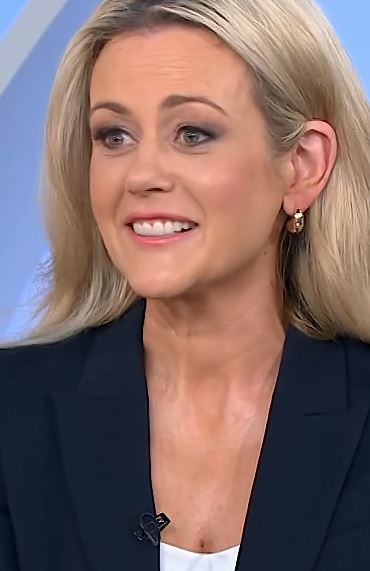
On screen, Rachael Carpani always exuded a disarming brightness that didn’t seem staged. She is most likely remembered by Australians who grew up watching McLeod’s Daughters as Jodi Fountain, the youngest Drovers Run woman who laughed first and worried later. When her family announced her passing on December 15th, it felt like the wrong kind of full circle. She was forty-five. Chronic illness was the official term. Scattered throughout her own old Instagram posts, the unofficial word was something heavier: a body that had been silently battling itself for the majority of her adult life.
On behalf of their parents, Tony and Gael Carpani, her sister Georgia posted the statement. The wording was cautious, almost delicate. She “unexpectedly but peacefully passed away after a long battle with chronic illness, in the early hours of Sunday, 7th December.” The family stated that the funeral, which is set for December 19, will be a modest event and requested privacy. The illness was not identified. In and of itself, that decision has sparked some sensitive and less sensitive speculation. Within hours, Reddit threads filled up. Half-memories of an October 2021 Instagram video in which she sat in front of the camera and finally uttered the words endometriosis and adenomyosis were shared by fans.
| Full Name | Rachael Anna-Maie Carpani |
| Born | 24 August 1980, Sydney, New South Wales, Australia |
| Died | 7 December 2025 (aged 45), Sydney, Australia |
| Cause of Death | Long battle with chronic illness; family confirmed via Instagram. Publicly, she had spoken about endometriosis and adenomyosis for over two decades |
| Occupation | Actress |
| Years Active | 2000–2025 |
| Best Known For | Jodi Fountain-McLeod in McLeod’s Daughters (2001–2009) |
| Other Notable Work | Against the Wall (Lifetime), NCIS: Los Angeles, The Glades, Home and Away, The Way Back |
| Education | The Hills Grammar School, Sydney |
| Past Partner | Actor Matt Passmore (2006–2011) |
| Awards | Nominated for Gold Logie and Most Popular Actress (2007) |
| Funeral | Private service, 19 December 2025 |
It’s worth considering that video. For a while, she had not used social media. She appeared paler and thinner when she returned. She revealed to her fans that she had been suffering from chronic pain since she was thirteen and had received a diagnosis in her mid-30s. Thirteen. She used the expression “white-knuckling it,” which you only use when you’ve truly done something, like gripping the edge of a kitchen counter, grinning at a wedding, or telling a director you were okay. She talked about attending weddings and birthday parties like she was climbing Everest. Looking back at her posts now, it seems like she was sharing something significant and hoping people would pay attention.
In 2007, she quit McLeod’s Daughters to try her luck in Los Angeles, where very few people knew who she was. Last year, she told Stellar magazine that she had pleaded with her agent to send her to “the acting equivalent of Siberia.” She had no desire to become well-known. She desired employment. Carpani never quite seemed to enjoy the loudness of Australian television’s celebration of its stars, so that admission says a lot. She established a solid, mid-level career in the United States with roles in NCIS: Los Angeles, The Glades, Against the Wall on Lifetime opposite her ex-partner Matt Passmore, and The Way Back with Ben Affleck.
Eventually, she returned home. She debuted on Home and Away in 2024 as Claudia Salini, a short recurring role that would prove to be her final one. On The Morning Show, she described it as “one of the most enjoyable times I’ve ever had on set.” At the time, it sounded like a gentle return. In retrospect, it seems like a farewell that she was unaware she was writing.
Since her passing, well-known people have paid tribute to her. Bridie Carter referred to her as “the baby of the MD family,” while Matt Passmore wrote that getting to know her was the greatest gift. Because the warmth was genuine, the grief feels genuine. Although endometriosis rarely results in death, its associated conditions—pain, fatigue, surgeries, and mental burden—accumulate. Nobody outside the family seems to know if that’s what ultimately killed her. They shouldn’t have to, and the Carpanis aren’t saying.
Observing her previous interviews, what sticks out is how frequently she chose to talk about painful topics, such as women’s health, domestic abuse, and the medical system, which she claimed was “woefully behind.” She was one of the few public figures who utilized a platform she wasn’t particularly interested in. Without her, Australia is a little quieter. It’s difficult to ignore it.
