

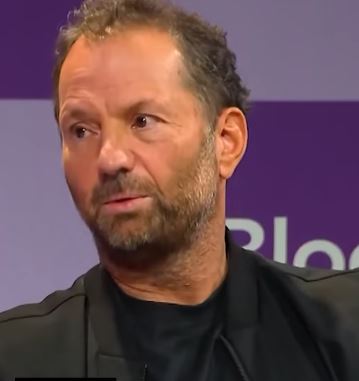
Michael Rapino is the quiet contradiction at the top of the live music industry. The majority of fans purchasing tickets for Taylor Swift or Bad Bunny couldn’t choose him from a lineup, even though the man owns the company that sets the price for almost every major tour on the planet. He probably likes it that way. By the spring of 2026, his estimated net worth sits somewhere in the neighborhood of $970 million, with some trackers pushing it just past $997 million on stronger LYV trading days. It’s the kind of figure that is just a hair’s breadth away from becoming a billionaire.
Cash makes up the majority of that wealth. It’s stock. Rapino’s ownership stake in Live Nation Entertainment is approximately 4.2 million shares, and the figure fluctuates based on the share price every Tuesday. Additionally, he has sold a sizable number of shares over the years—roughly 2.6 million, according to insider trade trackers—which is how a former Thunder Bay beer representative ends up on the same compensation lists as the executives of Alphabet and JPMorgan. He received the fifth-highest compensation of any American CEO in 2022, totaling $139 million. Even though it dropped to $23.4 million in 2023, it was still 831 times the median salary of a Live Nation employee. Critics frequently return to that gap.
| Field | Details |
|---|---|
| Full Name | Michael Rapino |
| Date of Birth | May 1, 1967 |
| Age | 59 |
| Place of Birth | Thunder Bay, Ontario, Canada |
| Nationality | Canadian-American |
| Education | Bachelor of Business Administration, Lakehead University (1989) |
| Occupation | President & CEO of Live Nation Entertainment |
| Years Active at Live Nation | Since 2005 |
| Company Ticker | NYSE: LYV |
| Spouse | Jolene Blalock (m. 2003) |
| Children | 3 sons |
| Residence | Los Angeles, California |
| Estimated Net Worth (2026) | Roughly $970 million to $997 million |
| Major Stock Holding | ~4.2 million shares of Live Nation Entertainment |
| Notable Compensation Year | $139 million total comp in 2022 |
| Other Board Role | Sirius XM Holdings, Director |
| Philanthropy | Co-founder, Rapino Foundation |
Rapino’s supporters might contend that he earned it the hard way. The chair was not inherited by him. He spent ten years at Labatt Breweries, then co-founded a small Canadian promoter called Core Audience Entertainment in the late 1990s, which got swallowed by SFX, which got swallowed by Clear Channel, which eventually spun off the concert business as Live Nation in 2005. Since then, he has been at the top. The 2010 merger with Ticketmaster — the deal that sealed the company’s reputation, for better and worse — was his. So was the acquisition of Bonnaroo, of House of Blues, of artists’ management deals stretching from Madonna and U2 to Lady Gaga and Jay-Z.
The recent events are the more difficult part. On April 15, 2026, a federal jury in New York found Live Nation had operated as an illegal monopoly over live events, a verdict that came out of a Justice Department lawsuit filed back in 2024. During the trial, a recorded phone call surfaced in which Rapino, by the prosecutors’ account, personally pressured a former Barclays Center executive against switching from Ticketmaster to SeatGeek, warning that tours could quietly disappear. On the stand, he had denied making threats. On the tape, it stated otherwise. It’s the kind of moment that lingers — the CEO of the world’s biggest concert company, caught sounding like the heavy in his own story.
Watching this unfold, it’s hard not to notice how little the verdict has dented his personal balance sheet so far. LYV has wobbled, not collapsed. Investors seem to believe the company is too embedded in the touring economy to be broken up quickly, even if remedies are coming. There’s also a separate version of Rapino visible from a distance — the film producer behind A Star Is Born and the HBO documentary Believer, the philanthropist who, with his wife, the actress Jolene Blalock, runs the Rapino Foundation. Whether that version softens the public picture is another question.
What his net worth really represents, in the end, is the price of being indispensable to an industry that doesn’t trust him. The concerts keep selling out. The costs continue to rise. The man in the middle continues to cash the equity for the time being. It’s still unclear whether that holds through the next antitrust ruling, or whether 2026 turns out to be the high-water mark.
