

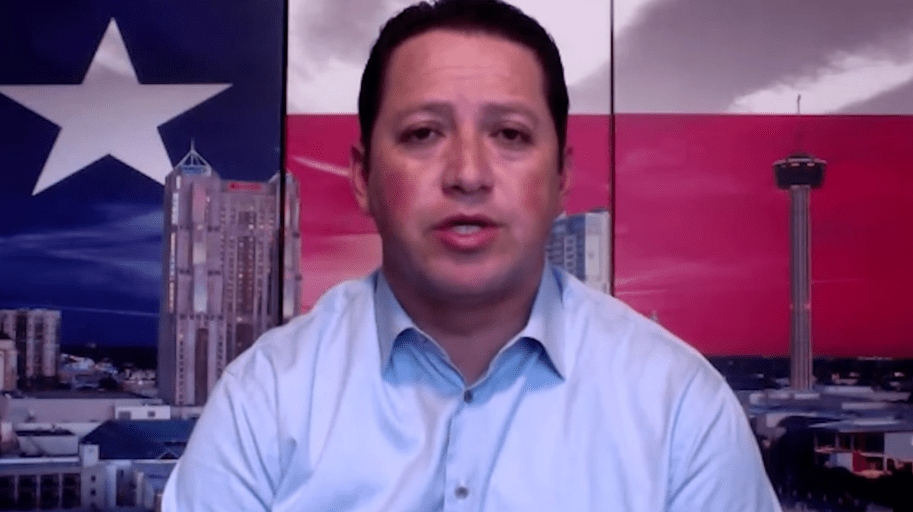
Credit: KENS 5: Your San Antonio NEWS Source
Tony Gonzales visited Laughlin Air Force Base on a recent afternoon in Del Rio, Texas, where he shook hands with aspiring pilots and pledged to safeguard military facilities under the expansive Texas sky. Behind him, flags snapped in the blustery wind. For a former Navy Master Chief, the scene was familiar: orderly, disciplined, and patriotic. However, a much less controlled story was developing in Washington, just a few hundred miles away.
Gonzales, a Republican who has served as the representative forTexas’s expansive 23rd Congressional District since 2021, has made service a central part of who he is. A father of six, a retired Navy cryptologist, and the head of the House’s Hispanic Conference, he frequently frames his work in terms of national defense and border security.
| Label | Information |
|---|---|
| Full Name | Ernest Anthony Gonzales II |
| Known As | Tony Gonzales |
| Date of Birth | October 10, 1980 |
| Age | 45 (as of 2026) |
| Party | Republican Party |
| Office | U.S. Representative, Texas’ 23rd Congressional District |
| First Elected | 2020 (Serving since 2021) |
| Military Service | U.S. Navy Master Chief (Ret.), Cryptologist |
| Residence | Texas |
| Official Website | https://gonzales.house.gov |
It seems as though he sees politics as just another deployment—messy, to be sure, but purpose-driven. However, the orderliness of military life isn’t always easily transferred to Capitol Hill.
His district includes ranchland, border towns, and military installations and extends from the outskirts of San Antonio to the Rio Grande. With its faded storefronts in Uvalde, dusty highways close to Eagle Pass, and new suburban developments creeping west, driving through it is like traveling across multiple Texases at once. In this complex terrain, Gonzales has positioned himself as a pragmatic conservative, which occasionally irritates his party’s more conservative members. When he narrowly defeated gun rights influencer Brandon Herrera in a 2024 Republican runoff by less than 400 votes, that independence almost cost him his seat.
Gonzales is now under investigation due to claims involving a former employee, just as another primary approach. SeveralHouse Republicans have called for his resignation after text messages that were purportedly taken out by forensic analysis went viral. Gonzales has called the incident a coordinated political attack and denied any wrongdoing.
It remains uncertain if the current investigations, conducted by the Office of Congressional Conduct as well as at the state level, will change the course of his career. However, the harm is already apparent, at least politically.
Colleagues in Washington have reacted differently. Thomas Massie and Lauren Boebert are among those who have publicly called for his resignation. Insisting that investigations be allowed to conclude, House Speaker Mike Johnson has adopted a more procedural approach. This prudence is a reflection of the party’s extremely narrow majority, where each seat is extremely important. It could upset delicate legislative math if one member were to leave, especially in a competitive district.
It’s difficult to ignore how swiftly political reputations can change as you watch this play out. Just a few months ago, Gonzales was posting about high school art competitions in TX-23, border alerts for U.S. citizens in Mexican states, and agricultural programs.
His social media accounts combined small-town visits—county treasurers in Washington, feed yard closures in Lubbock—with policy updates. It had a steady, nearly regular rhythm. These days, it seems like a louder, more disruptive narrative is competing with each post.
Gonzales has had a tense relationship with the House Freedom Caucus for a long time. He has been charged by some conservatives with not being sufficiently devoted to the party’s most aggressive faction. Deeper discontent is suggested by their support of Herrera before the March primary. It’s possible that the controversy has only intensified an internal conflict that was already going on. Political disputes rarely center on a single issue; instead, they develop gradually, layer by layer.
In Southwest Texas, however, responses seem more nuanced. Practical issues like trade disruptions, immigration flows, and federal infrastructure funding are frequently given top priority in border communities. Despite national headlines, Gonzales has been repeatedly elected by voters there. Some constituents seem to keep personal accusations and policy performance apart, at least until investigations yield conclusive results. It’s unclear if that division will still exist in 2026.
Resilience is the more general question that looms over all of this. Gonzales joined Congress at a time of extreme polarization, negotiating leadership conflicts, border crises, and impeachment discussions. Visibility is rewarded in that setting, but mistakes are quickly penalized. He may have been accustomed to pressure from his military experience, but political upheavals are unpredictable compared to combat operations. They persist, hardening perceptions and reshaping alliances.
If the investigations are concluded without further escalation, this episode might end up becoming a footnote—a challenging chapter that fades. It could also be a watershed moment, especially if primary voters decide they prefer a different form of representation.
The 23rd District of Texas has always been competitive, defying simple partisan assumptions due to its geography and demographics. Gonzales’ future is similar to that of his district in that it is broad, uncertain, and influenced by factors greater than any one campaign.
Before the next vote, reporters frequently congregate outside the Capitol under its white dome to exchange rumors. Lawmakers bustle through marble hallways inside, their phones ringing and their faces calm. Tony Gonzales is negotiating policy discussions while dealing with political and personal scrutiny somewhere in that whirlpool. The result has not yet been written. And that uncertainty might be the only thing that is constant in contemporary American politics.
