

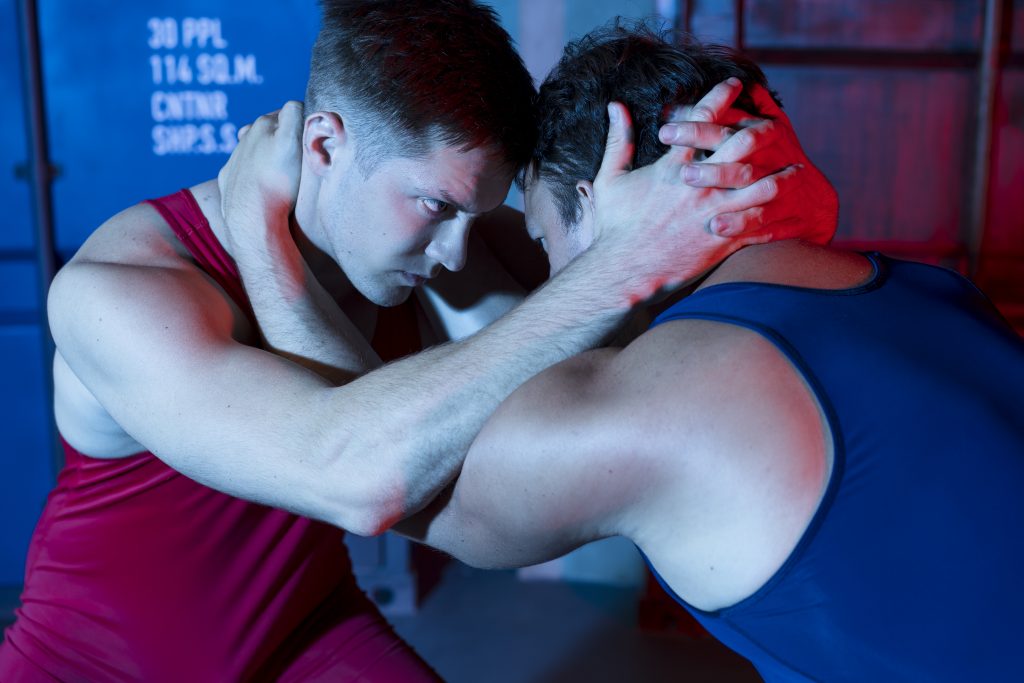
College wrestling fans have been circling one date with unusually acute attention in recent days. Penn State, ranked #1, is hosting No. 2. Ohio State was more than just another dual on the schedule; it was a matchup between unbeaten teams that brought history, ambition, and a quantifiable sense of expectation.
Like a swarm of bees finding rhythm before taking off, the noise level gradually increased as the Bryce Jordan Center filled up early. Bonus points, lineup strategy, and whether Ohio State’s front-loaded weights could quickly shift momentum were among the topics of conversation.
| Key Detail | Information |
|---|---|
| Event | No. 1 Penn State vs. No. 2 Ohio State wrestling dual |
| Date | February 13, 2026 |
| Venue | Bryce Jordan Center, University Park, Pennsylvania |
| Final Score | Penn State 36, Ohio State 5 |
| Records Entering | Penn State 13-0; Ohio State 17-0 |
| Stakes | Big Ten regular-season title and undefeated seasons on the line |
| Result Impact | Penn State clinched the Big Ten regular-season championship |
Penn State had a winning streak of more than six years going into the game. Ohio State, riding a program-best run, came in undefeated. On paper, the game felt a lot like a postseason preview crammed into a February night.
Luke Lilledahl and Nic Bouzakis squared off in the 125-pound opening bout. It was tense, tactical, and quick—the kind of fight where a single mistake can make all the difference. Lilledahl won 4-1 in a sudden victory, a small margin that seemed much bigger in the big picture.
Despite their youth, Marcus Blaze and Ben Davino wrestled with the poise of seasoned pros at 133. Blaze prevailed 3-2 after the fight went into tiebreakers. The home team’s confidence increased noticeably as a result of the crowd’s remarkably effective response to the change.
At 141, Jesse Mendez responded with a significant 18-2 ruling for Ohio State. He gave the Buckeyes a reminder that their lineup had firepower that could change the scoreboard with an extremely effective and forceful performance.
However, the pivotal corridor was the middle weights.
Penn State moved with an almost engineered precision from 149 to 197. A technical fall was scored by Shayne Van Ness. With one decisive turn, PJ Duke turned tension into momentum and pinned his opponent at 157.
Mitchell Mesenbrink kept up his season-long trend of earning bonus points, using a strategy that has significantly improved from the previous campaign. Following at 174, Levi Haines produced a commanding major decision that demonstrated Penn State’s roster depth.
Halfway through the dual, I was shocked by how rapidly the gap had grown and found myself looking at the scoreboard.
When Rocco Welsh faced his old teammates at 184, it added a level of narrative intrigue that is impossible to quantify with statistics alone. He won a close 7–6 decision, and the subsequent handshake was courteous but tinged with familiarity.
Josh Barr’s crucial choice at 197 essentially decided the match. The overall outcome was already determined by the time the heavyweight bout ended with Ohio State’s Nick Feldman winning by a slim margin.
Nine out of ten fights were won by Penn State. The final score of 36-5 demonstrated both control and victory.
The Penn State wrestling program has established a structure that feels incredibly resilient over the last ten years, which is bolstered yearly by recruitment, development, and a culture that values internal competition. Cael Sanderson, the head coach, has frequently talked about how much he enjoys big games, and his players competed with poise that seemed remarkably constant from the first whistle to the last.
Despite ending an undefeated season, Ohio State’s progress was not undone by the defeat. The Buckeyes showed tenacity in crucial areas and are still in a strong position to compete nationally. Dual meets in wrestling are used to gauge depth, but March tournaments have the ability to swiftly reframe stories.
That night’s atmosphere was especially telling. An indoor collegiate wrestling event saw record-breaking attendance, indicating a significant increase in interest in this rivalry. Parents leaned forward nervously, students stood shoulder to shoulder, and former wrestlers nodded gratefully as technical exchanges took place on the mat.
The win gave Penn State the opportunity to secure the Big Ten regular-season championship in the context of conference races. The program has had very clear standards since the beginning of its current streak: attack first, go for bonus points, and treat every weight class as vital.
Ohio State came in with the intention of upsetting that rhythm. And the margin felt fragile for a couple of fights. The middle lineup for Penn State, however, was noticeably deeper and faster, stacking points in a way that made reversal difficult.
Similar to team projects, dual meets rely on group participation. One weight must make up for the other if the first one falters. Penn State’s lineup worked like a very well-oiled machine this evening, with each wrestler supporting the others and increasing the pressure over time.
The coaching staff of the Buckeyes will probably go over the tape with an eye toward opportunities and adjustments, especially in order to prepare for the postseason brackets. In wrestling, progress frequently happens by tiny increments—a ride that is prolonged by seconds, an escape that is timed differently.
Penn State has developed a particularly novel strategy for long-term success by combining seasoned upperweights with self-assured freshmen. This combination has been incredibly successful in maintaining the program’s lead over talented competitors while still improving depth.
After the last fight, the mat cleared and the crowd lingered for a quiet moment. The energy didn’t go away right away. Slowly, like steam rising after a grueling practice, it settled.
Although the outcome was clear-cut, the larger narrative is still alive.
Ohio State will reorganize, hone strategies, and bring lessons learned into postseason play that can be especially helpful. Penn State, on the other hand, continues its winning streak and reaffirms the high and ambitious expectations.
These kinds of matches accomplish more than just ranking. They demonstrate resilience, put preparation to the test, and show how programs change under duress.
Penn State’s structure was remarkably dependable, its depth significantly enhanced, and its trajectory was clearly upward on this February evening.
Nevertheless, the season goes on, bringing with it new rivalries, chapters, and chances for both programs to improve upon what they have already established.
