

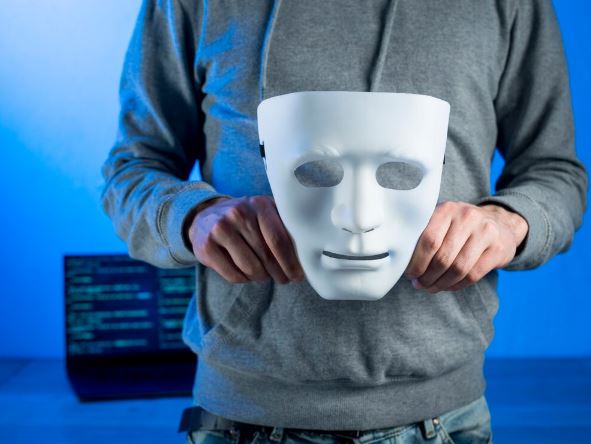
A political advisor recently watched a video clip that was making the rounds on social media, which initially appeared to be a scandal on a chilly London morning. A well-known politician was seen in the video making a ridiculous remark during what appeared to be a private meeting. The lighting was realistic. The voice sounded correct. Even the clumsy hand gestures seemed genuine.
However, it wasn’t authentic.
Artificial intelligence had created the video, which was put together using synthetic voice modeling and snippets of public footage. It received millions of views in a matter of hours. The rumor had already developed an odd online afterlife by the time fact-checkers refuted it.
| AI regulation, watermarking, fact-checking systems, and digital literacy | Information |
|---|---|
| Topic | AI-Generated Disinformation and Democracy |
| Technology | Generative AI, Deepfakes, Synthetic Media |
| Key Concern | Manipulation of public opinion and erosion of trust |
| Global Trend | Millions of AI-generated videos and fake content circulating online |
| Primary Threat | Election interference, political polarization, misinformation |
| Key Institutions Studying the Issue | Carnegie Endowment for International Peace, Journal of Democracy |
| Notable Concept | “Liar’s Dividend” — the idea that fake media undermines trust in all media |
| Policy Responses | AI regulation, watermarking, fact-checking systems, digital literacy |
| Reference Website | https://carnegieendowment.org |
Such moments are now unnervingly frequent. Once limited to research labs and obscure engineering conferences, artificial intelligence now creates convincingly human-looking images, videos, and news articles. Even though the technology has a lot of potential, it is also subtly changing the information landscape that democratic societies rely on.
Democracy has never been quiet. Whispered rumors, partisan newspapers, and campaign slogans are nothing new. However, there was still a common understanding of what constituted evidence in the past. A picture had significance. A recording had significance. An argument was typically resolved by watching a politician speak on camera.
AI is making that assumption more difficult.
These days, generative systems can create entire networks of fictitious online personas, clone voices, and create realistic deepfake videos. Millions of fake videos and images are circulating online today, and the number is still rising, according to researchers who study disinformation. The technology does more than just propagate false information more quickly. It alters the texture of truth itself.
Political scientists refer to one outcome as the “liar’s dividend.” People start to doubt everything, including genuine evidence, when fake content spreads widely. One can write off a genuine corruption recording as a deepfake. Sincere photos start to raise suspicions. Public discourse veers into a murky area where nothing seems totally trustworthy.
It’s a subtle but risky change.
Today, you can see the change in subtle ways when you walk through a newsroom. In the past, the majority of an editor’s time was devoted to confirming details and sources. In an effort to ascertain whether a viral video might be fake, they now also examine pixel patterns, metadata, and audio anomalies. Verification has evolved into a type of digital forensics.
Certainty can still be elusive.
The political ramifications are clear. AI enables malevolent actors to produce targeted false information on an astounding scale. Before journalists even notice, these stories can be amplified by bots and automated accounts, making them appear on trending lists. Some operations even modify language, tone, and emotional triggers based on the audience in order to customize messages for particular demographics.
It’s an advertising tactic. It’s only now influencing political perception.
Concern is increased by foreign meddling. Authoritarian governments are experimenting with AI-driven propaganda campaigns to undermine democratic societies overseas, according to intelligence analysts. The goal is typically the same, even though the strategies differ—from staged videos to organized networks of fake social media profiles.
In many respects, trust is the currency of democracy.
However, things are not totally hopeless. In actuality, the dreaded “AI election apocalypse” has not quite come to pass. Recent years have seen several significant elections pass without the disastrous manipulation that some experts had predicted. It turns out that voters are not totally gullible. Sensational online content has become a source of skepticism for many, particularly when it appears out of nowhere and spreads too well.
Technology is retaliating as well.
To find manipulated media, new detection tools examine voice patterns, visual artifacts, and microexpressions. Digital watermarks are now incorporated into generated images and videos by some AI systems, creating invisible signatures that can subsequently be used to verify their artificial origin. Regulations requiring platforms to clearly label synthetic media are being tested by governments.
None of these fixes is flawless. Not just yet.
As this develops, it seems as though society is about to embark on a protracted period of transition. When photography first appeared in the nineteenth century, and radio revolutionized politics in the twentieth, similar concerns surfaced. Every technological advancement altered people’s perceptions of authority and information.
The cycle is merely accelerated by artificial intelligence.
The scale feels different, though. False information can spread through social media platforms more quickly than it could through a newspaper or broadcast network. The ability of AI to create a convincing reality itself is something new.
Democracies might be able to adjust. People may become more adept at using their intuition to confirm information. Media literacy may be given the same priority in schools as reading and math. For digital media, news organizations might implement more robust authentication systems.
However, the changeover might be difficult.
The more profound query is philosophical. A common understanding of reality—some fundamental consensus regarding facts, evidence, and truth—is essential to democracies. AI complicates that foundation by creating a sort of informational fog, but it doesn’t necessarily destroy it.
It’s unclear if democratic societies can get through that mist.
For the time being, one of the key political issues of the digital age is the fight for the truth. Additionally, unlike conventional conflicts over ideology or policy, this one centers on something more delicate: the basic human capacity to believe what we see.
