

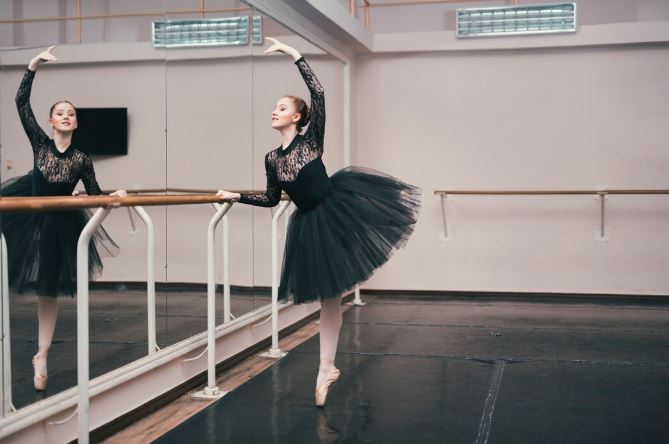
She came to the studio as a child, her hair pinned back, her expectations high, and she was hardly taller than the barre. She danced for eight years in an environment of tradition and hierarchy, under bright lights and unwritten rules. She has now filed a lawsuit that pierces the performance curtain like a sharp spotlight over ten years later.
The 85-page civil complaint is packed with detailed accusations and a powerful emotional impact. Fundamentally, the former pupil, whose name is withheld, charges Richmond Ballet with creating an atmosphere that she characterizes as gravely harmful. Her assertions go beyond isolated incidents; they point to a society that penalized vulnerability and rewarded silence.
| Category | Details |
|---|---|
| Organization | Richmond Ballet |
| Plaintiff | Anonymous former student |
| Legal Action | $11.5 million civil lawsuit filed December 2025 |
| Time Period Involved | Student attended from 2007 to 2015 |
| Nature of Allegations | Sexual misconduct, emotional and physical abuse, negligence |
| Number of Similar Cases | Third similar lawsuit since 2022 |
| Named Defendants | Richmond Ballet and six current/former staff members |
| Public Response | Ballet denies wrongdoing, promises internal review through legal channels |
| Trial Status | The student attended from 2007 to 2015 |
She claims that weight was an obsession from an early age. Allegedly, “fat letters” and public weigh-ins were given to students. Amazingly, she was complimented on her appearance when she admitted to having bulimia. According to reports, those casually cruel words reverberated more loudly than any applause she had ever heard.
The physical discomfort had become chronic by the time she was in her teens. After making a small error in class, she remembers being hit on the back of the head and shoved to the ground. According to her lawsuit, she carried visible and invisible injuries into adulthood. pain in the lower back. Fear. eating disorders. and a persistent fear that she was unable to identify.
Sexual misconduct allegations are especially troubling. She recounts one incident in which a staff member threatened her when she withdrew by putting his hands between her thighs. The lawsuit claims that the employee is still listed on the company’s website. This incident happened in 2014, which is not ancient history. It persists.
Despite being extremely personal and detailed, the student’s grievance is not unique. In just five years, a former student has sued Richmond Ballet three times. Similar themes—coercion, intimidation, and unchecked abuse—have emerged in each case. A pattern is emerging.
The official statement from Richmond Ballet, which was released soon after the lawsuit became public, was predictable. Kathleen Holman, executive director, highlighted the organization’s established reputation and its intention to take legal action. She admitted that the accusations went back more than a decade, a fact that was offered as both background information and a diversion.
However, time doesn’t lessen the impact for many who are witnessing this. It is impossible to ignore a culture that subtly harms its youngest members just because the harm happened years ago. In actuality, that delay frequently makes it more difficult to find justice and to establish accountability.
I recall silently watching a rehearsal when I visited Richmond Ballet years ago. Except for the piercing sound of pointe shoes on the floor, the room was silent. Technically, every movement was flawless, but the air felt heavy for some reason. Not serious. Simply put, too controlled. I believed it to be discipline at the time. I wonder now whether it was fear.
According to the lawsuit, pressure to land lead role caused the student to lose almost thirty pounds in three months. It also states that she had several suicide attempts, which show a terrifying degree of hopelessness. Her lawyers claim that this wasn’t an exception but rather a natural outcome of the setting in which she received her training.
The allegation that the ballet disregarded required reporting protocols is especially noteworthy. If accurate, this implies a failure of both legal obligation and culture. It is not only unethical but also dangerous for any organization that works with minors to make such mistakes.
The idea that this “culture of exploitation,” as the lawsuit describes it, didn’t start with her is even more striking. According to the plaintiff, it began as early as 1990. That’s more than three decades of possible harm that has gone unchecked. And nobody should unquestioningly defend that legacy.
The organization has continued to showcase its history, alumni, and performances through well-crafted statements. The core of the problem, however, has not been directly addressed: if three former students claim they were harmed in the same building over several years, how many more just never came forward?
This lawsuit is a call for visibility rather than merely a legal document. An appeal to investigate the darker aspects of elite training settings. A reminder that broken hearts and pain that goes unspoken are never the right way to gauge the cost of greatness.
The plaintiff’s decision to proceed with a jury trial goes beyond merely requesting damages. She is asking the public, as well as possibly the courts, to consider the consequences of institutions prioritizing prestige over people. Many people in the arts community have long shunned that discussion.
Numerous disciplines, including acting academies and gymnastics, have undergone a reckoning in the last ten years. Most of it has been swept aside by ballet, with its serene chambers and noble customs. So far.
If nothing else, this is an opportunity to redefine excellence. It is based on safety, mentorship, and trust rather than being purchased with silence, thinness, and compliance.
Because of this, this lawsuit is both extremely painful and incredibly hopeful. It has the potential to change. And that hope is important for the upcoming generation of dancers who are silently observing from the studio floor.
