

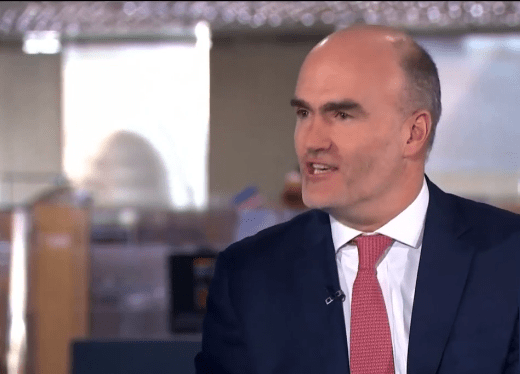
Credit: Chenavari Investment Managers
The financial story of Loïc Féry is surprisingly complex for someone who usually stays out of the news. His track record, from trading floors to football boardrooms, paints a picture of remarkably steady growth and restrained confidence. He is neither ostentatious nor seeks out media attention.
Féry was raised in an academic and disciplined environment after being born to two teachers in eastern France. His father was a physical education specialist, and his mother was a math teacher. That initial fusion of performance and reasoning—equations and stamina—had a profound impact.
| Attribute | Details |
|---|---|
| Name | Loïc Féry |
| Date of Birth | March 15, 1974 |
| Place of Birth | Nancy, France |
| Education | HEC Paris |
| Occupation | Investor, Hedge Fund Founder, Football Club Owner |
| Known For | CEO of Chenavari Investment Managers; President of FC Lorient |
| Estimated Net Worth | £222 million (2025), up from €120 million in 2011 to €320 million in 2023 |
| Notable Achievement | Successfully turned around FC Lorient’s finances while growing hedge fund assets |
| Source | Wikipedia – https://en.wikipedia.org/wiki/Loïc_Féry |
He enrolled at HEC Paris, a haven for the continent’s financial elite, after earning honors in his baccalauréat. Even so, he deviated momentarily from the usual course. He learned how swift and uncertain real economies can be when he took a break from school at the age of 19 to oversee a telematics project in Eastern Europe.
He was assigned to Hong Kong at the height of the Asian financial crisis in 1997, and he was well-versed in credit markets. That would have been a terrifying time to begin for most people. It turned into a testing ground for Féry. He guided Lé Générale’s credit business throughout Southeast Asia by navigating high-risk situations.
His rise only quickened after he returned to Europe in 2001. He was chosen to spearhead a fresh initiative into structured credit at the London branch of Crédit Agricole. He rose to the position of highest-paid executive at the bank by 2007.
Then came the setback: one of his subordinates lost €200 million in a New York trading fiasco. He left just four months after reaching the pinnacle of his career.
Amazingly, he recovered in a matter of weeks.
He established Chenavari Investment Managers later that year. The name of the company is derived from a mountain that can be seen from his hometown, which is a very sentimental decision for someone who is so driven by reason. However, it might indicate a subdued awareness of legacy, of creating something that will endure beyond quarterly profits.
Féry avoided the overexposure that caused many funds to fail after 2008 by concentrating on structured finance and niche credit plays. The fact that Chenavari managed $5 billion in assets as of 2020 shows how carefully the company has expanded without chasing attention.
According to Challenges, Féry’s personal net worth increased dramatically from €120 million in 2011 to €320 million by 2023. In 2025, that sum will be £222 million, providing him a strong foundation in the top tiers of French finance.
But it wasn’t inevitable that he would play football.
He first looked into deals for teams like Sheffield Wednesday, Nîmes Olympique, and OGC Nice. Every time, either because of a lack of transparency, shifting circumstances, or misaligned values, he left. Then, in 2009, he purchased FC Lorient at the age of 35.
Lorient was experiencing financial difficulties at the time, with low equity and few business opportunities. However, Féry saw a chance for change that many others missed. He has been applying the discipline of private equity to club management for more than ten years, cutting out inefficiencies, making calculated investments, and enduring promotions and relegations with the patience of an investor.
Some of his daring choices have provoked public discussion. Féry signed football player Benjamin Mendy almost immediately after he was cleared of criminal charges in 2023. This move drew criticism but also demonstrated Féry’s willingness to keep legal outcomes apart from public opinion.
More recently, following Lorient’s 2024 relegation in spite of having one of Ligue 1’s largest budgets, Féry publicly acknowledged a crucial strategic blunder: doing away with the position of sporting director. Coach Théis Le Bris was left in charge of recruitment after the error, and the outcome was foreseeable. In a field where deflection is common, Féry’s readiness to take responsibility stood out.
He once attributed his early club ownership philosophy to observing Ellis Short, the former owner of Sunderland, navigate the tumultuous world of English football during a quiet moment in an interview. Together, their sons participated in junior tennis. The door opened that way.
Féry’s life has a revealing symmetry.
Olivia Gravereaux, his ex-wife, played tennis professionally. After shocking a seeded opponent at Wimbledon, their son Arthur Féry is now a rising star on the ATP Tour. The family appears to view achievement as a shared goal based more on discipline than entitlement.
At one point, I was surprised to see how little Féry had altered his strategy despite his rising profile.
He still stays away from ostentatious purchases. He still emphasizes value over visibility. Even after Lorient made a triumphant comeback to Ligue 1 in 2020, he doubled down on reinvestment, pointing out that only PSG and OGC Nice had bigger budgets that year.
Serving institutional clients and taking advantage of specialized opportunities throughout Europe’s credit markets, Chenavari continues to operate with quiet precision and mostly goes unnoticed. There’s no desire for vanity projects and no need to grow for the sake of scale.
Nevertheless, his name keeps coming up—not because he is pursuing it, but rather because the outcomes are self-evident.
Féry provides a different route for investors observing from the sidelines, one that is remarkably successful at compounding capital without depleting the brand. His time at Lorient serves as an example for sports executives of how business reasoning can support athletic aspirations rather than conflict with them.
His story is still developing in many respects.
And if previous choices are any guide, the upcoming chapter is probably going to be equally thoughtful, subtle, and profitable.
