

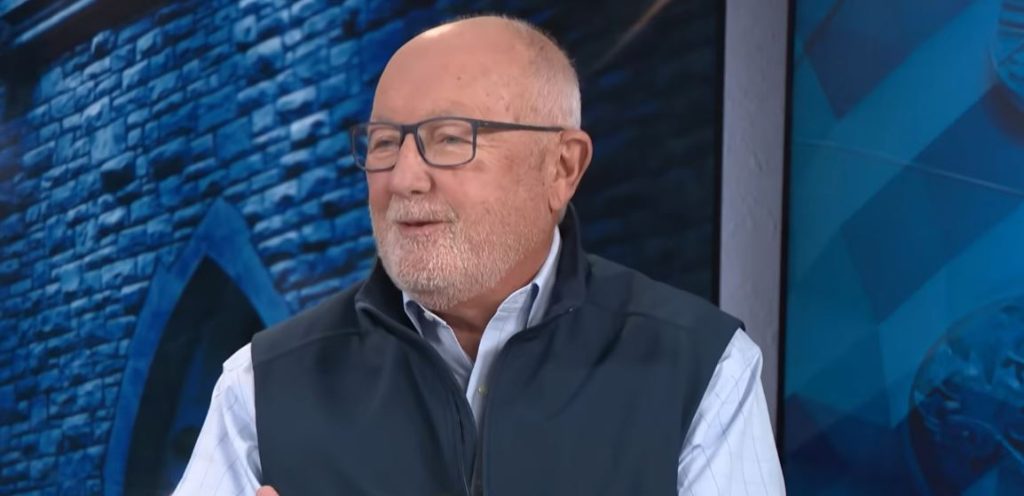
On a Thursday morning, Pete Hoekstra stood in front of a business audience in Toronto and said something that his boss had made seem impossible just twenty-four hours before. He acknowledged that America needs things. Actually, quite a few things. And if Canada just put on its “sales hat,” it could present a strong argument for supplying them. It’s likely that the executives in the room, who were already worn out from eighteen months of tariff anxiety, were unsure whether to cheer or simply place another coffee order.
Context is important. Donald Trump had told reporters in the Oval Office the previous day that the United States does not require anything that Canada possesses. Not automobiles. Not wood. Not whatever else crosses that 8,900-kilometer border daily. That quote was already making the rounds by Wednesday night, confirming the fears of many Canadian business leaders that the CUSMA review process was headed in an uncomfortable direction with its deadline of July 1. After Hoekstra moved to Toronto, the story became much more convoluted.
The difference between what a president says and what his ambassador has to deal with on the ground is difficult to ignore. The two economies are intricately linked, and Hoekstra is correct. He referred to the North American auto industry as a “thoroughly integrated ecosystem,” which is true in certain ways that make Trump’s rhetoric hard to maintain over time. An assembly plant in Ohio receives a transmission that was manufactured in Canada. Before being bolted onto a car sold in Texas, a door panel with a Michigan stamp must cross the border twice. These items don’t untangle neatly.
The particular commodity Hoekstra chose to name—potash—was perhaps more illuminating than the diplomatic softening. About 40% of the world’s potash exports come from Canada, and more than half of what Canada ships is purchased by American farmers. Without it, crop yields decline, fertilizer prices rise, and rural Republican constituencies begin to voice concerns. A “America First” trade stance that directly affects the Great Plains’ agricultural math is somewhat ironic.
Later that day, Prime Minister Mark Carney remained calm when questioned about Hoekstra’s comments. He declared that talks would go on and that Canada had made “good offers”. In contrast to LeBlanc’s account of specific proposals made to Trade Representative Jamieson Greer last week, Hoekstra himself stated that the Trump administration is still waiting for Canada to formally put something on the table. It is unclear whether those offers are even close to what Washington truly wants. Someone’s account of what happened is incorrect. Both parties may be simultaneously performing for their own domestic audiences.
The strategy is not new in and of itself. Before signing a modernized agreement, Trump rattled the framework during his first term by threatening to cancel CUSMA. Depending on how well Canada interprets the situation and whether the offers it appears to have already made are significant enough to change things, that pattern may recur. As you watch this happen, you get the impression that the negotiation is real; the bluster is a show, but the underlying pressure is real. Potash is truthful. Integrated supply chains don’t either. In the end, neither does a deadline of July 1.
FAQs
1. Why did Hoekstra contradict Trump’s claim that America needs nothing from Canada?
America genuinely depends on Canadian potash, cars, and deeply integrated supply chains.
2. What is the CUSMA review deadline?
The trilateral joint review must be initiated by July 1, 2026.
3. What specific commodity did Hoekstra admit the U.S. cannot do without?
Potash — Canada supplies over half of all U.S. potash imports.
4. Has Canada already made trade offers to Washington?
LeBlanc says yes; Hoekstra claims Washington is still waiting for a formal offer.
5. Has Trump used CUSMA cancellation threats before?
Yes — he made identical threats during his first term before signing a renewed deal.
