

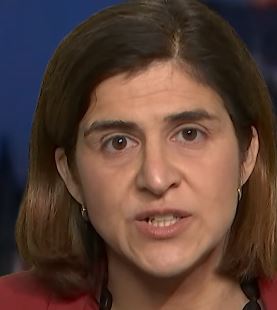
The timing was intentional. Following the conclusion of the 2026 World Cup, Sarah Sackman, the MP for Finchley and Golders Green and Labour’s Minister for Courts and Legal Services, wrote an article for the Barnet Post urging the local council to remove the Union Jacks and St George’s Crosses that had been affixed to public lampposts throughout her constituency. She had a clear narrative hook thanks to the World Cup: the competition is over, the flags’ sporting justification is no longer valid, so let them come down. The speed and scope of the response was what she might not have expected, or maybe she did and thought the argument was worthwhile anyhow.
The aforementioned flags had not been raised for the World Cup. That’s the portion of the narrative that often gets overlooked. Beginning in September 2025, they were placed throughout Temple Fortune and Golders Green by members of the Operation Raise the Colours movement, a social media-driven initiative that had been placing Union Jacks and St George’s Crosses on lampposts, roundabouts, and public infrastructure in several English towns and cities. Similar activity was observed in Oxford, Birmingham, and Essex. Long before Sackman’s article was published, the campaign caused local controversy in a number of places and was linked to right-wing activists, though not exclusively. One of the biggest Jewish communities in Britain is located in Finchley and Golders Green. Sackman wrote that constituents had described the flags as “unsettling, intimidating and othering”—words that carry particular weight in a neighborhood where the memory of what flags and symbols have historically meant to Jewish communities in Europe is not abstract—acknowledging the importance of this context.
The backlash happened quickly. Kevin O’Sullivan of TalkTV aggressively pursued her on the air. Reform-aligned voices and conservative pundits presented the intervention as an assault on British identity by Labour. Social media did what social media does: it removed most of the context and magnified the most combative version of the story. In other words, a Labour minister wanted to destroy the Union Jack.
In reality, her writing was more meticulous than that. She made a distinction between public lampposts, which she claimed should belong to the entire community, and private property, where she claimed people are fully entitled to fly whatever flags they choose. In theory, it’s a fair distinction. The question of whether this is true when the flag in question is the national flag of the nation where those lampposts are located is a different and genuinely contentious one. The argument seems to cut in several directions at once; the same reasoning that leads some locals to believe that the flags are an assertion of exclusion may also lead to their removal.
Locals Jack and Deborah Miller responded most strikingly, claiming to have personally hung flags in the area. Mrs. Miller said that Sackman’s statement was the source of the conflict. Mr. Miller discussed the Jewish prayer for the Royal Family, which is said in synagogues all over the nation on Saturday mornings. This is a uniquely Jewish tradition that expresses pride in Britain. They both claimed to be proud Britons and Jews, and they were unable to understand why having those two identities caused issues. The debate was framed by members of the community that Sackman had described as feeling threatened, which significantly complicated the situation.
This type of dispute—flags, public space, identity, who belongs where—tends to generate more heat than resolution, and it’s difficult to ignore. Whether the flags are raised or lowered, the underlying tensions remain. More than anything else, the episode showed that Finchley and Golders Green is a constituency with a genuinely complex set of identities and anxieties, and that a brief article in a local newspaper was never going to be the best way to navigate them. The dialogue they initiated is obviously not over, regardless of whether the flags come down or remain up.
