

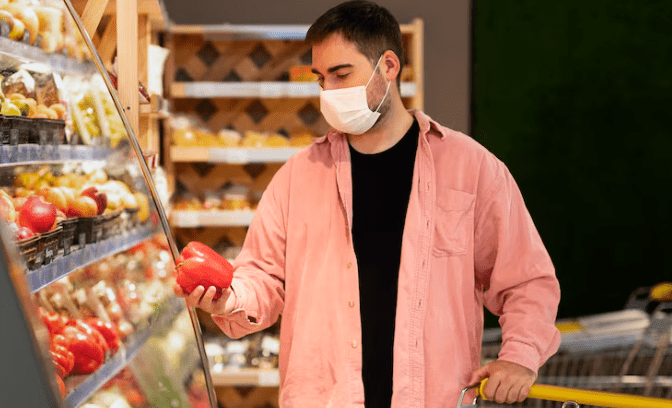
The trolley bays outside a big supermarket in Cardiff were rapidly filling up on a gloomy weekday morning. Families were coming in with shopping lists, frozen veggies, bread, and maybe a weekend treat. However, a printed notice had silently surfaced inside the store, close to the customer service desk. It advised consumers to inspect specific items at home.
A wave of Asda Farmfoods Argos recalls that have prompted thousands of customers to open their cabinets with a little more caution was reflected in the notice, which was tiny and nearly impossible to overlook.
| Category | Details |
|---|---|
| Topic | Recent UK Product Recalls |
| Retailers Involved | Asda, Farmfoods, Argos |
| Regulatory Authority | UK Food Standards Agency (FSA) |
| Main Safety Issues | Undeclared allergens, potential fire hazards |
| Example Recalled Products | Cheesecake desserts, snack products, air fryers |
| Consumer Advice | Return products to store for full refund |
| Reference Website | Return products to the store for a full refund |
The Food Standards Agency, which oversees consumer protection and food safety in Britain, issued the warnings. Product recalls occur frequently, but occasionally a number of them occur simultaneously, affecting various retailers and product categories. Desserts, snack foods, and even kitchen appliances are on the list this time, which is an odd combination that highlights how intricate contemporary supply chains have become.
Consider the cheesecake recall that initially attracted notice. Despite not being mentioned on the packaging, hazelnuts were discovered to be present in a dessert made by the company Gü Indulgent Foods and sold in supermarkets like Asda. The detail may seem insignificant to the majority of consumers. However, the risk is severe enough to require quick action for those who are allergic to nuts. It appears that during production, the product was mispacked, putting a different dessert inside the container with the label.
It’s easy to see how quickly these products move when you walk through the chilled dessert section of a British supermarket. Without giving it much thought, shoppers reach in and grab the well-known glass ramekins of chocolate pudding or cheesecake. There is a high level of brand recognition. However, circumstances such as these bring up an unspoken question: how frequently do customers actually read the fine print on a label?
In the meantime, appliance owners have been hearing about another recall, this one about an entirely different type of product. A possible overheating issue was raised for several Tower air fryer models that were sold by stores like Argos. There have been reports of the devices catching fire while being used. Even though it is uncommon, that possibility alters people’s perceptions of a kitchen appliance that they may have relied on for years.
It’s odd how a commonplace item can feel uncertain all of a sudden. After all, one of the most widely used kitchen appliances in Britain is the air fryer. One is frequently found next to the toaster or kettle when you walk into a suburban kitchen. Dinner routines were subtly altered during the pandemic years by the gadget, which promises faster cooking and less oil. Some of those same machines are currently being disconnected and put back.
A snack product called Ritz Cheese Sandwich crackers was taken off the shelves at Farmfoods after it was found that allergens like milk, wheat, and soy were not prominently displayed on the packaging. The recall notices were also sent to Farmfoods customers. Once more, the problem may sound technical. However, food labelling is taken seriously in Britain, in part due to the rise in allergy cases and public awareness.
Many customers might not even be aware of these recalls beyond a quick headline. Supermarkets handle thousands of merchandise items, so occasional withdrawals are practically a given. However, it appears that retail safety has become more apparent in recent years as this pattern develops. Recall notices are disseminated through social media, sometimes more quickly than through traditional news outlets.
This is also part of a larger context. Like the majority of contemporary supply chains, Britain’s food system spans factories, logistics hubs, and international suppliers of ingredients. A cheesecake put together in one location may use ingredients that are processed in a different nation. When something goes wrong, it spreads swiftly throughout supermarkets across the country, even if it’s something minor like a packaging error.
Retailers have discovered that offering a refund to customers who return recalled items without requiring a receipt lessens confusion and frustration. Occasionally, customers who are standing at a service desk with a product they purchased days ago appear a little perplexed. Some seem a little irritated. Some seem relieved that the problem was discovered early.
It’s difficult to ignore the fact that product recalls seldom generate long-term, dramatic headlines. They appear out of nowhere, make their way through news feeds, and then vanish just as fast as they came. However, each one reveals a little bit about the intricacy of contemporary retail—how a snack, dessert, or even a kitchen appliance can pass through several production stages before ending up in a customer’s cupboard.
As of right now, the official advice is still simple: read the labels, stop using the impacted appliances, and send the items back to the retailer. Even with its flaws, the system relies on the collaboration of consumers, retailers, and regulators. It’s still unclear if the recent Asda Farmfoods Argos recalls indicate a transient cluster of incidents or something a little more significant.
However, there is a subtle shift in awareness in the quiet aisles of British supermarkets, where trolleys pass piles of frozen chips and ready meals. People take a moment to look at packaging. They look up a kitchen appliance’s model number. brief moments of caution. And perhaps that is what recalls are intended to promote above all else.
