

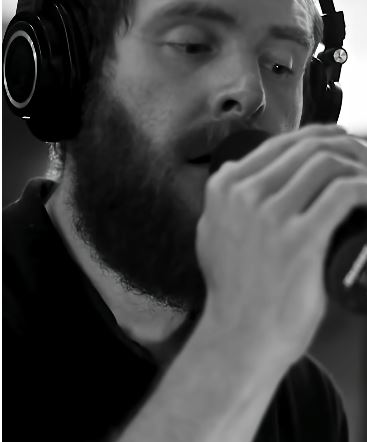
The information spread rapidly, but it was received with great force. Tim Very, the drummer for Manchester Orchestra for such a long time, passed away unexpectedly at the age of 42. His passing left his bandmates and fans in a state of visible disbelief. His death was confirmed by the Atlanta group on February 14, 2026, and they described it as a loss that felt both immediate and profoundly personal.
His name was given to him as their brother. It was not the first time that Manchester Orchestra had gone through lineup changes; in their early years, they alternated between four different drummers. However, since joining the band in 2011, Very has become the most enduring rhythmic presence to the band, serving as the steady pulse beneath some of their records that are the most emotionally resonant.
| Category | Details |
|---|---|
| Full Name | Timothy “Tim” Very |
| Age at Death | 42 |
| Role | Drummer for Manchester Orchestra (2011–2026) |
| Band Origin | Atlanta, Georgia (formed 2004) |
| Notable Albums | Cope (2014), A Black Mile to the Surface (2017), The Million Masks of God (2021) |
| Other Work | Co-founder of Super Canoe production company; podcast and YouTube projects |
| Date Announced | February 14, 2026 |
| Reference | https://www.rollingstone.com/music/music-news/tim-very-manchester-orchestra-dead-1234967890/ |
Even though he was not present during the formation in 2004, he has developed into something that is more long-lasting than a founding member over the course of fifteen years. He has become indispensable.
In their statement, the band expressed their disbelief and devastation. It was a description of his friendliness, his sense of humor, and his instantaneous ability to transform strangers into friends. In public tributes, those words may come across as rehearsed, but in this particular instance, they rang out as unusually specific. What they said was that his laugh was contagious.
If one were to pay close attention to a Manchester Orchestra performance, they would be able to recognize that particular detail. His shoulders moved with an ease that suggested he was both working hard and enjoying it thoroughly. He frequently leaned back from the kit in the middle of the set, grinning broadly and sometimes mouthing harmonies while keeping time. The individual’s cause of death has not been made public.
There is a certain unease that comes with sudden losses. The preparation is not gradual, there is no lengthy farewell, and there is no public arc of illness. One day, the tour schedule is in place, and the next, it appears to be in jeopardy.
Following Jeremiah Edmond’s departure from the band, Very became a member of the band. Camden, London was the location of his very first live performance with Manchester Orchestra, which took place in 2011. Subsequently, he admitted that he had been so anxious that he had thrown up before taking the stage. The later composure that he displayed was made all the more impressive by the fact that it was a minor, human detail.
From that point forward, he was the driving force behind albums that broadened the band’s audience and more precisely defined its identity. In 2014, he appeared on the album Cope, and in 2017, he appeared on the album Hope, which was an acoustic version of Cope. His next album, The Million Masks of God, was released in 2021. The subtle evolution that occurred with each release was reflected in his drumming, which adapted accordingly. The term “songwriter’s drummer” was frequently used to describe him.
Instead of filling every space with technical fireworks, he chose to exercise restraint when it was in the best interest of following the song. A Black Mile to the Surface featured textures that were more expansive, and there were times when silence was just as important as impact. This contrasted with the heavy, almost crushing snare hits that were featured on Cope.
During interviews, Very mentioned Dave Grohl and Nirvana as two of his early musical influences. That lineage was audible, not in imitation but in philosophy: power that was used for a specific purpose within the organization.
There was no chance that the band would take the path that it did during his tenure. The album “Cope” made it into the top five on the UK Albums Chart. The song “The Gold” was the most popular Adult Alternative Songs chart on Billboard. Their Stuffing Festival, which takes place every year in Atlanta, has become a well-liked institution in the region. Extremely was there for the entirety of it.
Although they go by the name Manchester Orchestra, the band has always had their roots in Georgia. Andy Hull, Robert McDowell, and Andy Prince collaborated to create a sound that is characterized by unpredictable emotional states and intense lyrical content. In addition to providing the structural backbone, Very was also responsible for translating the emotional mass into momentum.
I remember standing close to the side of a stage during one of their festival sets and noticing how little he seemed concerned with spectacle. Instead, he seemed to be concentrating on locking in with the bass line and allowing the song to breathe.
After leaving the band, Very pursued other creative endeavors in parallel. In the year 2020, he was one of the co-founders of the production company Super Canoe, where he contributed to the development of photographic projects and collaborative endeavors that broadened his scope beyond touring cycles.
In addition, he was the host of a podcast called Timmy’s Timeline, which chronicled his career and featured interviews with other musicians. Upon closer inspection, it revealed a craftsman who was thoughtful, reflective without being self-serious, and candid about nerves and mistakes.
Within the statement released by the Manchester Orchestra, the emphasis was placed on something that resonated even more than his musical output: his commitment to his family.
The band wrote that “the only thing that Tim loved more than creating music was being with his family,” and they referred to him as a happy father through their writing. This particular aspect is significant because musicians frequently lead fragmented lives, being pulled between their homes and the highways. His friends referred to him as someone who was always encouraging.
In a field that tends to reward ego and endurance more than empathy, that quality stands out as particularly noteworthy. It was said that he was Super Canoe’s biggest cheerleader, someone who celebrated even the smallest of victories with the same level of enthusiasm as they celebrated major milestones.
Those are not the characteristics that garner the most attention. These characteristics are what keep communities going strong.
Despite the fact that they were still processing their own disbelief, the band admitted that they had dreaded sharing the news. Instead of sounding ceremonial, that phrasing came across as genuine.
Within the realm of music communities, grief spreads rapidly. On social media, there are videos of live performances, photographs taken behind the scenes, and candid moments of laughter captured during a tour. Every single picture seemed to emphasize the same thing: he appeared to be right at home in that location.
His passing raises a number of important questions regarding the future of Manchester Orchestra. Festival commitments, recording schedules, and touring plans are all in the works. Nevertheless, in the immediate aftermath, those questions appear to be second-class.
The recognition that rhythm sections are frequently underappreciated is the only thing that remains standing. When the frontman speaks, the drummer provides the support. While the spotlight is moved around, the tempo remains the same. Over the course of fifteen years, it remained stable.
There is a tendency to romanticize sudden loss, to speak about it in a manner that is reminiscent of mythology. It is preferable to deny that. The fact that Tim Very was responsible for shaping the sound of a band that, for many listeners, exemplified a particular emotional chapter in their lives is something that can be stated unequivocally.
Assisting in the construction of crescendos that were cathartic. These verses, which required tension, were restrained by him. In his understanding, drums are not only used to keep time; they are also used to guide feeling. That guidance came to an abrupt end at the age of 42.
It is a different sensation to be in silence after the death of a drummer. It is not just the absence of a person, but the absence of a pulse that once held everything together.
That pulse will continue to reverberate for a longer period of time than the final note, both for Manchester Orchestra and for those who have found solace in their records.
