

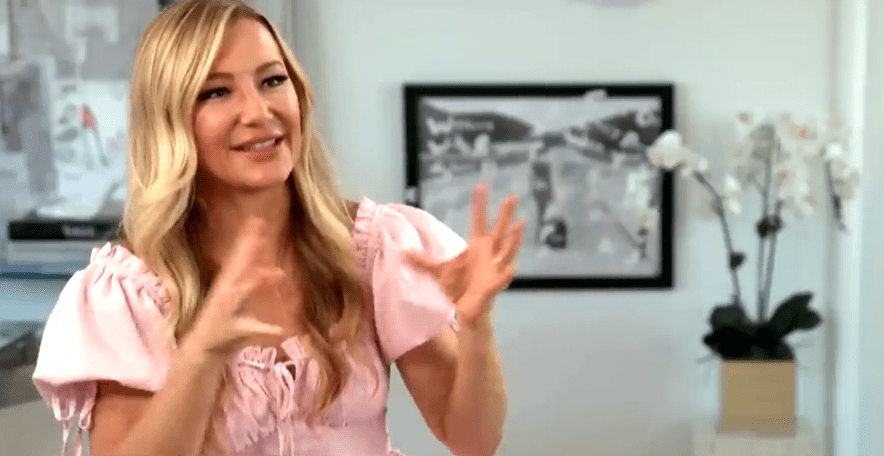
Credit: CBS Morning
Contracts and court documents are frequently the first things that come to mind when discussing the Hayley Paige lawsuit, but the true story starts with fabric and ambition, sewn together by someone who thought that creativity could advance a career more than caution ever could.
She signed a contract that appeared to be a golden invitation in 2011, when she was twenty-five years old, promising her national platform, support, and visibility. A clause that gave the company control over her name, designs, and brand identity—which would eventually become her second skin—was concealed within that opportunity like a seam you only notice later.
| Item | Details |
|---|---|
| Name | Hayley Paige Gutman |
| Profession | Bridal designer and media personality |
| Background | Gained recognition through JLM Couture and TV appearances |
| Legal Focus | Dispute over name rights, contracts, and control of social media |
| Outcome | Regained name, IP, and accounts through settlement |
| Reference | Business Insider |
In the ensuing years, brides watched in hope as her gowns floated through bridal boutiques and made an appearance on television, shimmering under studio lights. The growth was remarkably successful, fueled not only by gowns but also by social media posts that felt intimate, spontaneous, occasionally messy, and strikingly similar to late-night notes between friends.
The @misshayleypaige account expanded rapidly and became incredibly multipurpose, serving as a community gathering spot, marketing channel, and diary. Although it was closely related to JLM’s personality, it was especially helpful for her sales. At first, the tension created by that duality was subtle, like an off-beat song.
As her contract was about to expire, negotiations started. Ownership, usage rights, and the fine line separating brand promotion from personal storytelling were among the issues raised. For businesses, those lines are frequently very obvious. They blur for artists.
The disagreements solidified by the end of 2020. Lawsuits were filed. A judge imposed a non-compete agreement that essentially barred her from designing and gave the company control over the social media accounts. The audience she had built an audience for suddenly answered to someone else, and the name that had been hers since birth no longer belonged to her professionally.
Fans were perplexed by the change. Instead of following an object, they had followed a person. However, the designer herself had to stand by and observe as the accounts continued to post as if nothing had changed. It served as a reminder that identity turns into inventory once it is signed over.
She started rebuilding during this time by going by a different name, Cheval, launching shoes, learning how to work around the law, and remaining visible while adhering to court orders. In terms of survival, the effort was very effective, but it necessitated the reinvention of habits that had previously come naturally.
I found myself reflecting on how easily a life can be boiled down to clauses and commas halfway through one especially dense file.
In the meantime, JLM’s own financial circumstances changed, which ultimately resulted in actions that significantly altered leverage. The prospect of settlement emerged through those developments, first with caution and then with greater clarity, like headlights over a hill.
She paid $263,000 and got her name, intellectual property, and social media accounts back in 2024 after a bankruptcy court approved a deal. The inability to compete vanished. The obligations came to an end. Control came back. The result felt significantly better than where she had been only a few months before.
Her response was one of relief. Not a sound of victory. Not rage. It was more akin to someone opening a front door that had been bolted from the outside. This was remarkably successful in regaining momentum and much quicker than waiting out the initial contract.
Naturally, settling did not bring back what had been lost. The patterns were gone. The archives had vanished. She had to start over using instinct, memory, and trust. It was like leading a swarm of bees back to a hive that had been rebuilt from scraps when I returned to the industry.
Instead of just sparkle, the comeback collection carried strength. Resilience, less fantasy. The tone was one of encouragement and gentle persuasion, as though it were conveying the message that starting over is not a sign of failure.
Young creatives, influencers, and designers have been keeping a close eye on this story and discreetly sharing it, much like a warning article that they have bookmarked for later. The lesson is very evident. Contracts are worthy of patience, legal scrutiny, and inquiries. Long-term costs may be concealed by early successes.
Future artists can take this lesson to protect their names, negotiate differently, and maintain ownership even when working with larger companies. In a time when identity and business are so closely linked, that is especially creative thinking.
Her experience also shows how obstacles can serve as motivators. She continued to design, teach, and mentor by strategically collaborating, diversifying, and adapting. In addition to demonstrating to others that creative identity can be reclaimed, reforged, and carried forward, the process has greatly decreased the fear associated with starting over.
These days, it’s not just about gowns and glitz. It’s on agency. It is based on the assurance that results from knowing what you sign and why it is important. And it’s on a designer who persevered through legal proceedings, continued to work, and emerged able to use her name once more—not as a property returned, but rather as something incredibly durable that she earned twice.
