

Most American streets have a gas station on the corner. Somewhere in the back of your mind, you wonder why the number keeps rising as you pull in and swipe your card. However, the real answer to that question isn’t on Wall Street or in Washington; rather, it’s a small area of water between Iran and Oman that most people wouldn’t be able to locate on a map. Over the past few weeks, the Strait of Hormuz—which is only 33 kilometers wide at its narrowest—has caused more harm to household budgets worldwide than any recent increase in tariffs or interest rates.
On February 28, the United States and Israel began bombing Iran. Iran responded quickly and strategically, effectively closing the strait, threatening oil tankers, using fast attack boats and drones, and making the insurance premiums for any ship trying to cross almost unaffordable. Every month, about 3,000 ships pass through that channel. Almost instantly, that figure collapsed. Additionally, the market does not wait patiently for a diplomatic solution when you cut off about 20% of the world’s daily oil supply, or about 20 million barrels. Prices fluctuate. Quick.
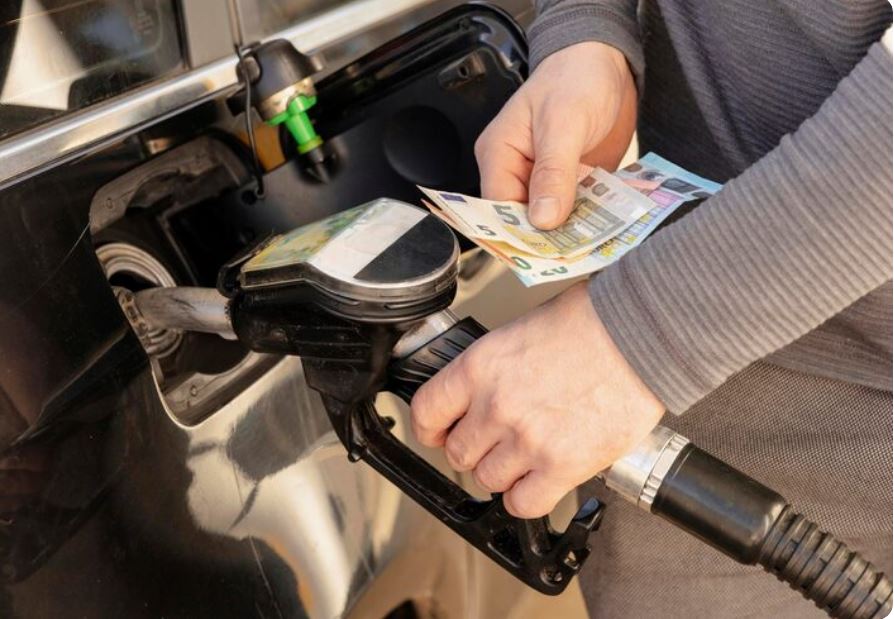
By early April, the average price of a gallon of regular gasoline in the United States had increased by 21% to $4.14. Diesel increased by over 25%. These are multipliers that permeate every aspect of an economy based on the movement of goods from one location to another, not just numbers on a sign at the pump. Because a full trip just doesn’t work out, trucking companies—which already operate on thin margins—are now filling up halfway through routes or, in certain situations, parking their vehicles completely. Shelves don’t fill as quickly when trucks stop moving, and eventually the prices on those shelves go up.
Strait of Hormuz — Key Facts & Crisis Overview
| Category | Details |
|---|---|
| Location | Between Iran (north) and Oman / UAE (south); connects the Persian Gulf to the Arabian Sea |
| Width at narrowest point | ~33 km (20 miles); shipping lanes approximately 3 km wide in each direction |
| Daily oil throughput (2025) | ~20 million barrels of oil and petroleum products — roughly 20% of global supply |
| LNG share | ~20% of global liquefied natural gas trade, primarily from Qatar (~9.3 Bcf/day) and UAE (~0.7 Bcf/day) |
| Fertilizer trade | Approximately one-third of internationally traded fertilizer passes through the strait |
| Closure trigger | U.S.–Israel bombing campaign against Iran began February 28, 2026; Iran effectively blocked the waterway in retaliation |
| Ships affected | At least 24 commercial vessels hit as of April 2, 2026 (United Against Nuclear Iran) |
| U.S. gas price impact | National average reached $4.14/gallon by early April 2026 — up 21% in one month; diesel up ~25% |
| Jet fuel impact | Jet fuel averaged $195/barrel (week of April 5); U.S. jet fuel costs up ~95% since late February |
| Fertilizer price spike | Some U.S. fertilizers rose more than 40% in one month after the war began |
| Key oil exporters via strait | Iran, Iraq, Kuwait, Qatar, Saudi Arabia, UAE |
| Ceasefire status | U.S.–Iran ceasefire announced with condition of “safe passage” guarantee through the strait; oil prices fell ~15% on the news |
| Reference | Brookings Institution analysis on the geopolitical significance of the closure |
The fact that more than just oil is at risk makes the Strait of Hormuz Closure especially challenging to overcome. These same waters handle about one-third of the global fertilizer trade, and modern agriculture is almost comically reliant on accurate fertilizer timing. Early in their growth, corn plants must receive nitrogen. Yields can decrease by 25% if it is delayed by two to four weeks or if the application is decreased by even 10 to 15%. As planting season approached, American farmers discovered that fertilizer supplies were only about 75% of normal in mid-March, just when they needed to be treating their soil. Since soybeans require less fertilizer, some are already considering making the switch. Your grocery receipt won’t reflect that change for months, but it will happen.
Passengers are already observing how jet fuel, which has nearly doubled in price since late February, is changing air travel. According to the International Air Transport Association, the average price of jet fuel in early April was $195 per barrel, which is more than twice the average for the prior year. Baggage fees have already been increased by three major U.S. carriers. If the strait remains closed, Ryanair’s CEO publicly projected that 5 to 10% of summer flights would be cancelled. Before it manifests itself visibly, airlines often absorb pain in silence for a while. It seems like the quiet time is coming to an end.
The duration of the disruption and the viability of the recently declared ceasefire, which is contingent upon assured passage through the strait, remain uncertain. The news of the ceasefire caused oil prices to drop by about 15%, indicating that markets had been pricing in a protracted closure. However, seasoned energy analysts point out that the announcement of a deal does not instantly eliminate the physical supply deficit. Tankers must move. The insurance market needs to re-engage. It takes time to regain confidence after it has been damaged.
Observing all of this, it seems as though the majority of consumers were totally unprepared for how vulnerable everyday life is to a single geographic chokepoint. About one-third of the world’s supply of helium, which is used in semiconductors and, yes, birthday balloons, comes from shipments via Hormuz. This also applies to synthetic textiles, aluminum inputs, and a variety of technology components. Most people are unaware of how short and straightforward the path is from that small waterway to the goods on store shelves.
There has also been an uneven landing of the Strait of Hormuz Crisis. Fuel station robberies have increased in Bangladesh, which imports roughly 95% of its energy, as panic-buying creates a risky cycle of fear and scarcity. Slovenia was the first country in the EU to impose fuel rationing. In order to save supplies, governments in Asia mandated shorter workweeks and early university closures. The prime minister of Australia urged people to use public transportation on national television. Although the headlines in each nation portray it as a local issue, the suffering is genuine and widespread throughout the world.
The full economic impact is still being felt by American consumers. The first wave is clearly gas and jet fuel. Because wholesale markets make adjustments before retailers do, food prices typically lag by two to four months. Before beef, which has more steps between feed costs and the grocery case, corn tortillas and poultry will probably see increases. The USDA predicted that average food prices would rise by 3.1% this year, and that forecast was made prior to the start of the Iranian conflict. It is highly likely that the actual figure will be higher.
It is difficult to ignore the fact that the most strategically important waterway in the world is also one of its most vulnerable. 50 kilometers across. Sufficiently deep for supertankers. The shipping lanes pass through waters that Iran is legally able to contest because they are entirely within Iranian and Omani territorial waters at their narrowest point. For many years, there has been a known risk associated with that combination of significance and vulnerability. Now, the question is whether the ceasefire will last long enough for supply chains to rebound or if the strait will emerge as the year’s most significant economic development. Every week, the answer becomes more apparent at the pump and in the grocery aisle.
