

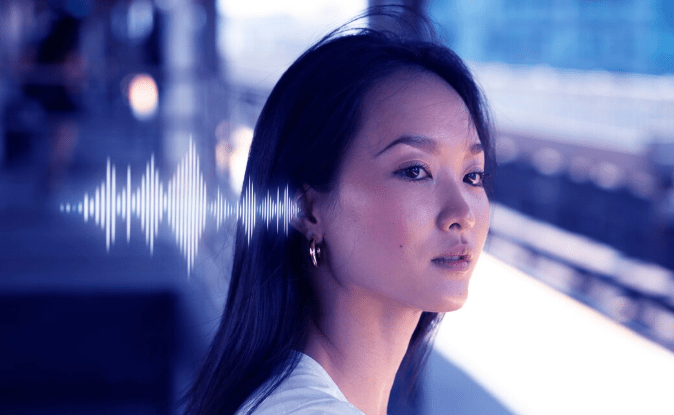
A short audio clip can now replicate a human voice convincingly enough to fool a listener on a quiet afternoon, something that previously required a full recording studio. Sometimes it’s just a few seconds of speech taken from a social media video or podcast.
According to reports, contemporary AI systems are capable of capturing not only words but also tone, rhythm, and even hesitation—details that give a voice a distinctly human quality. It’s amazing how precise that is. It’s also uncomfortable.
| Category | Details |
|---|---|
| Topic | AI Voice & Face Cloning Ethics |
| Field | Artificial Intelligence, Digital Rights, Media Ethics |
| Key Concern | Consent, identity ownership, misuse, fraud |
| Core Technology | Voice synthesis, facial deepfakes, neural networks |
| Credible Organizations | European Union, Forbes, The Conversation |
| Reference Links | https://www.forbes.com ; https://theconversation.com ; https://arxiv.org |
The ethical discussion surrounding AI cloning—whether of voice or face—has swiftly transitioned from theory to practice. Once-experimental tools are now widely available and utilized in everything from customer service systems to movie dubbing. Alongside these useful applications, however, a more subdued question keeps coming up: once a person’s likeness can be digitally replicated, who really owns it?
Although it’s not always clear-cut, consent is at the heart of that question. Researchers’ and businesses’ guidelines stress that voice cloning should only take place with explicit, informed consent. However, in reality, the lines are hazy. Public figures are especially vulnerable because their voices and faces are already widely accessible. Many ethicists contend that availability does not equate to permission, but technology does not always make this distinction.
This tension is becoming evident in an increasing number of incidents. The Conversation’s analysts have detailed instances in which scammers used cloned voices to impersonate executives or family members in order to demand immediate money transfers. Skepticism may be overcome by the emotional impact of hearing a familiar voice, particularly in times of distress. It serves as a reminder that identity is closely related to trust and is not only visual or auditory.
However, there are indisputable advantages to the technology. Voice cloning can help people who are ill and unable to speak regain their sense of self by enabling them to speak in a voice that feels like their own. It makes multilingual storytelling possible in creative industries without sacrificing performance nuance. As these applications grow, it seems like the distinction between innovation and intrusion is blurry and frequently changing.
Legal systems are making an effort to keep up. Voices and likenesses are starting to be recognized as types of intellectual property in some jurisdictions, expanding rights that were previously limited to written or visual works. For instance, the European Union has implemented regulations mandating transparency in the use of AI-generated content. Some states in the US have enacted legislation that expressly addresses voice replication. However, regulations are still inconsistent, creating gaps that technology frequently fills swiftly.
In this context, ownership is a complex concept. Does the person, the developer, or the user creating the content own the output if an AI model is trained on someone’s voice? Whether current intellectual property frameworks can adequately address that is still up for debate. The question seems more philosophical than technical: what does it mean to “own” something as intimate as a voice?
Permanence is another problem. Controlling the use of a voice or face becomes challenging once it has been digitized and shared. Even if consent is initially granted, it might not completely remove the digital traces if it is later revoked. This leads to a conflict between finality and flexibility that current systems are ill-prepared to handle.
Reactions from the public point to a mixture of curiosity and unease. AI cloning is viewed by some as a creative tool that expands the possibilities of media and communication. Others see it as a possible loss of identity, especially if it is used without consent. It’s difficult to ignore how quickly perceptions change based on context; something that seems novel in one situation may seem intrusive in another.
Another layer is added by the discussion surrounding deceased people. AI-generated replicas of historical voices or faces have provoked discussion about respect and legacy. Families have occasionally voiced discomfort with the use of these digital versions, which raises concerns about whether consent can be extended beyond a person’s lifetime. Although the area is still unclear, future standards may include more precise guidelines for posthumous digital rights.
For their part, tech companies are starting to develop security measures, such as watermarking systems, consent verification procedures, and usage limitations. These steps can be beneficial, but their implementation and enforcement must be consistent. The tools for abuse frequently proliferate just as quickly as the tools for protection, as is the case with many new technologies.
As this develops, it seems as though society is negotiating a new kind of boundary—one that lies between digital representation and physical identity. The capacity to mimic a person’s voice or face calls into question long-held beliefs. Seeing might not be believing anymore. Maybe neither can be heard.
How these boundaries will settle is still up in the air. Will identity ownership become more codified, with distinct rights and safeguards? Or will it continue to change as a result of new standards and technological advancements? The questions themselves are getting more difficult to ignore, but the answers are still developing.
