

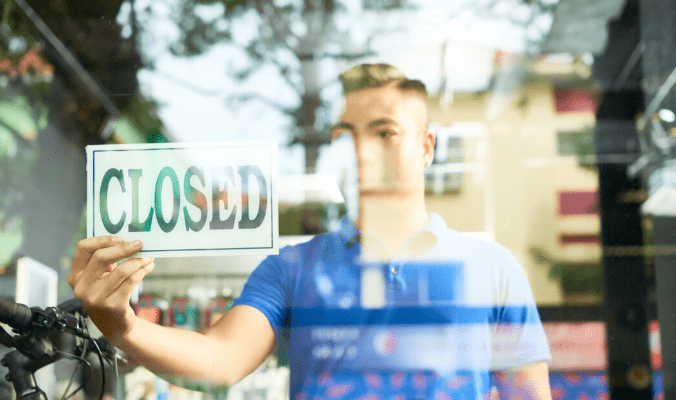
This week, the scene at the Russell & Bromley window in Covent Garden tells you most of what you need to know. There are fewer shelves. Compared to before, the lighting seems harsher. The closure is announced in an apologetic handwritten card next to the door, as though the store is ashamed of how things turned out. This is not how anyone envisioned the final chapter for a company that has discreetly dressed the feet of royalty for over a century.
In January, the 1873-founded Russell & Bromley filed for administration. The result was evident by April. The name, the domain, and the intellectual property were acquired by Next plc for £2.5 million. Not the shops. Not the stock. Only the brand itself, which will continue to exist as an online storefront nestled within Next’s vast online empire. Ten stores, including those in Bath, Harrogate, and Covent Garden, closed right away. Chelsea, Mayfair, and Bluewater are the only three still standing. That’s what’s left of thirty-six.
| Detail | Information |
|---|---|
| Company | Russell & Bromley |
| Founded | 1873 |
| Origin | United Kingdom |
| Industry | Footwear and leather goods |
| Original Store Count | 36 standalone stores, 9 concessions |
| Stores Remaining | 3 (Chelsea, Mayfair, Bluewater) |
| Employees (pre-administration) | Approximately 440 |
| Administration Filing Date | January 2026 |
| Acquirer | Next plc |
| Acquisition Value | £2.5 million (brand and IP only) |
| Liquidation Partner | Retail Realisation |
| Insolvency Regulator | Companies House |
| Notable Customers (unendorsed) | Kate Middleton, Queen Camilla |
| Administrator | Interpath Advisory |
Losing a shoe store is a unique experience. It is not comparable to a chain restaurant or a bank. People carry bags that are associated with memories. A mother is purchasing the first pair of appropriate leather heels for her daughter. For the next fifteen years, a man will spend money on a single pair of brogues that he will wear to job interviews and funerals. These shoes were manufactured by Russell & Bromley. Yes, it’s pricey, but it’s made with stitching that lasts through multiple trends.
Although the royal family never directly supported anything, the royal connection is part of the legend. Regarding that, the Advertising Standards Authority of Britain is very stringent. However, the photos were visible, and they worked in silence. Kate Middleton is wearing a pair of Russell & Bromley flats as she exits a vehicle. Queen Camilla at a garden party. For a long while, the brand didn’t need to purchase that level of attention.
The pandemic and its protracted aftermath came next. High street traffic hasn’t really recovered, and anyone acting otherwise hasn’t spent a Tuesday afternoon in Swindon or Birmingham. Russell & Bromley’s dominated categories were eaten up by online shopping, especially women’s high-end footwear, where rivals moved more quickly and spent more on digital. It turns out that when your clients are using their phones at midnight, heritage is a brittle currency.
The intriguing part is Next’s approach. Purchasing the name without the stores is a well-known strategy that worked for them with Joules and Cath Kidston. The deal’s liquidation expert, Retail Realization, has connections to Modella Capital and a history of recovering valuable assets from failing brands while allowing the physical infrastructure to fall apart. It works well. One could argue that it’s also a little depressing. Overnight, a company that established itself through location and craftsmanship is reduced to a logo in someone else’s shopping basket.
The narrative is less philosophical for the approximately 440 employees. Gift cards are no longer valid. Ninety percent of stock is being cleared, which seems generous until you see what’s really going on. The Russell & Bromley unit there had been one of the street’s anchors, a Harrogate real estate agent told a local newspaper. It now contributes to an increasing number of vacant frontages, each of which slightly dulls the surrounding pavement.
It’s difficult to ignore how many of these tales are beginning to rhyme. Paperchase, Ted Baker, Wilko, and Cath Kidston. distinct categories with the same collapse shape. The administrators won’t and most likely won’t respond to the question of whether Russell and Bromley could have been saved by an earlier intervention. It’s more evident that the brands that once characterized the British high street are disappearing, and when they do appear, they hardly ever feel like replacements at all.
