

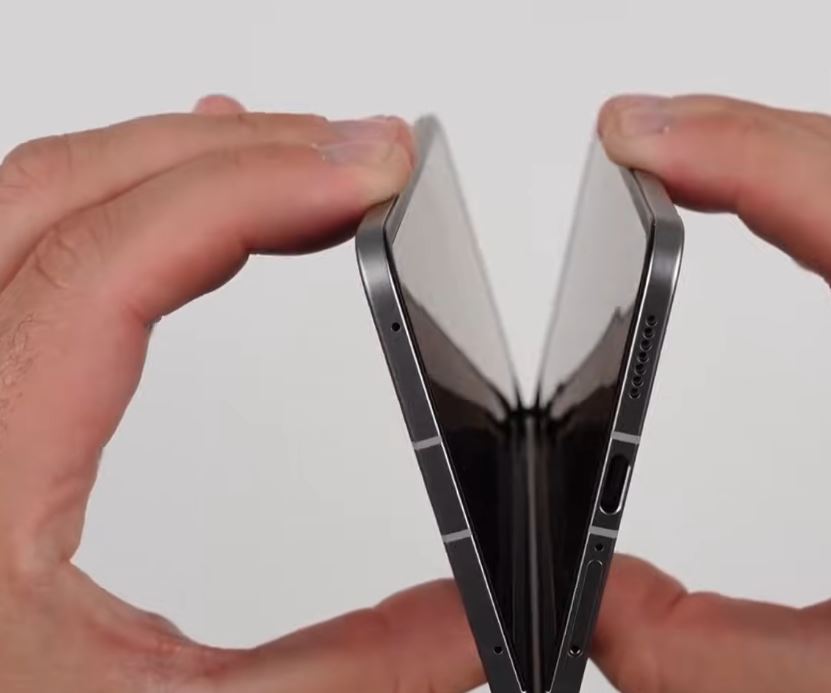
Foldable phones typically attract a certain kind of attention on a busy electronics showroom floor. People pick them up, unfold them slowly, almost cautiously, and then stop for a second longer than normal. Thus far, the foldable era has been characterized by that pause, which is a mix of curiosity and hesitation. And Apple Inc. is stealthily getting ready to enter that uncharted territory.
Apple stood by for years as businesses like Samsung conducted public experiments. Despite early adopters’ complaints, screens creased, hinges creaked, and the category continued to advance. It seems as though Apple was holding off on entering the market in order to steer clear of its early blunders. It remains to be seen if this patience will pay off.
Key Information About Apple iPhone Foldable
| Category | Details |
|---|---|
| Product Name | Apple iPhone Foldable (Rumored “iPhone Fold”) |
| Company | Apple Inc. |
| Expected Launch | Late 2026 (rumored) |
| Design Type | Book-style foldable |
| Inner Display | ~7.8-inch (iPad mini size) |
| Outer Display | ~5.5-inch |
| Operating System | iOS (with iPad-like interface) |
| Authentication | Touch ID (side button, expected) |
| Price (Estimated) | $2,000–$2,400 |
| Key Feature | Dual-screen multitasking |
| Reference Website | https://www.apple.com |
A book-style design is anticipated for the rumored foldable iPhone, also known as the “iPhone Fold.” When closed, it resembles a slightly thicker iPhone. When opened, its roughly 7.8-inch internal display grows into something more akin to an iPad mini. Although the concept seems simple, it actually alters how a gadget fits into daily life.
It’s possible that the software, rather than the hardware, is the true story here. According to reports, Apple is redesigning iOS so that it functions more like an iPad when the device is unfolded, enabling side-by-side apps, wider layouts, and a different interaction rhythm. It’s easy to understand how this could feel natural when you watch people using tablets in coffee shops, flipping between apps while looking at notifications. However, it’s still unclear if consumers genuinely want that phone experience.
Subtle questions are raised by the design itself. According to reports, Apple is putting a lot of emphasis on durability in an effort to get rid of or at least reduce the noticeable creases that come with long-defined foldable screens. Many users have been quietly frustrated by that crease, which is frequently subtle but noticeable in specific lighting conditions. Perceptions could change overnight if Apple can drastically cut it. However, it seems like a challenging commitment to consistently accomplish that thousands of times.
And then there’s the identity problem. Is this a shrinking tablet or an expanding phone? Holding a folded gadget while standing on a train platform, it functions similarly to a phone—quick, effective, and recognizable. It leans toward tablet territory when unfolded for media or email while seated at a desk. Although that duality is fascinating, it also causes conflict. Individuals typically want their devices to have distinct roles.
One of the more unexpected rumors is that the power button’s Touch ID sensor will take the place of Face ID. It’s a sensible choice, probably motivated by the ultra-thin design’s space limitations. At least on the surface, it still seems like a step back. One of those inconspicuous conveniences that is only apparent when it is absent is Face ID.
Naturally, the main topic of discussion is price. The foldable iPhone is estimated to cost between $2,000 and $2,400. That is a psychological threshold in addition to being costly. At that point, consumers begin comparing it to laptops, tablets, and even entire device ecosystems in addition to other phones. The value proposition’s persuasiveness is still up in the air.
Additionally, a larger cultural dynamic is at work. Despite years of advancements, foldable phones have remained niche. Many people just don’t think it’s necessary. It’s difficult to argue that something is lacking when observing commuters browsing social media on typical smartphones. However, there is a persistent belief that Apple has the power to change that, that its entry could give the category legitimacy that others haven’t.
The similarities to previous Apple products are difficult to ignore. Neither the Apple Watch nor the iPhone was the first smartphone or smartwatch. However, by improving the experience rather than creating it from scratch, both transformed their categories. It’s unclear if the foldable iPhone will be able to accomplish the same.
When discussing this gadget, there’s a subtle tension. Some are looking forward to a time when a single gadget will take the place of a phone and a tablet. Some are dubious, citing factors like price, longevity, and the straightforward issue of necessity. Both viewpoints seem legitimate.
As you literally watch this happen, you get the impression that Apple isn’t merely introducing a new product. It’s a behavior test. requesting that consumers reconsider how they use a device they’ve been carrying around for more than ten years.
And like most things in technology, the outcome will probably depend more on whether or not people decide they truly want to use the device than on what it can do.
