

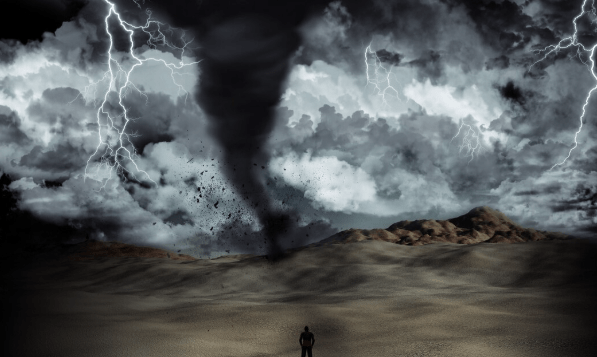
There’s a particular kind of silence that settles in just before a storm turns serious. The sky darkens unevenly, wind picking up in short bursts, and somewhere—often from a phone, a television, or a distant siren—comes the alert. A tornado watch. or a warning of a tornado. The terms have a similar, nearly identical sound. But they aren’t. And in that difference, there’s a quiet urgency most people only fully understand after the fact.
In essence, a tornado watch is an indication of potential. Meteorologists have been tracking atmospheric conditions—warm air rising, cold air pushing in, wind patterns twisting just enough to create instability. The components are present. It’s possible that storms could develop into tornadoes. Though not assured, it is conceivable. And so the alert is issued across a broad region, sometimes spanning multiple counties or even states.
| Category | Details |
|---|---|
| Issued By | National Weather Service (NWS) |
| Tornado Watch Meaning | Conditions are favorable for tornadoes |
| Tornado Warning Meaning | Tornado is occurring or imminent |
| Coverage Area | Watch: Large region; Warning: Small, specific area |
| Typical Duration | Watch: Several hours; Warning: 30–60 minutes |
| Action Required | Watch: Be prepared; Warning: Take immediate shelter |
| Detection Method | Radar, weather models, storm observation |
| Risk Level | Watch: Potential risk; Warning: Immediate danger |
| Highest Alert | Tornado Emergency (rare, severe cases) |
| Reference | A tornado is occurring or imminent |
Standing in a neighborhood under a watch, life often continues as usual. Cars still pass by. Kids may still be outside, but maybe a parent is looking up more frequently. There is a feeling of anticipation, of keeping an eye out for hints in the sky. It’s a calm preparation. That’s the idea, anyway. However, a warning changes everything.
Something has already been observed—or detected—when a tornado warning is issued. A trained spotter may have reported an actual tornado touching down, or radar may show rotation strong enough to indicate the formation of a funnel. The vocabulary sharpens. immediate peril. Act. Go to a shelter right now.
It’s difficult to ignore how people respond differently. There is frequently hesitation during a watch. A tendency to assume nothing will happen this time either. Perhaps that’s human nature—balancing risk with routine. But when a warning comes through, especially accompanied by sirens, the atmosphere changes quickly. Doors close. Lights flicker on. Basements fill.
Part of the problem seems to be language. “Watch” and “warning” don’t intuitively signal urgency to everyone. A watch may sound almost observational and passive. If there isn’t a storm outside the window, a warning could seem abstract. It’s still unclear whether people consistently interpret these alerts as intended, especially in regions where tornadoes are less frequent.
The distinction is typically better understood in regions where tornado season is a regular occurrence, such as the American Midwest or parts of the South. Locals acquire a sort of intuition. They use weather apps more often. Without giving it any thought, they are aware of the location of the house’s safest room. During some months, it becomes a part of everyday consciousness.
The learning curve may be steeper elsewhere. Think about a typical sequence. A broad area is covered by a watch that is issued in the morning. Heavy clouds and sporadic rain accompany the day’s events. A warning is issued for a particular county a few hours later. The window of opportunity for action drastically shrinks. A once widespread threat turns into a localized one.
The difference is crucial because of this compression of time, going from hours to minutes.
This is something that meteorologists frequently stress, reiterating the same advice: “a watch means be prepared; a warning means take action.” It’s very easy to understand. However, simple instructions can become complicated in real life. People balance the perceived risk of danger against the inconvenience of disrupting their routine. They occasionally wait too long.
Additionally, there is the issue of trust. Repeated watches that don’t produce tornadoes can eventually wear you out. Alerts start to seem less urgent. People ignore them. It makes sense, but it’s dangerous. Because when a warning does come, it carries a different degree of certainty—one that doesn’t allow for much leeway.
Observing this development in various communities, it seems that communication is not the only issue. It has to do with conduct. how individuals react to ambiguity. How they assess risk in the moment.
These alerts’ underlying science has advanced dramatically. Radar systems are more sophisticated. Forecasting models are more accurate. It is possible to issue warnings more quickly than in earlier decades. However, the last stage—the human reaction—remains unpredictable even with improved tools.
At that point, the distinction between a tornado watch and a warning becomes more than just nomenclature. It turns into a point of decision. A watch demands attention. A warning necessitates action.
It sounds easy. However, it’s that distinction that determines what happens next when it matters most—when the sky is changing, when the air feels heavy, or when an alert appears on a screen.
