

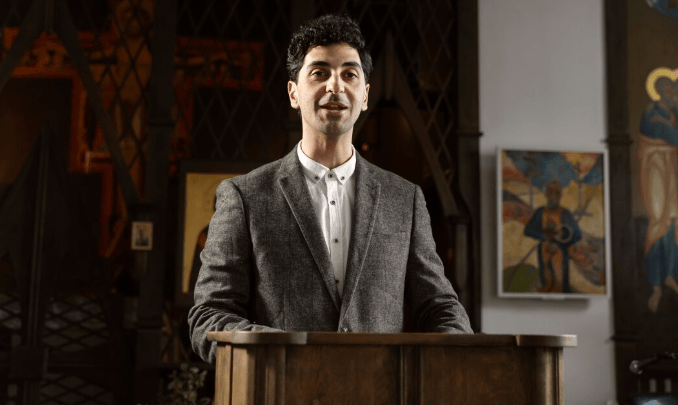
When discussing Brandon Herrera’s polls, the first thing that comes to mind is the peculiar fusion of traditional politics and internet culture. Herrera doesn’t appear to be a conventional candidate in many respects. His reputation was established in a workshop, where he produced gun reviews and commentary videos for millions of YouTube viewers, rather than in congressional offices.
However, those online supporters seem to be transforming into something more concrete—votes—in the vast 23rd Congressional District of Texas.
| Category | Details |
|---|---|
| Name | Brandon Herrera |
| Born | November 20, 1995 |
| Profession | YouTuber, firearms manufacturer, political candidate |
| Nickname | “The AK Guy” |
| Political Race | Texas 23rd Congressional District (Republican Primary) |
| Key Opponent | U.S. Rep. Tony Gonzales |
| 2026 Primary Result | Herrera ~43.3%, Gonzales ~41.7% (Runoff required) |
| Party | Republican |
| Known For | Gun-rights advocacy, large social media presence |
| Reference Website | CNN |
The numbers came slowly on the eve of the Republican primary. The results were displayed on screens within campaign watch parties located throughout South and West Texas, county by county and precinct by precinct. By the end of the evening, Herrera had about 43 percent of the vote, just ahead of incumbent Congressman Tony Gonzales, who had about 41.7 percent. Both fell short of the majority required to win by a landslide, necessitating a runoff in late May.
There was a discernible murmur among political observers in the room as they watched the early tallies come in from counties like Brewster and Bexar. Herrera wasn’t merely a rival. In a number of rural areas, he was in the lead. It’s difficult to ignore how out of the ordinary that is.
After all, Herrera was more of a digital personality when she first entered politics. By talking about guns, Second Amendment issues, and occasionally politics, he amassed a following of over four million YouTube subscribers. He was known online as “The AK Guy.” The videos are frequently shot in open spaces in Texas, with metal targets clanging in the background and dusty shooting ranges.
For many years, the majority of that audience was found online. According to polls and preliminary findings, it appears to be moving into the voting booth.
The actual race has been exceptionally tense. Gonzales, who has served as the district’s representative since 2021, had the benefit of being in office when he started the campaign. He was well-known, had a track record in Congress, and had established donors. However, the campaign took a dramatic turn in the final weeks leading up to the primary.
Gonzales allegedly had an improper relationship with a former employee who passed away last year, according to reports. Publicly shared text messages raised issues that swiftly took center stage in the Texas media’s political discourse. Gonzales insisted that more information would eventually come to light, denied any wrongdoing, and turned down calls to step down. It’s a completely different story whether or not voters trusted him.
Herrera’s campaign took advantage of the situation. He presented the controversy as proof of character issues in Washington politics on social media, where he already has a sizable following. His posts quickly gained popularity and were shared thousands of times on conservative networks.
Herrera seems to have a deeper understanding of the online rhythms than the majority of politicians. It feels different when you watch him campaign. brief videos captured on mobile devices. direct appeals to supporters. a constant flow of commentary that occasionally sounds more like a podcast than a political address. However, polls by themselves do not ensure victory.
The 23rd District of Texas is vast, spanning hundreds of miles from San Antonio westward to the border with Mexico. It takes more than just being popular online to run a campaign there. Candidates spend hours traveling between towns to attend small gatherings in rural community centers and county meetings.
Something intriguing about Herrera’s appeal is revealed by those settings. Supporters appeared more interested in the message than in online celebrity at a recent event held in a town hall in West Texas, with folding chairs neatly arranged in rows and fluorescent lights buzzing overhead. They discussed gun rights, border policy, and their dissatisfaction with Washington. Herrera felt “closer to regular people,” which some people found appealing. It’s unclear if that sentiment will result in enough votes.
History is another element that makes the Brandon Herrera polls discussion more difficult. Herrera faced Gonzales in a comparable runoff contest two years prior. The outcome was agonizingly close. Only 354 of the nearly 30,000 votes cast went to Gonzales.
Herrera looks more formidable going into the runoff this time, but the result is still uncertain. In the second round, incumbents frequently bounce back, especially after donors and party leadership have fully mobilized. Gonzales continues to have the support of powerful people in Washington, including former President Donald Trump.
As you pass through a few of the district’s smaller towns, you’ll notice the typical signs of election season: pickup trucks with bumper stickers and yard signs resting against fences. However, quieter conversation is also taking place in gas stations and coffee shops.
They want to know if someone who gained notoriety through internet videos can truly be elected to Congress. At first, it seems improbable. However, the results of American politics have been more bizarre. It’s hard to completely rule out the possibility when looking at the primary results.
Herrera’s backing is no longer merely hypothetical. On election night screens, it can be measured in counties, votes, and percentages.
The question will be answered by the runoff. However, for the time being, the story of the Brandon Herrera polls feels more like a political experiment than a conventional campaign, as it is being played out in real time across rural towns, Texas highways, and the peculiar nexus between electoral politics and social media fame.
