

Credit: LUMA
The Trade Desk’s headquarters are located in Ventura County, north of Los Angeles, close to the Pacific coast, where eucalyptus trees and a hint of salt permeate the air. It’s not the ostentatious campus that one might anticipate from a billion-dollar tech company in Silicon Valley. The offices are tidy, contemporary, effective, and purposefully quiet.
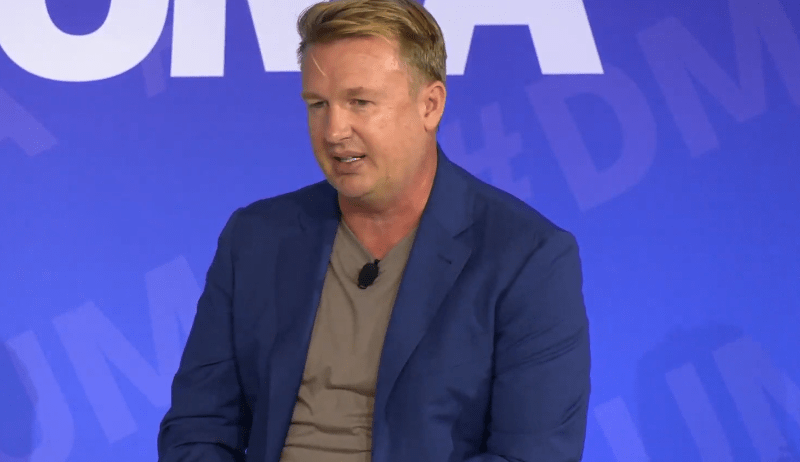
That understated setting mirrors the personality of the company’s founder and CEO, Jeff Green, a billionaire who somehow managed to build one of the most influential advertising technology companies in the world without becoming a household name.
| Entrepreneur, C, EO, and Chairman of The Trade Desk | Details |
|---|---|
| Full Name | Jeffrey Terry Green |
| Birth Year | 1976–1977 |
| Nationality | American |
| Profession | Entrepreneur, CEO, and Chairman of The Trade Desk |
| Known For | Co-founding The Trade Desk and AdECN |
| Industry | Digital Advertising / AdTech |
| Estimated Net Worth | About $2.2 billion (2026 estimate) |
| Major Company | The Trade Desk (Nasdaq: TTD) |
| Residence | Newbury Park, California, United States |
| Reference | https://www.forbes.com/profile/jeff-t-green |
According to Forbes, Jeff Green’s estimated net worth as of 2026 is $2.2 billion. Depending on how much The Trade Desk’s stock is worth, the amount has occasionally increased even further, momentarily coming close to $6 billion. It fluctuates with the market, just like many fortunes made in the tech sector. The earnings call for a single quarter has the power to change billions.
Green is unquestionably a member of the billionaire class, even at the lower end of those estimates. The intriguing aspect is how silently it took place.
Green didn’t begin in the glamorous realm of technology. There were no celebrity-founder myths or viral apps. Rather, he entered the largely unseen machinery of digital advertising, which silently selects which advertisements show up when a user opens a website or watches a video. That ecosystem is virtually invisible to the majority of internet users. It turned into a goldmine for Green.
Following his father’s career of purchasing and selling businesses, he spent his childhood traveling throughout the United States, including Utah, Colorado, Kansas, Minnesota, and Rhode Island. That type of upbringing frequently results in a certain level of adaptability. New social circles, schools, and surroundings.
He later attended Brigham Young University to study English literature before attending the University of Southern California to study marketing communications. For a tech founder, this mix feels a little out of the ordinary—part marketer, part storyteller.
Green seems to have always had a deeper understanding of the internet economy than many of the early entrepreneurs. Online revenue is frequently driven by advertising rather than content. Huge revenue streams can be discreetly controlled by whoever controls the system that links advertisers and audiences.
He started the first digital advertising exchange, AdECN, in 2003 with the goal of making online ad purchases more akin to the stock market. The idea was simple but powerful: allow advertisers to bid automatically for digital ad space in real time. Today, it seems clear. It was revolutionary at the time.
Microsoft took notice. After the company bought AdECN in 2007, Green joined the tech behemoth and worked on the online advertising strategy for a while.
He probably learned something from observing the tech world from within Microsoft. The industry titans like Google and Facebook were not going to control the entirety of digital advertising in the future. Independent platforms that link advertisers to the wider internet would also have room.
After leaving Microsoft in 2009, Green and fellow executive Dave Pickles co-founded The Trade Desk. In retrospect, that choice made him incredibly wealthy.
The Trade Desk specializes in programmatic advertising, which uses algorithms to automatically purchase and place advertisements on websites, streaming services, and mobile applications. Businesses use software platforms like The Trade Desk to bid on digital inventory instantly rather than negotiating individual ad deals.
The amount of money that passes through those systems is difficult to understand when you stand outside the Ventura offices today. Every year, digital advertising brings in hundreds of billions of dollars worldwide. In the center of that flow is Green’s business.
The 2016 NASDAQ IPO of The Trade Desk was met with cautious optimism. Technology used in advertising was known to be unstable. Some analysts questioned the company’s ability to contend with industry titans like Google, Amazon, and Meta. However, investors appeared to think Green’s strategy could succeed.
The stock did exceptionally well over the years, occasionally trading at multiples of its initial public offering price. In addition to growing into connected television advertising, which could eventually change how ads appear on streaming platforms, the company’s revenue continued to rise, reaching billions each year.
Green’s greatest quality may be a certain level of patience rather than technical skill. He has frequently discussed the “open internet,” contending that independent publishers and platforms need alternatives to the massive tech ecosystems, in contrast to many tech founders pursuing rapid expansion. The company’s strategy has been subtly influenced by that philosophy.
Naturally, scrutiny follows billionaire wealth. Green gained notoriety in 2022 after allegedly receiving a compensation package valued at over $800 million, which was mostly based on stock options. Supporters contended that the size of executive compensation was a reflection of the company’s quick expansion, while detractors questioned it.
When Green publicly quit the Church of Jesus Christ of Latter-day Saints in 2021 after criticizing the organization’s position on social issues, another unexpected chapter began. Additionally, he made a $600,000 donation to an LGBTQ rights group, which garnered attention outside of the business pages.
The incident revealed something about his character—someone who is prepared to enter a contentious situation when needed.
Another important aspect of his narrative is his philanthropy. Green committed to donating 90% of his wealth either during his lifetime or after his death when he joined The Giving Pledge. Bill Gates and Warren Buffett initiated the pledge, which has drawn several billionaires who believe that excessive wealth entails responsibilities.
Whether Green ultimately gives away most of his fortune remains to be seen. Promises made by billionaires can be challenging.
However, something is intriguing about how subtly Jeff Green’s CEO net worth increased over time. No ostentatious consumer goods. Not a single celebrity brand. Simply algorithms that discreetly display advertisements online. Sometimes the most successful tech companies aren’t the ones that people see on a daily basis; rather, it’s the systems that operate quietly behind the scenes.
