

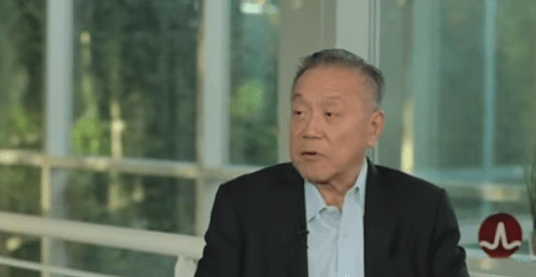
One of those figures that appears simpler on search results pages than it actually is is Hock Tan’s net worth. There isn’t a formal public document that clearly and unambiguously states his value. Instead, there are pieces: insider-sale records, stock holdings, compensation disclosures, and the market’s shifting perception of Broadcom. Tan’s net worth was recently estimated by GuruFocus to be at least $300 million based on disclosed holdings. Benzinga has calculated it to be approximately $1.21 billion based on a more comprehensive total of reported holdings across companies. Both figures are incomplete and believable in their own limited sense. In all honesty, Hock Tan is extremely wealthy; depending on how one counts equity, trusts, and previous sales, he is likely well into the nine figures and possibly over the billion-dollar mark.
| Important Information | Details |
|---|---|
| Full name | Hock E. Tan |
| Birth name | Tan Hock Eng |
| Born | 1951 or 1952 |
| Birthplace | Penang, British Malaya (now Malaysia) |
| Citizenship | American |
| Current role | President, CEO, and Director of Broadcom |
| Education | MIT (BS, MS), Harvard Business School (MBA) |
| Main source of wealth | Broadcom stock ownership and long-term equity compensation |
| Public net worth estimate | Not officially disclosed; public estimates range from roughly $300 million based on visible holdings to over $1 billion in broader estimate models |
| 2025 compensation | $205.3 million, mostly stock awards |
| Authentic reference website | Broadcom executive profile |
That ambiguity is part of the story, not a weakness. Executive wealth frequently resembles a weather system that moves over stock charts and vesting schedules rather than a bank balance. Tan’s wealth is held by Broadcom, which has emerged as one of the market’s most powerful AI-era winners. On March 5, 2026, Reuters reported that Broadcom’s stock increased after the company predicted that sales of AI chips would reach over $100 billion by 2027. This estimate was significant enough to increase the company’s market value by over $42 billion in a single trading day. That type of market movement is not background noise for a CEO whose wealth is based on equity. It’s the environment in which he lives.
Tan’s biography sheds light on why he continues to be a somewhat unique figure in American business. According to Broadcom’s own executive profile, he became president and CEO in March 2006. Born in Penang, he graduated from MIT with a bachelor’s and master’s degree in mechanical engineering before enrolling in Harvard’s MBA program. On paper, this is a typical immigrant meritocracy arc, but in reality, these journeys are always messier and less likely than the resume indicates. Tan’s public persona has an air of traditional discipline. He doesn’t exude charisma on social media or founder mystique. Instead, he appears to be a man who would prefer to seal a deal than tell its story.
And a lot of the wealth story starts with deals. In 2022, Reuters reported that Tan had transformed Broadcom into a technology conglomerate through a series of acquisitions, gaining a reputation as a shrewd negotiator and a brutal cost-cutter. On Wall Street, that reputation has held up well, if not always comfortably. Although Broadcom is not often associated with the cultural glitz of Nvidia or Apple, it has become essential to the development of AI, particularly in networking and custom chips. Tan’s wealth may have increased in part because he created the kind of business that investors value most during uncertain times: one that is practical, profitable, and a little scary.
In a more overt register, his compensation conveys the same message. Tan’s total compensation for 2023 was $161.8 million, more than twice his 2022 salary, according to Reuters, primarily due to stock awards. His 2025 compensation package then increased to $205.3 million, with roughly $202.4 million coming from equity awards, according to a Bloomberg report published just days ago. Even in a market that has become numb to executive excess, those are staggering amounts. It is difficult to ignore how modern CEO wealth is becoming more closely linked to the market’s desire for future narratives when numbers like that start to mount. The story in Tan’s instance is AI infrastructure.
Investors’ willingness to continue making payments is demonstrated by Broadcom’s own performance. According to the company, revenue for fiscal 2024 increased 44% year over year to a record $51.6 billion, with $21.5 billion coming from infrastructure software. Later, it stated that revenue for the fourth quarter of fiscal 2025 reached a record $18.0 billion, up 28% from the previous year, partly due to a 74% increase in AI semiconductor sales. These numbers aren’t ornamental. These are the kinds of figures that gradually transform a CEO’s stock grants into a staggering amount of personal wealth, particularly when the market determines a company has taken center stage in the upcoming computing cycle.
However, net worth and yearly salary are not the same. That difference is important. Tan has also been a consistent seller of Broadcom stock over time, according to public trackers. According to GuruFocus, he sold more than 1.18 million shares through 14 insider transactions at Broadcom during the previous 18 months. Following sales, direct and trust-held Broadcom shares were still valued at hundreds of millions of dollars, according to additional reporting on SEC filings in late 2025. As a result, his fortune is more than just a salary story or an unrealized stock story. It is a combination of realized gains, long-term ownership, and compensation plans intended to hold him accountable for Broadcom’s success.
Additionally, there is a human element that is sometimes overlooked in favor of money. According to public profiles, Tan and his ex-wife gave tens of millions to disability programs and autism research, including gifts to Harvard Medical School, Cornell, and MIT. Even so, some people are still uncomfortable with CEO compensation at this level, particularly after Reuters reported that his 2023 compensation was 510 times that of Broadcom’s median employee salary. However, it muddies the picture, which is typically where the truth is found. Rarely are great fortunes morally pure objects. A combination of success, leverage, timing, market euphoria, and systems that favor a select few over the majority are typically involved.
What is the net worth of Hock Tan, then? The most responsible response is that, although it is not exactly public, it is significant enough to rank him among the richest executives in American technology. He is estimated to be in the low hundreds of millions by a conservative, holdings-based read. A more comprehensive estimate places him over $1 billion. In any case, it’s difficult to overlook the deeper point: Tan made his fortune by becoming something Wall Street frequently values even more highly than a celebrity CEO: a tenacious operator at the core of a business that the AI boom suddenly made indispensable.
