

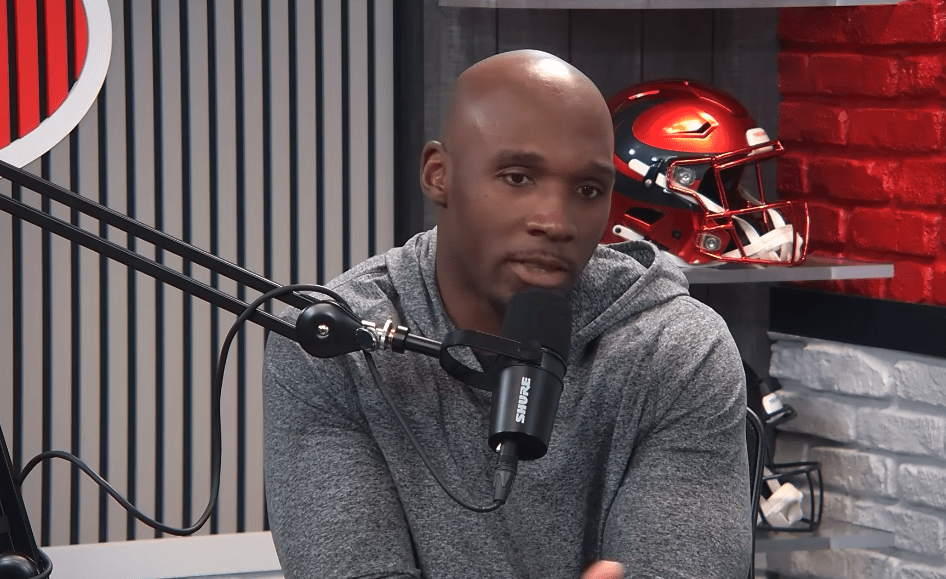
Credit: Houston Texans
It was early in the fourth quarter at NRG Stadium on November 2, 2014. A pass had just been intercepted by DeMeco Ryans, who was with the Philadelphia Eagles at the time. His Achilles tendon snapped as he planted his foot to turn; there was only turf and torque, no contact or tackle.
Unaware that they were seeing the end of a linebacker’s career, the crowd cheered as he was carried off the field.
| Detail | Information |
|---|---|
| Full Name | DeMeco Ryans |
| Date of Birth | July 28, 1984 |
| Career Highlights | NFL Linebacker (Texans, Eagles), Pro Bowl (2007, 2009), NFL Coach (Texans) |
| Notable Legal Action | Filed lawsuit over injury on unsafe turf at NRG Stadium (2016) |
| Credible Source | ESPN |
A reputation had already been established for that field, which was patchworked with StrathAyr Turf modular grass trays. NFL players had expressed concerns on numerous occasions, describing softness and seams that resembled uneven terrain after a rainstorm rather than a football field.
Two years later, Ryans sued the NFL, the Houston Texans, and other stadium-related organizations for $10 million. He made a straightforward case: despite the field’s known dangers, nothing was done about it until careers, including his own, were destroyed.
He wasn’t just sidelined for the remainder of that season due to the injury, which was a complete Achilles tear. It changed his career path as a player forever. Even though he returned in 2015, his numbers drastically declined. He was released at the beginning of 2016 and never signed again.
It was not resentment that led to that lawsuit. It had to do with responsibility.
They had warned the Texans. not only by Ryans, but also by earlier occurrences. There, Wes Welker was seriously hurt. Brett Hartmann, a punter, lost his career there. Additionally, it was reported that teammates, including rookie Jadeveon Clowney at the time, complained about holes in the turf. However, significant changes didn’t start until Clowney, a first-round pick, was injured.
The lawsuit brought to light the institutionalized and painfully familiar dynamic of some voices being valued more than others. Ryans said more than just that the field was defective. He supported it with years of disregarded grievances and a pattern of management silence.
Following its filing in Texas state court, the case was filed in several different jurisdictions. Citing the NFL’s Collective Bargaining Agreement, the Texans contended that the matter ought to be arbitrated. Ryan’s attorneys resisted, arguing that this was merely basic premises liability, the kind one would anticipate if they slipped on a wet supermarket floor, rather than a contract dispute.
However, in 2019, the Texas Court of Appeals decided that Ryan’s claim had to be arbitrated because the field’s condition met NFL workplace standards as specified by league regulations. Many viewers were disappointed by the result, especially considering how infrequently those regulations prioritize individual players over multibillion-dollar teams.
The system once again prioritized the process over the individual by emphasizing arbitration. However, Ryans refrained from making a public outburst. He continued to coach, to build, and, most importantly, to stay in the city that had molded him as a rookie.
Years later, he unexpectedly made a comeback to Houston as head coach.
That has a certain poetic quality to it. With poise and resolve, a man who sued the team for his career-ending injury now serves as its leader. His idea of what football can become when safety and trust coexist is now housed in the same stadium that once let him down.
During a home game last season, I recall seeing him pace the sideline. Be calm. concentrated. Every step was measured. When someone chooses to lead after suffering institutional and physical setbacks, they exhibit a quiet kind of authority.
Over time, what started out as a legal dispute has expanded into a larger discussion about how athletes are treated both on and off the field. Ryan’s case raised awareness of turf safety, which ultimately sparked change not only in Houston but also in several stadiums where player grievances were growing.
He didn’t just speak for himself when he stood up. He spoke for every athlete who felt like a statistic following an injury, for every instance in which it seemed easier to keep quiet than to confront someone. He changed a portion of the legacy he is currently creating as a coach in the process.
There are no longer any improvised grass trays on the field at NRG Stadium. There are no more seams. The surface is more uniform, safer, and smoother. A very public fall gave rise to a quiet victory.
Ryans never made the story about retaliation throughout it all. He made it about accountability. His fortitude as a person and a professional is still incredibly effective, not only on Sundays but also in the culture he’s fostering within the Texans’ locker room.
That leadership is not only motivating for players navigating the harsh highs and lows of football, but it is also incredibly clear in its goal.
The DeMeco Ryans did more than just win games. He questioned a system, went through its procedures, and came back stronger. That’s a story worth listening to, particularly as we anticipate leadership and games that put people before plays.
