

When a ceasefire is announced, there is a certain silence that no one is boasting about. This week, it occurred once more. Standing at the G7 summit in Évian-les-Bains on Wednesday, Donald Trump called his new memorandum of understanding with Iran “very strong,” but he quickly undermined himself by acknowledging, almost cheerfully, that “nobody knows what it is.” The majority of what you need to know about this deal can be found in that one sentence. It’s true. It has been signed, or will soon be. Furthermore, very few of the participants appear eager to get too close to it.
It is fairly simple to describe the basic shape. The United States and Iran have reached a 14-point memorandum that ends the fighting, including in Lebanon, reopens the Strait of Hormuz to commercial shipping, and lifts the US naval blockade of Iranian ports following more than a hundred days of fighting that started on February 28.
Pakistan and Qatar are credited as the mediators who kept the negotiations going, and the official signing is scheduled for Friday in Switzerland at the Müngenstock resort. It is anticipated that Vice President JD Vance, who spearheaded the American side of the negotiations, will personally sign there. It is an important document by all standards. Additionally, it is a document that almost no one fully approves of by almost every measure being proposed in Washington, Tehran, and Jerusalem.
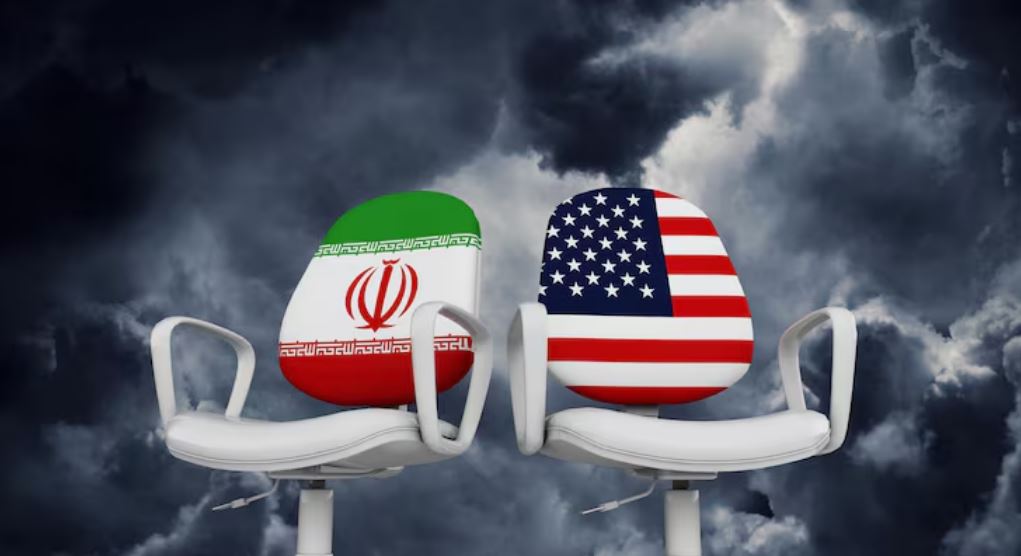
That’s this moment’s peculiar texture. Iran’s leadership is making a lot of effort to declare victory. Speaker of the Parliament, Mohammad Bagher Qalibaf, told state media that the nation had made “a long step towards final victory,” but the following day he described the same agreement as “a record of US failure.” President Masoud Pezeshkian went so far as to say that the agreement might eventually lead to “a different world” for Iran and the surrounding area. It’s important to observe how much weight that type of language is expected to carry. A government that recently endured strikes that killed the father, mother, wife, and son of its supreme leader—strikes that the US and Israel allegedly carried out—usually does not get to select its own narrative of victory without opposition. Additionally, it isn’t receiving that luxury here.
The official messaging does not accurately reflect the intensity of the criticism within Iran. According to reports, a hardline member of parliament’s National Security Committee accused negotiators of disobeying the supreme leader’s own order not to reopen Hormuz and called the draft a document that would make the nation an American colony. Speaking from exile, that is not a dissident. That person is breaking ranks in public while working for institutions that are supposed to defend the state. The relative silence from other hardliners seems to be more a sign of deference than agreement, a realization that the person who approved this deal is above public debate, at least for the time being.
Washington’s unease travels in the opposite direction but ends up in a similarly uncomfortable spot. If reports of an immediate lifting of sanctions were true, Nikki Haley wrote on social media, “Iran wins.” Steve Bannon, who is generally not Haley’s natural ally, made similar remarks on his podcast, cautioning against ever unfreezing Iranian assets. According to Senator Eric Schmitt, the Republican caucus is divided between two camps: one that “wants us to lose” and the other that “wants a forever war.” Trump, according to Schmitt, is neither. Bluntly, a person close to the administration described the arrangement as “a low-grade humiliation” masquerading as a victory lap, with the Strait reopening without the uranium leaving, without regime change, and without the kind of clean ending wars are supposed to produce in the retelling.
The extent to which this deal depends on postponed decisions is difficult to ignore. The most difficult problem, what will happen to Iran’s approximately 440 kilograms of highly enriched uranium, isn’t settled as much as planned and is instead pushed into 60 days of follow-up negotiations that might or might not survive contact with domestic politics in three different nations. According to reports, Iran’s missile program and its backing of organizations like Hezbollah were completely removed from the agenda. The technical lift needed, particularly on the nuclear piece, appears to be greater than what an administration she characterizes as improvising can credibly manage, according to Brookings’ Suzanne Maloney.
For what it’s worth, markets responded as they do when uncertainty momentarily decreases. Despite the fact that prices have increased by more than 40% since the start of the year, crude dropped more than 4% following the announcement and settled close to $80 per barrel. It appears that investors think the worst is over. The question of whether the parties involved in the negotiation also think that is a different and far less settled one.
