

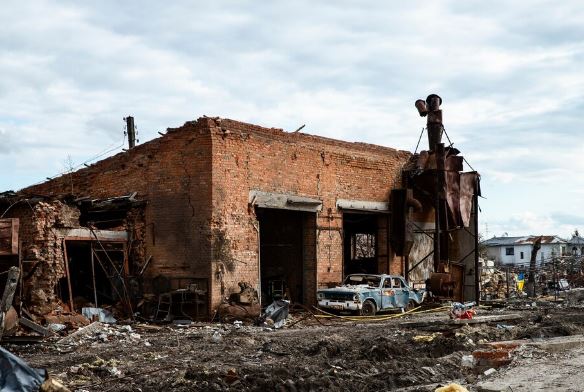
Just after midnight, the drone arrived, and most of Limassol was awake when the sirens sounded. I remember that particular detail. Not the hangar, not the scorch marks the cameras would capture in the morning, but the common people on a vacation island running for cover at a time when the main concern is typically whether the tavernas have closed. None of this was agreed upon by Cyprus. And yet there it was, an Iranian-made Shahed crashing into British sovereignty, drawing an EU member state into a conflict it had insisted for weeks it had no interest in.
The official line on Akrotiri was so boring for years that it was almost comforting. a joint operating base that is permanent. a post for staging. On their way to another location, airplanes refuel somewhere. Built in 1955, the base is situated on a windswept peninsula southwest of Limassol. For the most part, it serves as a peaceful expat town with runways attached, complete with schools, a volunteer band, and families on three-year postings. The speed at which that image changed is difficult to ignore. One hangar, utilized by US U-2 spy planes, and all of a sudden, the term “sovereign” began to play a significant role in political discourse.
Britain has been in a precarious situation. Keir Starmer repeatedly emphasized that the UK was not involved, that the jets in the sky were there for collective self-defense, and that joining offensive strikes is not the same as defending allies. It’s a true difference. Iran also didn’t seem to acknowledge it. 300 British soldiers were within several hundred yards of a strike in Bahrain, according to John Healey, who told the BBC. This was close enough that the term “exposure” stopped being abstract and started to sound more like luck.
As this develops, it seems as though the gap between reality and policy has widened uncomfortably. Defensive, London says. Press releases are not read by the drones. Although officials carefully pointed out that the two missiles fired in the direction of Cyprus weren’t necessarily directed at British facilities, that’s cold comfort when about 3,000 of your people live beneath the flight path.
Landing closer to home also has a political cost. The Cypriot high commissioner in Nicosia stated on Newsnight that people were disappointed and afraid because they had higher expectations. Marching activists carried banners that said “British bases out.” It’s possible that the lengthy, largely unseen agreement of the Sovereign Base Areas is finally being openly questioned: Cyprus becomes a target it never selected, and Britain gains its forward post in the Mediterranean.
Whitehall thus provided reinforcement. The Type 45 destroyer HMS Dragon, which can launch eight missiles in less than ten seconds, was dispatched east. More F-35s. Martlet-equipped Wildcat helicopters. The hardware is truly remarkable, and it might be sufficient. However, hardware doesn’t address the awkward question that lies at the heart of it all: can a base simultaneously serve as a symbol of protection and a liability?
How this is resolved is still unknown. Starmer himself reached for the Iraq analogies, claiming to have learned lessons from them. Perhaps. There is no doubt that the cozy myth that British bases overseas are somehow unrelated to the conflicts occurring nearby was severely damaged that evening. There was always exposure. Everyone has seen it now.
