

Credit: Hospice in the Weald
The evening weather forecast on British television has a subtly comforting quality. For a few minutes, the chaos of world news fades into something simpler: rain fronts moving across the Atlantic, high pressure drifting over southern England, and a hopeful patch of sunshine somewhere near Cornwall. The studio lights glow softly, and the map of the United Kingdom appears behind the presenter.
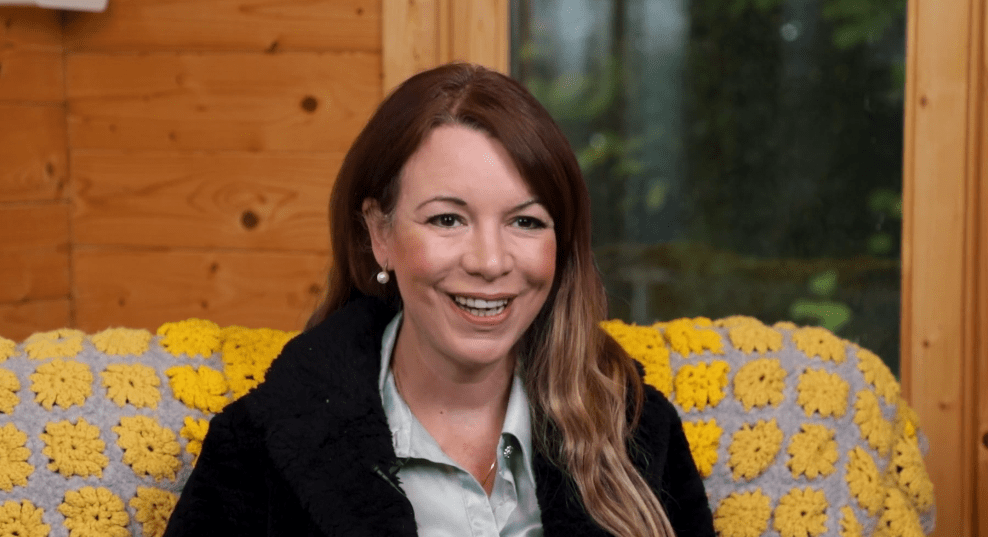
Elizabeth Rizzini, a BBC meteorologist whose serene delivery is well-known to BBC London viewers, is one of the voices making those predictions in recent years. Predictably, the internet frequently directs inquisitive viewers to look up “Elizabeth Rizzini Wikipedia” in an attempt to piece together a more complete picture of the woman describing the weather for tomorrow.
| Category | Details |
|---|---|
| Full Name | Elizabeth Rizzini |
| Date of Birth | November 19, 1975 |
| Nationality | British |
| Profession | Meteorologist and Television Weather Presenter |
| Employer | BBC |
| Known For | Weather forecasts on BBC London and BBC broadcasts |
| Training | Meteorological training with the UK Met Office |
| Location | London, United Kingdom |
| Partner | Frank Gardner (BBC security correspondent) |
| Reference | https://www.bbc.co.uk/weather |
Typically, biographical entries provide the essentials. Born in 1975, he received training from the UK Met Office and is currently frequently featured on BBC broadcasts. Sufficiently accurate. However, as is frequently the case with television personalities, the straightforward facts fall short of capturing the subtle rhythms and texture of a career spent explaining the sky to millions of people.
Late in the afternoon, Broadcasting House in London, which houses a large portion of the BBC’s news operations, has a unique atmosphere. Producers rush through hallways with scripts in their hands. Cameras are positioned by sliding. Screens flicker with satellite images of swirling clouds. The weather team is somewhere in that controlled bustle, creating forecasts that must somehow make complex meteorology sound simple.
In television journalism, weather presenters hold an interesting position. They are communicators as well as scientists. It’s not as simple as it seems to explain atmospheric pressure systems in a clear and conversational manner. In fact, there’s a feeling that part of the skill is in making the technical invisible when you watch someone like Rizzini perform live.
The route to that position frequently starts outside of the television studio. Meteorology training in Britain usually involves rigorous study with the Met Office, where weather models, satellite data, and historical patterns are analyzed in meticulous detail. A tiny percentage of forecasters eventually transition into broadcasting, converting that scientific analysis into a language that the general public can understand.
That’s what Rizzini did. The transition from internal forecasting to television presentations is frequently described by industry colleagues as unexpectedly difficult. Shorter explanations, quicker conclusions, and comfort with the bright, somewhat harsh environment of live television are all necessary for a different rhythm.
On BBC London, which covers Greater London and its environs, a weather segment typically lasts a few minutes. Cloud maps, rainfall charts, and temperature forecasts are among the graphics that change quickly. Without going into too much detail, the presenter gives the audience a sense of the conditions for tomorrow by moving through them in a fluid, almost conversational manner.
These forecasts are more important than one might think for a practical reason. Everyday activities in London, such as cyclists navigating congested roads, parents walking their kids to school, and commuters crossing bridges, frequently depend on minute choices impacted by weather forecasts. An umbrella may be brought or left behind depending on the forecast. It’s simple to overlook how much confidence viewers have in those succinct explanations.
Rizzini’s relationship with Frank Gardner, the BBC’s longtime security correspondent, has occasionally sparked public interest in her personal life. In 2004, Gardner was partially paralyzed after surviving a severe attack while reporting in Saudi Arabia. Interviews and documentaries about their relationship gave viewers a glimpse into a private life that is seldom seen behind television personas.
Rizzini herself, however, usually keeps her public persona modest. This self-control may help to explain why people initially use Wikipedia searches. Television establishes familiarity without necessarily offering a great deal of personal information. Although viewers can identify the forecaster’s voice and face, they don’t know much about them. It’s a strange aspect of contemporary broadcasting.
With over 5,000 journalists worldwide, the BBC produces news for radio, television, and digital platforms. Despite making up a very small portion of that system, weather presenters have a surprisingly prominent position within it. Meteorologists are regular fixtures in viewers’ routines, in contrast to many journalists who report infrequently.
There is a subtle rhythm to seeing those forecasts come to pass each night. storm systems that are coming from the Atlantic. Scotland is being swept by cold fronts. High pressure is lingering stubbornly over southern England. The atmosphere never quite behaves the same twice, even though the science is repeated. Perhaps part of the appeal is that it’s unpredictable.
The career of Elizabeth Rizzini fits neatly into the steady, methodical, and subtly authoritative tradition of British broadcast meteorology. Not ostentatious. Not dramatic. The atmosphere’s complex language is simply translated into a comprehensible voice by a professional.
And maybe that’s why people continue to look up her name on the internet. Not because the narrative is dramatic, but rather because the familiarity of those succinct predictions piques a tiny interest.
After all, the individual pointing at the weather map every evening also subtly becomes a part of the everyday scene.
