

Most people overlook a specific type of recall notice. Not the noisy ones, the ones that make the evening news and sweep through grocery store chains. the ones that are more subdued. A Tuesday press release, a box of fruit, and a few small-type lot numbers. That’s how the Ayco Farms cantaloupe recall began in March. The FDA then took action last week that altered the entire situation. The recall was upgraded to Class I.
The agency’s most serious category is that one. The meaning is not clinical, but the language is. Class I refers to the FDA’s assessment that there is a plausible risk that consuming the product could have detrimental effects on one’s health or, in extreme circumstances, result in death. It’s important to pay attention when a Florida-based distributor pulling 8,302 cartons of cantaloupe is placed in that category, even though the produce has already run out of stores.
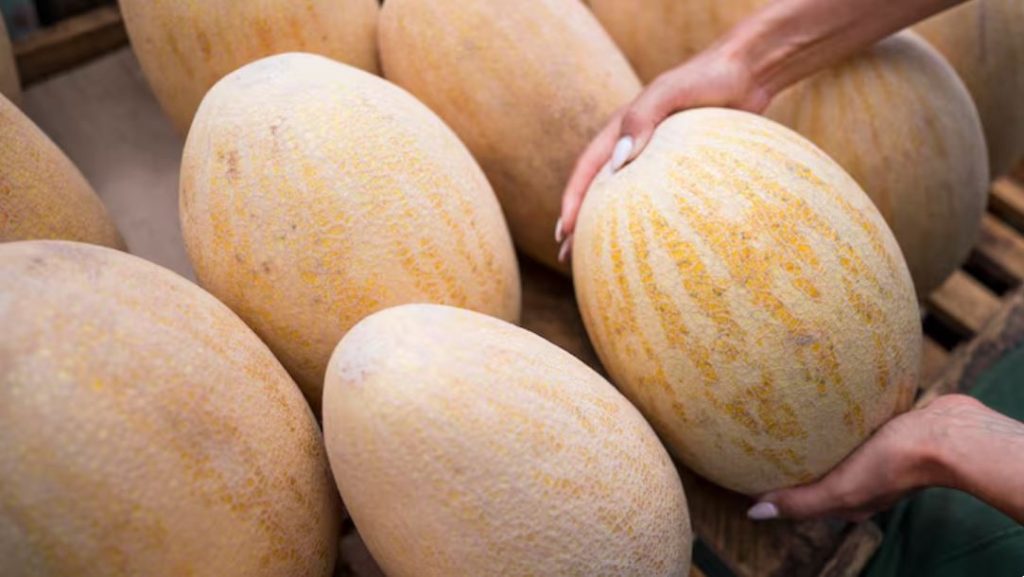
And that’s the peculiar aspect of this tale. Pompano Beach-based Ayco Farms quickly notes that the recall is no longer in effect. From December 12, 2025, to January 16, 2026, the melons were distributed. The company states that the shelf life of refrigerated cantaloupe is about thirty days. According to the math, whatever made it to the shelves was either eaten or composted months ago. According to the company, all environmental and product samples tested negative for Salmonella Newport. There have been no complaints of illness. This appears to be a safety measure that has outlived its usefulness on paper.
The freezers are an exception. What sticks is the detail. You might be surprised to learn how frequently home cooks freeze cantaloupe. Fruit bowls, smoothies, and summer purees that are kept for the cooler months. Those unlabeled, half-forgotten plastic bags behind the ice trays. In a way, those bags are the target of the FDA’s upgrade to Class I. Customers who purchased cantaloupe from Ayco Farms in late 2025 or early 2026 might still have bits of it hidden, and contamination doesn’t gracefully go away with the season. That’s the unsettling idea. Stores no longer carry the fruit, but homes may still have it.
As a pathogen, salmonella typically exhibits predictable behavior. Typically, symptoms appear between twelve and seventy-two hours. diarrhea, fever, and cramps that are occasionally severe enough to need hospitalization. A tiny percentage of patients experience reactive arthritis, which can last for years, according to the CDC. The majority of healthy adults get better in a week. The risks are higher for children, the elderly, pregnant women, and people with weakened immune systems. It’s the type of bacteria that doesn’t show up on the fruit. There is no warning sign at the cutting board, no visual cue, and no smell.
In American produce aisles, cantaloupe has a convoluted past. The 2023 outbreak, which resulted in eight fatalities and hundreds of illnesses, continues to influence how regulators handle these recalls. The FDA’s decision to raise the classification is likely partially due to that memory. Yes, caution, but learned caution as well. Particularly with a fruit whose porous rind has repeatedly caused problems, there’s a feeling that the agency would prefer to overwarn rather than underwarn.
The lot numbers that are impacted are numerous. codes with dozens of entries that start with GC, SCX, and SGC.
The FDA’s guidelines are not as detailed as they could be for anyone inspecting a freezer bag. The retailers have not been identified by Ayco Farms. A disposal protocol has not been released by the agency. The majority of food safety writers who covered the story subtly offered this straightforward and somewhat disappointing piece of advice. Throw it out if it matches. As this develops, it’s difficult to avoid thinking that the system is more effective at tracking fruit than instructing customers on what to do when the trail gets cold.
