

In politics, a certain type of letter only shows up when things are at their most fragile. It’s not a party memo or a policy paper; rather, it’s something personal, thoughtful, and written with the full awareness that it will be analysed line by line in a matter of hours. That’s precisely what John Healey’s resignation letter to Prime Minister Keir Starmer on June 11, 2026, is.
Healey was not viewed as a rebel because he had been the Defence Secretary since Labour’s comeback. According to most Westminster accounts, he was a quiet pillar of Starmer’s cabinet, devoted, serious, and fully engaged in the brief. The letter is so striking because of this. It doesn’t sound like a man taking advantage of a chance. It reads like a man with no other choice.
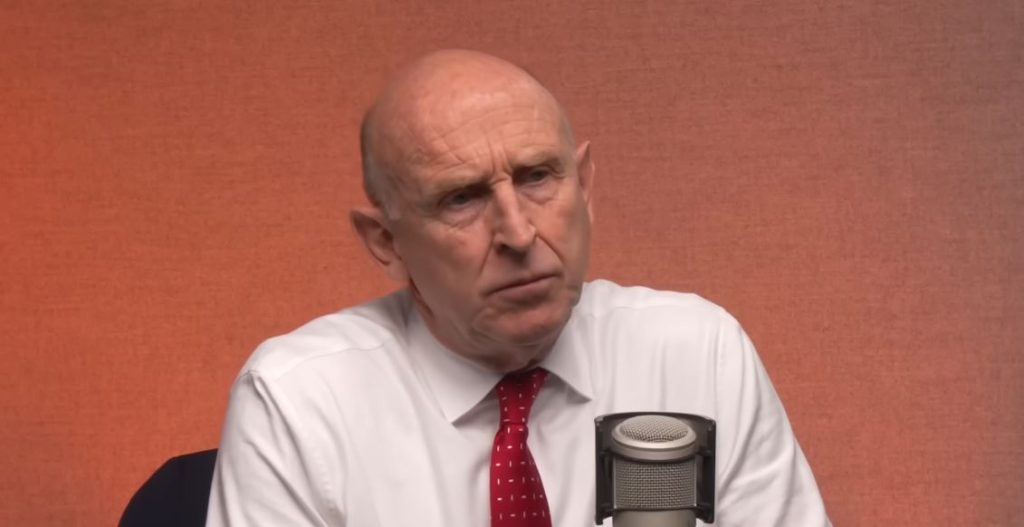
Beneath just 250 words, the main charge is nearly surgical: Starmer was “unable,” and the Treasury was “unwilling,” to commit the resources the nation requires. Two well-chosen words. Unable implies a lack of strength at the top. Unwilling blames the Treasury and Rachel Reeves directly. When taken as a whole, they depict a government torn between fiscal paralysis and ambition, a gap that Healey apparently felt he could no longer ignore.
Healey sought a pledge to increase defence spending to 3% of GDP by 2030, which would be a first step toward the 3.5% goal already set for 2035. On Monday afternoon of that same week, he reportedly received a “backloaded” settlement that would limit spending to 2.68% by 2030. It’s the type of financial choreography used by governments to project an air of boldness without actually being so. It appears that Healey had finally had enough of the show.
He had voiced these concerns before his resignation, as the letter makes clear, and the fact that he received the full financial settlement only a few days before leaving is somewhat heartbreaking. It’s difficult not to interpret that timeline as a man receiving a fait accompli and deciding not to accept it.
Hours later, Armed Forces Minister Al Carns resigned as well, claiming he was unable to defend a level of funding he knew was insufficient. One afternoon, two departures. That is a collapse of confidence, not a coincidence.
If anything, Starmer’s overall political situation is worse than the defence figures. In the local elections, Labour had already suffered a crushing defeat. Wes Streeting was no longer there. And for a party that was starting to doubt its leadership, the possibility of Andy Burnham going back to Westminster carried its own gravitational weight. Healey’s departure fits into all of that; it’s both a morally sound defensive stance and, it seems, a calculated addition to the mounting pressure surrounding Starmer.
Only Healey could honestly respond to the question of whether his motivations were wholly pure. The content is more difficult to refute. Britain must contend with Russia’s aggressive rearmament, obligations in the Arctic, duties near the Strait of Hormuz, and a ceasefire role in Ukraine that may require a significant military presence at short notice. Healey’s letter subtly reminds Starmer that while the Treasury and the MoD were squabbling over billions, the world continued to move forward.
The position has now been filled by Dan Jarvis, a former Army officer with a serious reputation who was appointed almost nine hours after Healey left. No one in Downing Street was openly discussing whether that disparity was the result of difficult negotiations over the spending amounts or security clearance processes. Whether Jarvis got any better commitments than his predecessor is still up for debate. The next resignation letter might not be far off if he didn’t.
FAQs
1. Why did John Healey resign as Defence Secretary?
He resigned over insufficient defence funding in the government’s Defence Investment Plan.
2. What spending target did Healey demand?
He demanded 3% of GDP on defence be reached by 2030.
3. Who replaced Healey as Defence Secretary?
Former Army officer and security minister Dan Jarvis was appointed his successor.
4. Did anyone else resign alongside Healey?
Yes — Armed Forces Minister Al Carns resigned hours after Healey.
5. How does this affect Keir Starmer politically?
It significantly weakens his authority, compounding losses from earlier cabinet resignations.
