

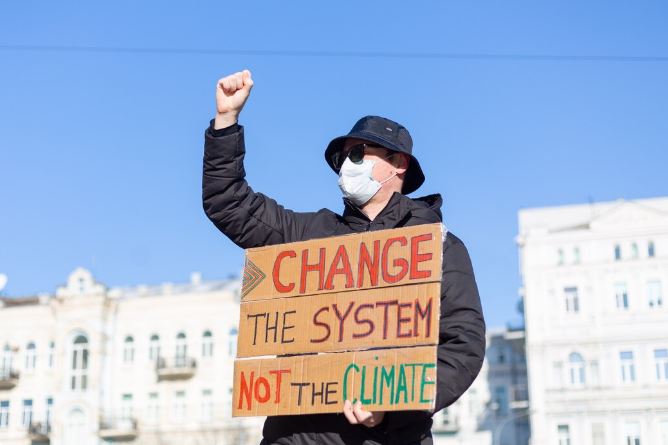
Climate politics in Britain become less like a detached policy debate when energy becomes emotional and more like a family argument at the kitchen table, where everyone agrees that something needs to change but disagrees sharply on pace, cost, and accountability, resulting in remarkably similar conversations across geographically disparate regions.
| Related Area | Key Information |
|---|---|
| Core theme | Emotional and political responses to climate and energy policy in Britain |
| Main pressures | Energy prices, net zero targets, household costs |
| Social divides | Urban and rural views, generational perspectives, income gaps |
| Shared concerns | Health, affordability, energy security, jobs |
| Political context | Net zero commitment and shifting party narratives |
| Societal impact | Polarisation alongside local cooperation |
| Reference | https://www.bbc.com/news |
Kilowatts have become emotions due to energy bills. In recent years, debates about insulation, offshore wind, heat pumps, and gasoline cars have escaped expert panels and entered everyday life, influencing how people vote, create budgets, and assess fairness in ways that are more intimate than impersonal.
The UK’s legally binding pledge to achieve net zero by 2050 has changed from being a private parliamentary agreement to a contentious issue in recent years. Climate policy has become a stand-in for broader economic anxiety as what once passed with little opposition is now weighed against food prices, rent, and heating expenses.
According to a 2023 study by HW Chan, national culture, reliance on fossil fuels, and individualism all have a substantial impact on political differences regarding climate attitudes. Because energy use varies so clearly between rural and urban living, homeowners and renters, commuters and remote workers, those divisions feel especially acute in Britain.
Energy has evolved into an emotional gauge for many households. Depending on the situation, a cold winter morning or an unexpectedly high direct debit can have political connotations, making climate commitments feel either protective or punitive. Policymakers frequently underestimate this emotional reaction.
As a result, political messaging has changed. Many leaders now question timing and cost instead of climate science, portraying climate ambition as something that needs to be slowed or softened. Voters who are feeling stretched financially rather than ideologically opposed have responded remarkably well to that rephrasing.
Division, however, only provides half the picture. According to research on climate outreach, public support for climate action significantly increases when it is presented in terms of health advantages, cleaner air, energy independence, and local jobs. Resentment gives way to cautious optimism as the emotional charge changes.
Discussions about energy are becoming more and more like a swarm of bees, with each minor issue being overwhelming when taken as a whole. Simultaneous buzzing about power generation reforms, transportation changes, and insulation plans can wear people out and make them more resistant to change, even if they agree with it.
Another layer is added by generational dynamics. Climate action is frequently framed as a moral imperative by younger Britons who have been influenced by climate education and continuous exposure to extreme weather coverage. The same policies are often seen through the prism of immediate affordability by older voters, especially those with fixed incomes.
Beyond protests, individuals such as Greta Thunberg have shaped British discourse, transforming climate urgency into a moral language that inspires young people while occasionally alienating those who feel accused rather than invited. Here, the emotional divide is more about tone and trust than it is about knowledge.
According to surveys like Eurobarometer, people of all ages in Britain are concerned about climate change, but there is still a noticeable lack of trust in political institutions. Many citizens believe that while their concerns are acknowledged in theory, they are ignored in reality, which perpetuates a feeling of exclusion rather than involvement.
Much of this tension can be explained by Britain’s energy history. Since World War II, the electricity system has undergone numerous changes, including nationalization, privatization, and the current unfinished low-carbon transition, as reported by Peter Pearson and Jim Watson. Every stage left regional disparities and social scars.
Promises of renewal that came in uneven doses are still remembered in former coal regions. Wind farms are debated in coastal communities as either impositions or symbols of opportunity. Renters in cities live in inefficient housing that they are unable to upgrade. These real-life encounters give climate politics a strong emotional foundation.
Trust has been impacted by public figures in various ways. David Attenborough has a very clear and well-respected tone when discussing climate risk. Skepticism tends to increase rapidly when climate arguments are presented in the form of moral pressure or technical jargon.
Britain’s moment is sharpened by comparisons with the United States. There, lobbying and media framing made climate change a partisan identity issue. Although Britain has so far avoided that drastic division, recent changes indicate that the gap is closing.
One particularly creative approach to bridging gaps is economic framing. According to studies by Bertolotti and Catellani, messages emphasizing economic benefits rather than just environmental sacrifice are more likely to be well received by right-leaning audiences. This finding is becoming more and more evident in British policy language.
This change is exemplified by offshore wind. It is now portrayed as a source of domestic energy, skilled employment, and resilience against unstable gas markets, having previously been criticized as expensive symbolism. Opposition has significantly decreased in areas where communities perceive real benefits.
Compared to national discourse, local governance frequently presents a more optimistic picture. Driven more by necessity than by ideology, councils led by various parties work together on clean transportation, flood prevention, and insulation drives, showing how proximity can lessen polarization.
Emotions have also been altered by extreme weather. Heatwaves in southern cities and flooding in northern towns have made the effects of climate change seem immediate. Arguments frequently give way to pragmatic cooperation, at least temporarily, when risk becomes apparent.
Fuel poverty is still a major problem. Carbon pricing and electrification calls are meaningless in the absence of solid plans to safeguard low-income households. Climate policy runs the risk of losing its credibility if it is not fair.
Trust turns out to be the deciding element. When people feel that their voices are heard and that costs are shared, they are more receptive to change. The challenge facing Britain is not to convince people that climate change is important, but rather to convince them that the solutions will be equitable, reasonably priced, and long-lasting.
Energy now has emotional weight because it affects dignity, identity, and security. It influences how people view the future and how they fit into it. Both unexpected alliances and intense division can be explained by that emotional intensity.
Climate politics reveals a double truth when energy turns emotional. It has the power to unite communities around common values of health, stability, and care while also dividing Britain along economic and cultural lines. The way forward hinges on leaders realizing that, despite differences, there is a strikingly shared aspiration for a safe and livable future.
