

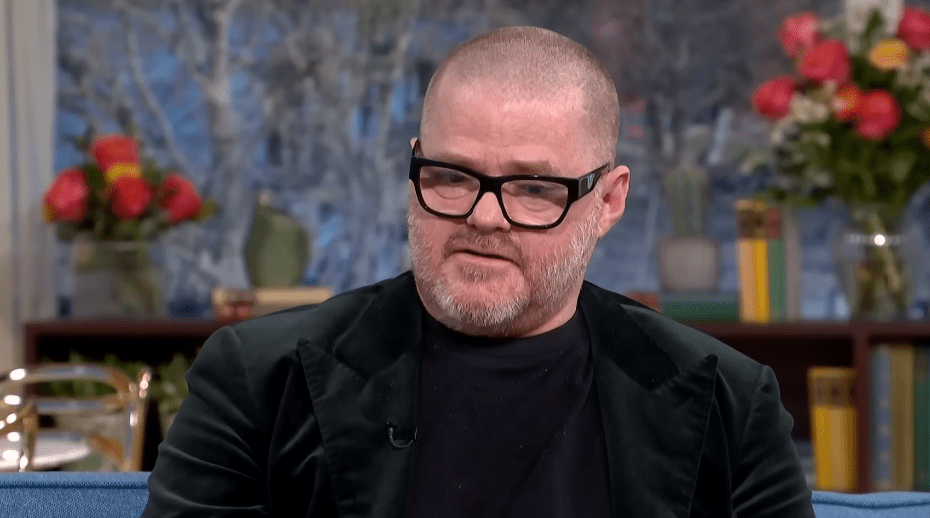
Credit: This Morning
The village of Bray, Berkshire, is quiet in the sort of way that makes footsteps echo on a cobbled path. A pub, some greenery, and a few brick homes. The location doesn’t immediately evoke the idea of a culinary revolution. Nevertheless, nestled in this drowsy English nook is Heston Blumenthal became one of the most inquisitive figures in contemporary gastronomy thanks to The Fat Duck.
There’s something a little bizarre about passing the building. The building’s low roof and traditional architecture give it an almost unremarkable exterior, but the concepts inside have altered the way many chefs view food. Driven primarily by obsession and experimentation, Blumenthal opened the restaurant in 1995 with minimal formal training. That kind of unyielding curiosity is difficult not to admire. British fine dining was reputable but predictable at the time. From the beginning, the Fat Duck felt different.
| Category | Details |
|---|---|
| Full Name | Heston Marc Blumenthal |
| Profession | Chef, Restaurateur, Culinary Innovator |
| Nationality | British |
| Famous Restaurants | The Fat Duck (Bray), Dinner by Heston Blumenthal (London & Dubai), The Hinds Head |
| Culinary Style | Molecular gastronomy, experimental cooking |
| Major Awards | Multiple Michelin Stars; The Fat Duck ranked among the world’s best restaurants |
| Flagship Restaurant Opening | 1995 (The Fat Duck) |
| Known Signature Dishes | Meat Fruit, Bacon & Egg Ice Cream, Liquid Nitrogen Ice Cream |
| Official Website | https://thefatduck.co.uk |
Chefs were doing more than just cooking in the kitchen. They were conducting tests. adjusting temperature, monitoring chemical reactions, and using liquid nitrogen to freeze ingredients. It sounded strange. Perhaps even careless. However, the outcomes were peculiar and unforgettable. Foods like snail porridge or bacon-and-egg ice cream caused diners to pause, occasionally laugh, and raise an eyebrow. Nevertheless, the restaurant went on to receive three Michelin stars and widespread praise.
It seems that Blumenthal never considered food to be just a source of nourishment. He handled it more like a play. Many times, dining at one of his restaurants is like going to a show where memory, texture, and aroma all play supporting parts.
That spirit of experimentation spread beyond Bray years later. In 2011, Blumenthal opened Dinner by Heston Blumenthal in London’s Mandarin Oriental Hyde Park. The concept surprised some observers. The menu featured traditional British recipes, some of which date back centuries, rather than futuristic science-driven dishes. Still, this was Blumenthal. Nothing was simple.
One well-known dish, “Meat Fruit,” resembles a flawlessly polished mandarin orange. When you cut into it, you’ll find chicken liver parfait. It’s strangely entertaining to watch diners experience it for the first time. Perplexity, wonder, and joy. All three at times.
The restaurant became one of London’s most talked-about dining establishments and soon received Michelin recognition. Everyone seemed to eventually pass through, including critics, chefs, and wealthy tourists. The place exuded a subtle confidence that comes from a kitchen crew that is extremely at ease with accuracy.
Restaurants, however, seldom remain static. After sixteen years of operation, Blumenthal recently announced that Dinner’s London location will close in January 2027. The somewhat unremarkable explanation highlights a fact that many diners overlook: restaurants are subject to budgets, leases, and hotel partnerships. The Mandarin Oriental’s tenancy is simply coming to an end.
The moment was bittersweet, according to Blumenthal himself. It seems like the right word. For any restaurant, even one with international recognition, sixteen years is a long time. Perhaps even more so in a sector where margins are still precarious and costs are constantly rising.
On a normal evening in London, diners emerge from the restaurant wearing coats to protect themselves from the cold as taxis line up along Knightsbridge. Inside, polished cutlery reflects warm lighting. Birthdays, anniversaries, and quiet business dinners where deals might have been discussed over linen tablecloths all seem to have taken place there.
It’s difficult to avoid wondering what will happen next.
It’s interesting to note that the concept doesn’t end with the closure. Dinner by Heston Blumenthal’s Dubai location, which debuted at Atlantis The Royal on Palm Jumeirah, is still open. With a slightly different clientele—international travelers, affluent tourists, and inquisitive locals—that eatery maintains the same historical British theme. There is a more theatrical, almost cinematic atmosphere that reflects Dubai’s wider aesthetic.
In the meantime, Bray continues to be the emotional focal point of Blumenthal’s culinary universe. The Hinds Head, a historic pub restaurant that the chef renovated and reimagined, is located in the village alongside The Fat Duck. The Hinds Head has a calmer, more grounded vibe than The Fat Duck’s lab-like setting. Classic British cuisine, comfortable seating, and wooden beams. It serves as a reminder that even experimental chefs occasionally revert to the past.
The narrative now includes Blumenthal’s personal journey. The public’s perception of the renownedly intense chef has been further complicated by his recent public disclosure of his bipolar diagnosis. Mental health and creativity are frequently closely related, and observing the development of that discussion has been profoundly touching.
The sight of liquid nitrogen ice cream swirling at their table may be all that some diners can recall. Others remember the eerie beauty of dishes that tasted like one thing but looked like something else. In either case, the experience usually stays with you.
And that might be Heston Blumenthal’s restaurants’ true accomplishment. They do more than just feed people. Long after the table has been cleared, they remain slightly perplexed, slightly delighted, and contemplating the meal. That kind of memory is surprisingly uncommon in the world of fine dining.
