

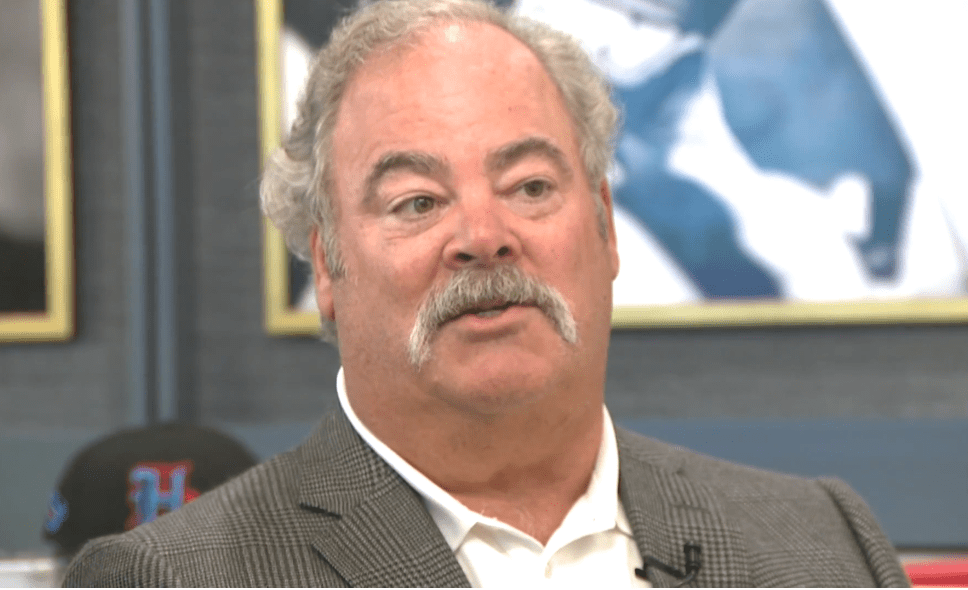
Credit: KPRC Click2Houston
Within minutes of observing Cal McNair’s actions around the Texans organization, where tact and caution have gradually supplanted the bravado that once typified NFL ownership culture, it becomes clear that he does not resemble the boisterous caricature that people frequently envision when they envision a billionaire sports owner.
He learned early on that wealth is more about patient systems than it is about flashing out and burning out, like a power plant that hums steadily for decades. He grew up surrounded by ambition, money, and long-term thinking.
| Detail | Information |
|---|---|
| Full Name | Daniel Calhoun McNair |
| Born | October 24, 1961 |
| Birthplace | Houston, Texas, United States |
| Education | University of Texas at Austin; MBA from Rice University |
| Current Role | Principal Owner, Chairman, and CEO of the Houston Texans |
| Estimated Net Worth | Approximately $4 billion to $5.6 billion (varies by valuation year) |
| Primary Sources of Wealth | Houston Texans franchise, inherited and expanded energy assets, real estate |
| Family Background | Son of Bob McNair and Janice McNair |
| Reference | WikiPedia |
Cal closely observed as agreements were made, alliances were negotiated, and reputations were earned gradually rather than demanded as his father, Bob McNair, built an energy empire before acquiring an NFL franchise for Houston. This decision combined civic pride with calculated risk.
By the late 1980s, Cal was already employed by the family business, managing projects and doing financial analysis. He was quietly learning how infrastructure investments work when deadlines drag on for years and margins suddenly narrow.
Later, when he dug deeper into football operations, where perseverance, capital discipline, and long-term valuation are far more important than weekly headlines or fleeting optimism, that foundation would prove especially helpful.
Cal was never positioned as the future owner in waiting when the Houston Texans were founded, and the lack of overt grooming left league insiders feeling uneasy for years.
After graduating from Rice University with an MBA in 1995, he returned to Houston with a more savvy financial toolkit and a distinctly practical mindset that stood in stark contrast to the intense emotions that fans frequently attribute to professional sports.
His position within the Texans organization remained purposefully incremental for a considerable amount of time. He served as vice chairman and then chief operating officer, assimilating internal culture while avoiding public posturing that could have prematurely raised expectations.
After Bob McNair’s health deteriorated, that gradual increase became inevitable. By 2018, the founder-to-successor transition shifted from abstract planning to urgent necessity, creating pressure that no spreadsheet could adequately depict.
Cal inherited leadership of the Texans at a time when the league was undergoing rapid change in terms of its structure, media reach, and valuation logic. Bob McNair’s death later that year transformed the team from a business asset to a symbol of continuity.
His management style in his early years of leadership seemed remarkably similar to someone learning to steer a big ship in the middle of a voyage; cautious at the wheel, occasionally putting their trust in the wrong advisors, but dedicated to keeping the ship afloat through turbulence.
The Jack Easterby era, which has received a lot of criticism and is often revisited, demonstrated how loyalty and belief systems can complicate corporate governance, especially when football decisions involve personal trust rather than operational clarity.
Staff turnover rose, internal confidence declined, and public skepticism increased during that time, but the franchise’s financial engine remained incredibly stable due to broadcast contracts and league-wide revenue sharing.
As I read internal reports of those departures, I recall how remarkably composed McNair sounded for someone taking in so much institutional criticism at once.
The Texans were worth more than $6 billion by 2024, when he was formally named the principal owner. This amount would have seemed unthinkable when his father purchased the team for $600 million decades prior.
The majority of Cal McNair’s net worth can be explained by that valuation; analysts typically estimate it to be between $4 billion and $5.6 billion, depending on debt structures, market conditions, and the shifting assumptions incorporated into franchise multipliers.
In addition to football, he has real estate holdings and trust-managed energy-related investments in his portfolio. These assets are low-key and produce stability rather than spectacle.
McNair’s wealth functions more like infrastructure capital, which is slow-moving, incredibly durable, and built to outlast individual seasons or leadership cycles, in contrast to tech founders who use visibility to inflate their personal brands.
His approach to ownership has significantly improved in recent years, focusing on operational accountability, cultural reset, and more disciplined football decision-making, especially after internal reevaluation was prompted by public missteps.
A move toward collaborative leadership was indicated by the selection of C.J. Stroud and the hiring of DeMeco Ryans, which gave football executives more authority while McNair concentrated on structural alignment as opposed to tactical control.
Fans and league observers who previously doubted whether inheritance alone could maintain competitive stewardship have been remarkably reassured by this recalibration.
Cal and his wife Hannah continue to support causes pertaining to community infrastructure, education, and child health throughout Houston. Philanthropy continues to be a parallel thread, woven through both personal loss and institutional commitment.
The couple’s work with organizations like March of Dimes became even more urgent after the death of their infant son, turning grief into focused impact rather than symbolic donation.
Despite his wealth, McNair leads a surprisingly grounded lifestyle, prioritizing family privacy and time spent outdoors over public recognition. This decision is consistent with his desire for operational influence over cultural domination.
His net worth, which is shaped by patience, recalibration, and an understanding that value compounds quietly when systems are allowed to mature, tells a different story from the criticism and skepticism that will likely continue to surround his early decisions.
Cal McNair’s path indicates that ownership does not need spectacle to succeed, but rather consistency, adaptability, and a readiness to learn in front of a demanding audience, as the NFL continues to develop into a global entertainment enterprise.
